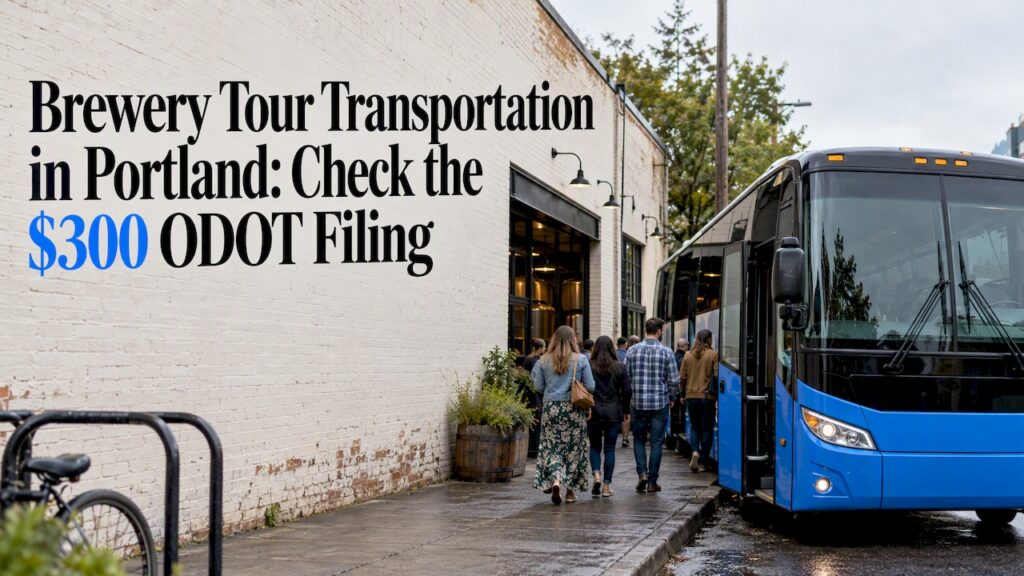
The simplest, safest way to move a brewery group through Portland is a licensed charter shuttle, not a caravan of personal cars or rideshares. Before you book anything, lock in your brewery reservations, pick a vehicle size that fits your headcount, and request proof of insurance and ODOT permits from any carrier you’re considering.
TL;DR:
- Oregon charter operators need Form E insurance filed with ODOT and a valid Class 1R or 1A intrastate permit; the application fee is $300.
- Reserve brewery windows first: Old Town Brewing accepts parties of 10 or more for 2.5 hours, while Double Mountain offers bookings lasting four hours.
- Groups under 14 often fit a limo bus, while groups of 15 or more typically need a charter coach; smaller vehicles access tighter streets.
- Portland event districts may charge $5.40 to $7.00 per hour for on street parking, so check event schedules and confirm legal bus loading zones.
- Raise mobility needs when requesting quotes, because carriers need lead time to assign a vehicle with a lift, securement points, and accessible seating.
Table of Contents
- Why a private charter beats multiple cars or public transit for brewery stops
- Oregon and ODOT checklist: permits and insurance to verify before you book
- How to coordinate brewery reservations and set shuttle timing
- Choosing vehicle size and onboard features for group comfort and routing needs
- Drop-off, loading zones, and parking in Portland’s event districts
- Planner’s booking checklist: exact steps and documents to collect
- Safety considerations and drunk driving prevention measures specific to brewery tours
- Accessibility features and accommodations for passengers with disabilities
- Customization options for brewery tour routes and stops in Portland
- Amenities and features of different vehicle types used for brewery tour transportation
- Driver experience and knowledge of Portland’s brewery districts
- A planner’s perspective on last-minute changes
- How to request a quote from Reliant Transportation
- FAQ
- Sources
Why a private charter beats multiple cars or public transit for brewery stops
Driving between breweries in the Pearl, Slabtown, or Central Eastside means hunting for parking, splitting up when spots run out, and losing twenty minutes per stop to regrouping. A single charter keeps everyone together and on schedule, which matters when a brewery only holds your reserved space for a set window.
Hiring a licensed carrier also shifts liability away from your guest list. Instead of relying on designated drivers or rideshare availability on a Saturday night, you have one contracted vehicle and one professional driver responsible for getting the group there and back safely.
- Parking and regrouping delays disappear when one vehicle handles the whole route.
- A shared schedule means no one misses a reservation window waiting on stragglers.
- A licensed carrier carries the liability and insurance coverage that individual drivers can’t offer.
Pro Tip: Ask your carrier how they build buffer time into brewery-to-brewery routes; a good operator already has a rhythm for Portland traffic patterns.
Oregon and ODOT checklist: permits and insurance to verify before you book
Any charter operator working in Oregon needs specific state filings, and a planner who checks these up front avoids a canceled trip or a liability headache later.
- Ask for proof of Form E insurance filed with the Oregon Department of Transportation, which Oregon’s intrastate carrier rules require before certain permits are issued; vehicles over 26,000 pounds typically need minimum liability coverage.
- Confirm the operator holds a valid Class 1R or Class 1A intrastate permit, which ODOT’s motor carrier requirements outline for charter operations within Oregon.
- If your trip crosses state lines or uses a heavier vehicle, ask whether the carrier holds a USDOT number or IRP/IFTA credentials where applicable.
The application fee for an Oregon intrastate permit to transport persons is $300, and minimum liability limits for vehicles over 26,000 pounds are commonly set at $750,000, according to ODOT’s insurance requirements page. A carrier that hands over these documents without hesitation is telling you they operate by the book.
How to coordinate brewery reservations and set shuttle timing
Book your brewery space before you touch the shuttle schedule. Many Portland taprooms hold group reservations for a fixed window, and some require deposits or minimum spends, so your transportation plan needs to work around their rules, not the other way around.
Once each brewery window is confirmed, build the shuttle schedule backward from those times, adding extra minutes for traffic and restroom stops between locations.
- Reserve group space at each brewery first, since blocks often run 2.5 to 4 hours and may include a deposit.
- Set your shuttle pickup and drop-off times to match the confirmed brewery windows, not an assumed schedule.
- Get a direct contact and mobile number from each brewery’s group coordinator the day before your event.
Old Town Brewing accepts group bookings for parties of 10 or more with a standard 2.5-hour window, while Double Mountain’s Overlook Taproom offers a private room on 4-hour booking intervals, useful reference points when you’re sketching your own timeline.
Choosing vehicle size and onboard features for group comfort and routing needs
Vehicle size shapes everything from comfort to route flexibility. As a general rule, groups of 15 or more people usually do better in a charter bus than a van, since a bus offers more seating and legroom without sacrificing much maneuverability in most Portland neighborhoods.
Beyond headcount, think about what makes a brewery crawl comfortable: a restroom onboard means fewer unplanned stops, climate control keeps things pleasant through a long afternoon, and a social seating layout keeps the group talking instead of staring at the back of someone’s headrest. Review charter bus seating chart options when you’re comparing layouts.
- Groups under 14 often fit comfortably in a limo bus with a lounge-style layout.
- Groups of 15 or more typically need the seating capacity of a full charter coach.
- Smaller vehicles can access tighter streets but offer less storage and fewer onboard amenities.
Pro Tip: Ask for onboard storage details if your group is bringing growlers or merchandise home; not every vehicle has room for it.
Drop-off, loading zones, and parking in Portland’s event districts
Dense districts like the Pearl, Slabtown, and Central Eastside come with real curb constraints, and those constraints get worse on event days. Portland’s parking guide notes that on-street rates in event districts near large venues can climb to $5.40 to $7.00 per hour, with adjusted time limits during big events, so check the schedule before you assume a curb will be open.
The Pearl District’s access and circulation plan also limits how large vehicles move through the neighborhood, which means a thoughtful route matters as much as a reserved stop.
- Check PBOT’s event district schedule for the dates you’re touring, especially near Providence Park on game days.
- Reserve off-street or garage parking if your itinerary needs the vehicle to wait on-site rather than loop back.
- Coordinate directly with brewery managers on where the bus can legally load and unload guests.
Planning a timed drop-off with a driver return window often works better than trying to hold a curb space for hours in a busy district.
Planner’s booking checklist: exact steps and documents to collect
A brewery tour comes together faster when you work the booking in order, from reservation to signed contract.
- Confirm brewery bookings and group windows at each stop on your route.
- Estimate your final headcount so you can match it to vehicle capacity.
- Request written proof of insurance and ODOT permit from your carrier.
- Ask for a detailed quote covering hours, mileage, and wait-time fees.
- Confirm loading zones at each brewery and exchange driver contact information.
- Sign the contract and send a final passenger manifest before the event.
Weekend afternoons in summer and early fall book up fastest, so start this process several weeks ahead rather than days out. Ask your carrier for a copy of their Form E filing, a copy of their permit, and clear contract terms before you sign anything.
Safety considerations and drunk driving prevention measures specific to brewery tours
A brewery tour’s entire appeal is drinking without worrying about driving, which makes the transportation choice itself the single biggest safety decision a planner makes. A licensed charter removes the guesswork: no one in the group is tempted to drive after a few pours, and no one has to volunteer as the designated driver and miss out on the day.
A professional driver also means someone sober and alert is handling Portland traffic, tight turns near the Pearl, and evening visibility on Central Eastside streets, rather than a guest who’s been drinking since noon. Reputable carriers also build wait-time flexibility into the schedule so no one feels rushed to finish a pour and get back on the bus.
Set clear expectations with your group before the day starts. Make sure everyone knows the pickup windows, understands that the bus won’t wait indefinitely past a scheduled departure, and has the driver’s contact number in case someone gets separated from the group. A few ground rules upfront save a lot of confusion by the third stop.
If your contract includes language about onboard alcohol consumption between stops, review it carefully. Oregon liquor laws and your carrier’s own policy may affect whether guests can bring drinks on board, so it’s worth checking our charter bus alcohol policy and OLCC guidance before the event.
Accessibility features and accommodations for passengers with disabilities
A brewery tour should work for every guest on your list, including anyone using a wheelchair, walker, or other mobility device. When you request a quote, ask specifically whether the vehicle offers a wheelchair lift or ramp, securement points, and enough aisle width to accommodate a mobility device comfortably.
Seating layout matters too. Some vehicles offer designated accessible seating near the entrance so a guest doesn’t have to navigate the full length of the bus, and companions can sit nearby without rearranging the group. If someone in your party needs extra time boarding or disembarking, build that into your schedule between brewery stops rather than treating it as an afterthought.
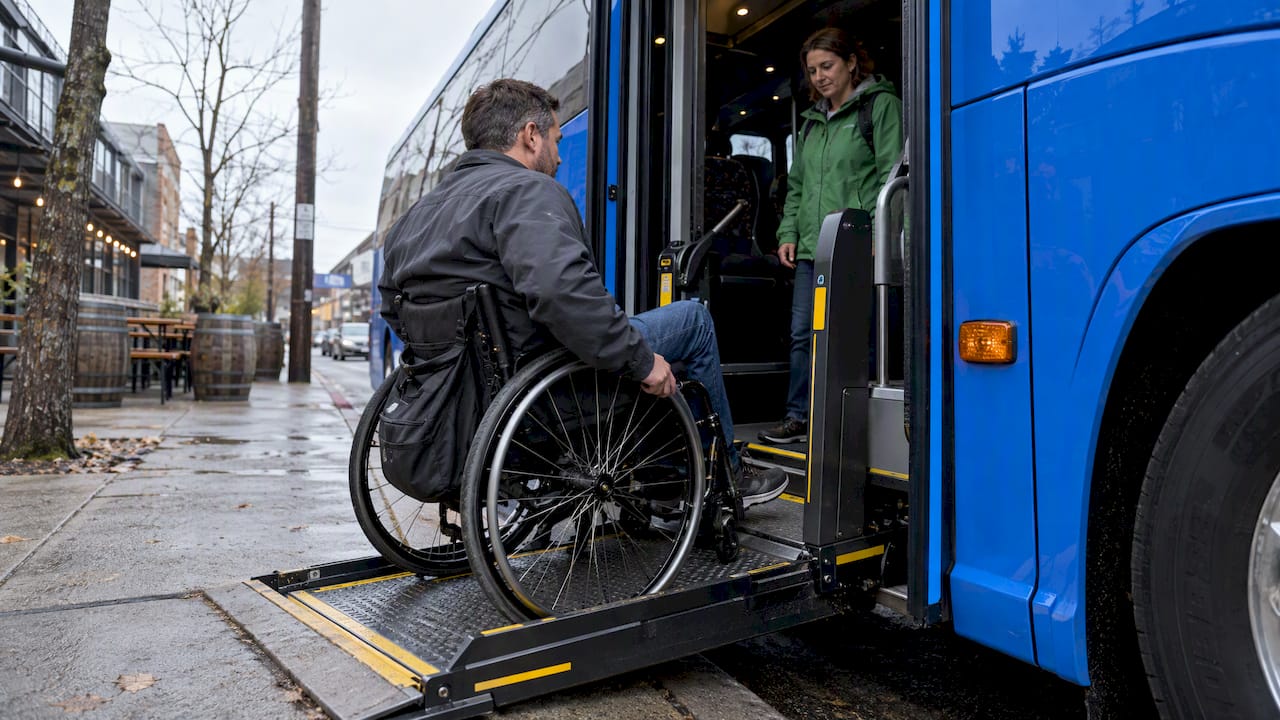
It’s also worth asking whether the brewery locations themselves have accessible entrances and restrooms, since a vehicle with great accessibility features doesn’t help much if the venue itself has steps at the door. A quick call to each brewery’s group coordinator, the same person you’re already contacting to confirm reservation windows, can clear this up early.
Raise accessibility needs when you first request your quote rather than the week of the event. Operators need lead time to confirm the right vehicle is available and assigned to your date, especially during peak weekend booking periods.
Customization options for brewery tour routes and stops in Portland
No two brewery crawls look the same, and a good charter route reflects that. Some groups want a tight loop through two or three Slabtown breweries within walking distance of each other, while others want a wider arc that touches the Pearl, Central Eastside, and a stop near Providence Park in a single afternoon.
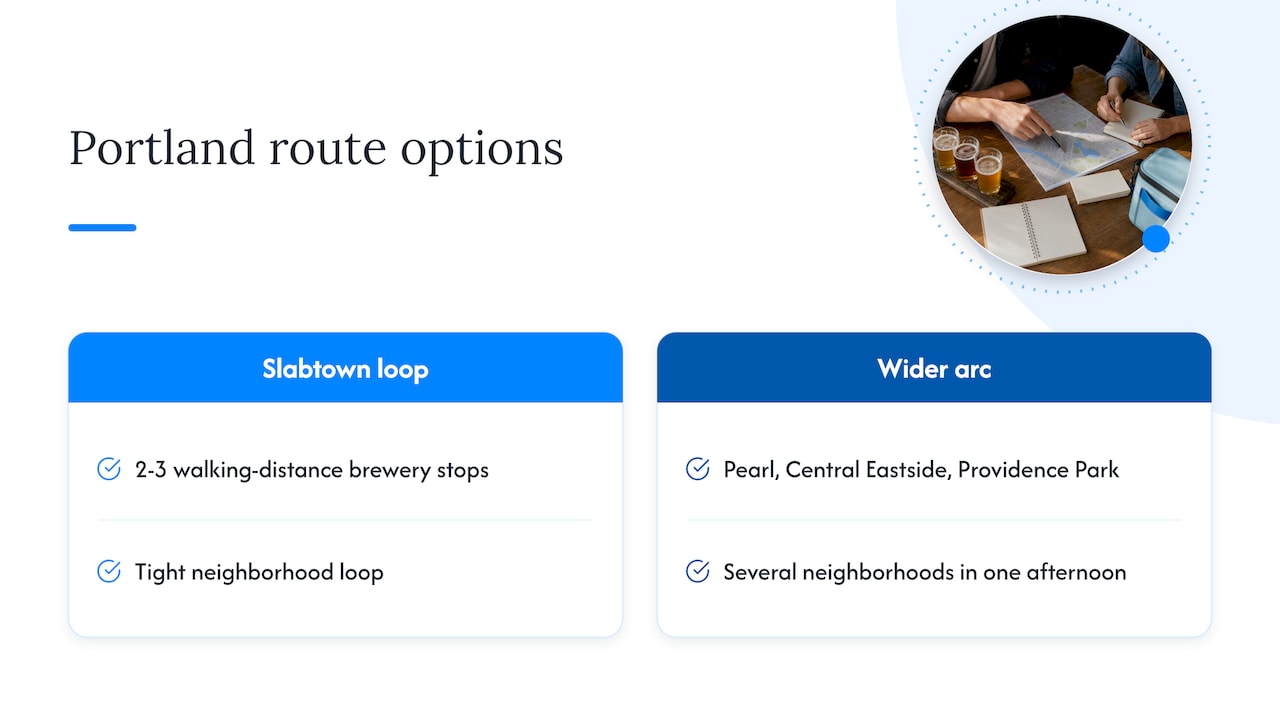
Route planning should start with your guest list’s priorities: are you chasing specific breweries for a bachelor party, hitting a mix of well-known names and small taprooms for a corporate outing, or building a route around one anchor venue with a private room, like the roughly 50-seat space at Double Mountain’s Overlook? Once you know the priority stops, a charter operator can sequence them to minimize backtracking and avoid overlapping with event-district traffic.
Flexibility matters just as much as the initial plan. Groups sometimes want to add a stop, skip one that’s running a private event, or extend time at a favorite taproom. Ask your carrier how they handle itinerary changes on the day, and whether wait-time fees apply if the group wants to linger somewhere longer than planned.
If you’re unfamiliar with how Portland’s neighborhoods connect, a local moving guide can help you get oriented to the city’s layout and traffic patterns before you start building a route. Our team can also recommend a sequence based on where your brewery reservations already sit on the map.
Amenities and features of different vehicle types used for brewery tour transportation
Vehicle type changes the whole experience, not just the seat count. A limo bus typically favors lounge-style seating facing inward, which works well for a bachelor or bachelorette crowd that wants to keep the conversation going between stops, and it often includes mood lighting and a sound system for a party atmosphere.
A standard charter coach leans toward forward-facing rows, more overhead storage, and a layout built for comfort over a longer route with more stops. Review our limo bus features checklist to compare what’s typically included, from onboard restrooms to phone charging and luggage space for anyone picking up growlers or merchandise along the way.
Climate control matters more than people expect on a Portland brewery tour, since you might start in cool morning fog and end in afternoon sun. Ask whether the vehicle has zoned climate control, especially for a longer multi-stop itinerary.
- Limo buses suit smaller groups wanting a social, lounge-style layout with built-in ambiance.
- Standard charter coaches suit larger groups prioritizing seating capacity and storage over lounge seating.
- Either type should offer an onboard restroom option for longer routes with multiple stops.
Confirm amenities in writing on your quote rather than assuming a vehicle matches the one you saw in a photo online.
Driver experience and knowledge of Portland’s brewery districts
A driver who already knows the quirks of the Pearl, Slabtown, and Central Eastside saves your group real time. Narrow streets, one-way patterns, and construction detours trip up drivers who aren’t familiar with the city, and that unfamiliarity shows up as late arrivals at your next reservation.
Ask whether your driver has handled brewery routes before and whether they know which streets allow bus-sized vehicles to load and unload without blocking traffic. An experienced local driver also tends to have a feel for which loading spots near popular breweries fill up fastest on weekend afternoons, and can adjust the drop-off plan on the fly if a spot is taken.
Driver professionalism matters just as much as route knowledge. A credentialed, background-checked driver who communicates clearly with your group contact keeps the day running smoothly, especially when plans shift, like a brewery running behind on seating or a guest needing a few extra minutes before the next stop.
A planner’s perspective on last-minute changes
The hardest brewery tours to run aren’t the ones with tight timelines, they’re the ones where the headcount changes the morning of the event. A group that confirmed 18 guests the week before shows up with 24, and suddenly the vehicle, the loading plan, and the brewery’s reserved space all need a second look. A driver who knows the district and a dispatch team that can adjust quickly make that kind of morning manageable instead of stressful.
— Dusty
How to request a quote from Reliant Transportation
We provide brewery tour charter services and build quotes based on your confirmed brewery windows rather than a generic hourly rate.
When you reach out, include a few specifics so we can send back an accurate number:
- Vehicle type preference (limo bus or charter coach) and your estimated headcount.
- Hours needed, including buffer time between brewery stops.
- Any known wait-time expectations and your preferred loading zones.
We’ll include our insurance proof, permit documentation, and driver contact details as part of the booking process. Visit our services page to review options, or go straight to our booking page to request a quote and attach your brewery reservation windows.
FAQ
What size vehicle do I need for a brewery tour group?
Groups under about 14 people typically fit well in a limo bus with a lounge-style layout, while groups of 15 or more usually need the seating capacity of a full charter coach. Vehicle choice also depends on storage needs and how many stops you’re planning.
Do Portland charter companies need special permits?
Yes. Oregon intrastate carriers need to file Form E insurance with ODOT and hold a valid Class 1R or 1A permit under ODOT’s motor carrier rules before operating charter trips in the state.
How far in advance should I book brewery tour transportation?
Book as soon as your brewery reservations are confirmed, ideally several weeks ahead for weekend dates since those windows fill first. Lead time also gives your carrier room to confirm the right vehicle size and any accessibility needs.
Can breweries accommodate large private groups?
Many Portland breweries do, though policies vary by location. Old Town Brewing accepts groups of 10 or more with a standard 2.5-hour reservation window, and Double Mountain’s Overlook Taproom offers a private room for up to roughly 50 seated guests on 4-hour intervals.
What should I ask for when requesting a transportation quote?
Ask for the vehicle type and capacity, total hours needed, wait-time fee policy, and proof of insurance and ODOT permits. We include these details in every quote through our booking page.
Sources
- Oregon Department of Transportation : Insurance Requirements : Commerce and Compliance Division : State of Oregon
- Portland Bureau of Transportation — Parking guide
- Groups Downtown — Old Town Brewing
- Overlook Taproom – Double Mountain Brewery & Cidery