

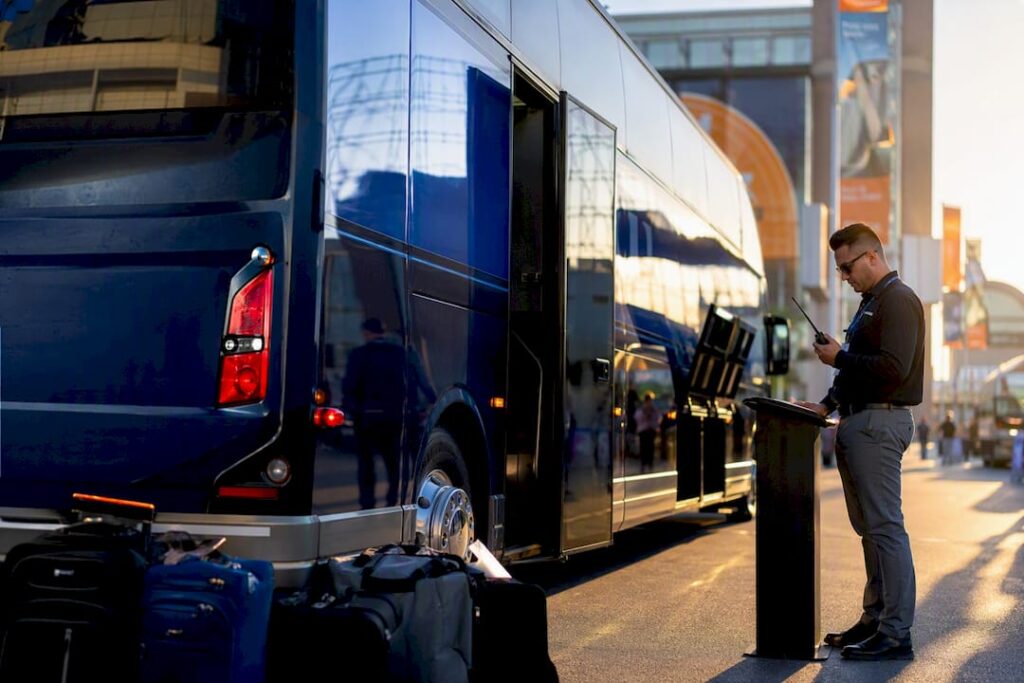
Book a charter shuttle for your trade-show attendee flows. That’s the answer. Before you request quotes, lock in three things: firm headcount, pickup and drop-off windows, and proof of USDOT/MC authority plus $5 million liability coverage coverage from any operator you’re considering.
Charter shuttle service beats scattered rideshares or attendee self-parking for one simple reason: it controls the flow. Coordinated pickup windows and dedicated staging cut wait times at hotel curbs and convention entrances, and they keep your exhibitors and attendees moving instead of clustering into a line that makes your event look disorganized before it even starts.
Here’s your next move:
- Confirm firm headcount plus a 10 to 15% contingency buffer
- Nail down exact pickup and drop-off addresses and time windows
- Flag any accessibility needs now, not later
- Ask every operator for USDOT/MC numbers and a certificate of insurance showing $5 million liability coverage
Reliant Transportation, based in Portland, is one regional operator planners in the metro, Willamette Valley, and Hood River area can contact directly for this kind of quote.
Key Takeaways
Reliable trade show transportation depends on early booking, verified insurance and ADA compliance, and dispatcher-level coordination rather than fleet size alone.
| Point | Details |
|---|---|
| Book early | Lock in charter service well ahead of peak convention season to avoid price spikes. |
| Verify insurance and authority | Confirm $5 million liability coverage coverage and USDOT/MC numbers before signing any contract. |
| Request ADA vehicles at booking | Accessible vehicle availability is limited, so confirm ramp or lift access up front, not day-of. |
| Match vehicle to access, not just headcount | Coaches suit high-volume curbs; Sprinters suit tight access or staggered pickups. |
| Reliant Transportation serves the region | Reliant Transportation offers ADA-compliant vehicles, verified insurance, and dispatcher support for events across the Portland metro, Willamette Valley, and Hood River area. |
Table of Contents
- Pre-Booking Checklist For Trade Show Transportation Quotes
- Which Vehicle Type Fits Your Trade Show Crowd?
- How Do You Handle Permits And Venue Coordination?
- How Do You Request ADA-Compliant Shuttle Service?
- What Insurance And Licensing Should You Verify?
- What Should Event-Day Dispatch Actually Look Like?
- What Drives Trade Show Shuttle Pricing?
- Why Reliant Transportation Fits Trade Show Shuttle Needs
- What Most Planners Get Wrong About Shuttle Logistics
- Get A Trade Show Shuttle Quote From Reliant Transportation
- Frequently Asked Questions About Trade Show Transportation
- Sources
Pre-Booking Checklist For Trade Show Transportation Quotes
An accurate quote depends on what you put in the request, not what the operator guesses. Vague RFPs get vague pricing, and vague pricing turns into change orders three weeks before your event.
- Headcount and cargo. State your firm attendee count, a contingency margin, and whether exhibitors are bringing booth materials, sample cases, or oversized signage that eats into luggage space.
- Addresses and windows. List every pickup and drop-off address, staging instructions for each site, and the exact time windows, not just “morning” or “afternoon.”
- Accessibility and amenities. Note any wheelchair or mobility-device riders, VIP transport requests, and whether you need Wi-Fi or an on-board restroom for longer routes.
- Permits and documentation. Disclose any venue restrictions you already know about, and request the operator’s insurance certificate and USDOT/MC numbers up front, not after you’ve signed.
Pro Tip: Put a line in your RFP that reads, “Quote must include current USDOT/MC number and a certificate of insurance naming [your organization] as certificate holder.” Operators who hesitate on this request are telling you something.
Which Vehicle Type Fits Your Trade Show Crowd?
Vehicle choice comes down to curb access and how many people move at once, not just total headcount. A logistics guide for event shuttles makes the point clearly: plan around the full trip cycle, meaning boarding, travel, unloading, and turnaround, and match vehicle type to access constraints rather than seat count alone.
- Full-size coaches work best for high-volume hotel-to-venue moves where the curb has room for a 45-foot vehicle and a steady stream of riders.
- Mini-coaches and Sprinter vans make sense when access is tight, pickups are staggered across multiple hotels, or you’re moving a VIP group that needs flexibility.
- Mixed fleets often outperform a single vehicle type at large conventions, pairing coaches for main hotel routes with Sprinters for boutique properties or last-mile connections.
Run the math on trip cycles before you commit to a headcount-only vehicle plan. A 56-passenger coach that takes 12 minutes to load and unload at a busy curb might move fewer people per hour than two Sprinters cycling faster through the same space. Amenities matter too. Wi-Fi and restrooms count for longer Willamette Valley or Hood River routes; luggage racks matter when exhibitors are hauling booth kits.
How Do You Handle Permits And Venue Coordination?
Most transportation failures on event day aren’t vehicle problems. They’re access problems: a bus that can’t get to the curb because nobody applied for a staging permit.
- Venue parking passes for your vehicles, requested through the venue’s operations team.
- Curbside or staging permits, often issued by the city rather than the venue itself.
- Special-event or traffic-control permits, required when your shuttle route crosses public streets during peak hours.
Request these at least 7 to 10 days before your event, and share your full manifest with venue operations at the same time. Permitting has moved increasingly online in many cities, and curbside rules have tightened in recent years, which means starting early matters more than it used to.
Ask venue security directly: which staging lane is assigned, what’s the arrival window, and can buses remain on-site between runs or must they circulate? Confirm in writing whether your operator applies for permits on your behalf or expects you to handle it, and document that split in the contract.
How Do You Request ADA-Compliant Shuttle Service?
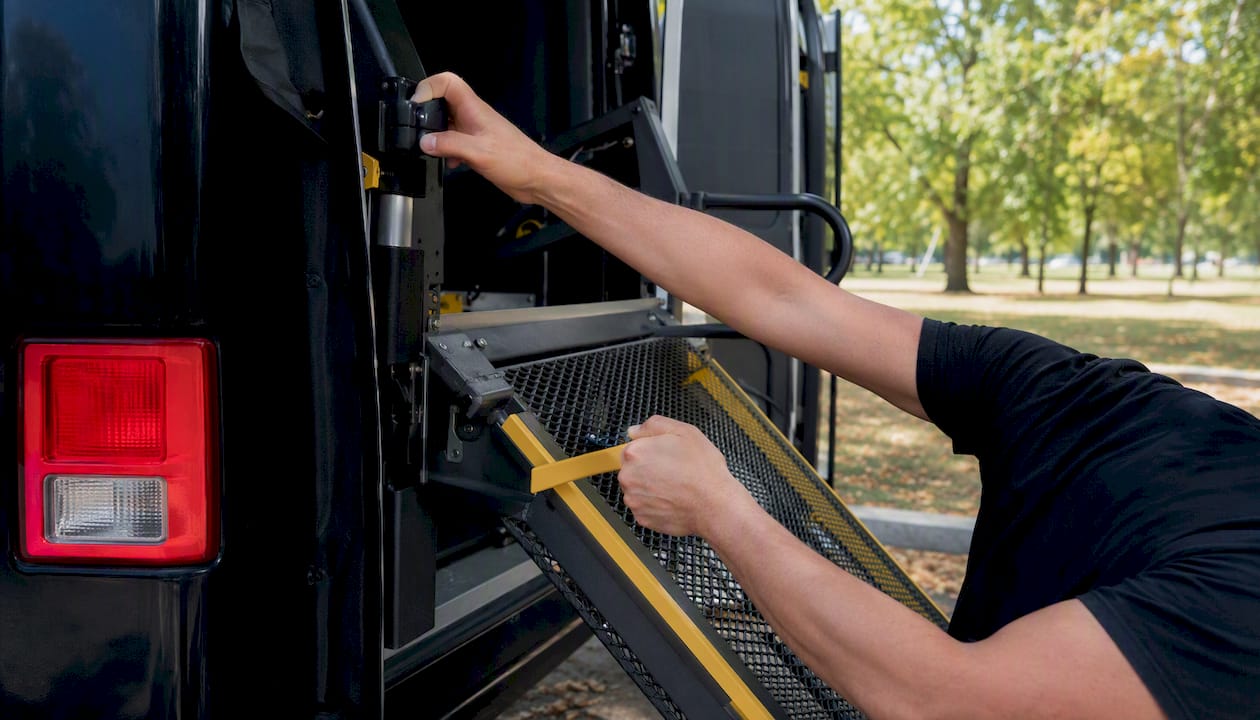
Request ADA-compliant vehicles when you book, not when someone shows up needing one. Accessible vehicles are a limited slice of most fleets, and operational guidance from disability-access advocates is consistent on this point: confirm ramp or lift availability in your quote and manifest accessible riders proactively.
- State the number of accessible seats needed in your initial RFP.
- Confirm ramp or lift type and boarding time in the written quote.
- Provide the driver a manifest and staging instructions for each accessible rider.
- Add contract language requiring the operator to confirm accessible vehicle assignment in writing 48 hours before the event.
Last-minute changes rarely work here. If an attendee’s accessibility need surfaces the week of your event, your options shrink fast because accessible vehicles are harder to swap in than standard seating.
Pro Tip: Ask your operator this exact question during the quote stage: “If I need to add one accessible rider three days before the event, can you accommodate it?” Their answer tells you how deep their accessible fleet actually is.
What Insurance And Licensing Should You Verify?
Federal guidance points to $5 million as the relevant minimum liability for many passenger operations running vehicles with 16 or more seats. That’s not a suggestion you can skip. Request the operator’s certificate of insurance showing this coverage, and verify their USDOT and MC numbers directly through the FMCSA’s public lookup tool rather than taking their word for it.
$5 million is the number to remember. It’s the minimum liability threshold federal guidance ties to larger passenger vehicles, and any operator running coaches or full-size buses for your event should be able to produce proof without hesitation.
Beyond insurance, vet these:
- Fleet maintenance records and vehicle age
- References from prior corporate or convention clients
- 24/7 roadside support in case of a breakdown mid-event
Put a clause in your contract requiring the operator to supply proof of insurance and current operating authority before the event date, not after.
What Should Event-Day Dispatch Actually Look Like?
Shuttle operations rarely fail because a fleet is too small. They fail because idle vehicles sit in the wrong place while a crowd builds at the wrong door. A dispatcher playbook for event shuttle management lays out the fix: pre-position reserves, redeploy dynamically, and keep passengers informed in real time.
Here’s what a solid operator should run on event day:
- Pre-event demand mapping. Chart your keynote schedule, breakout sessions, and expo hall hours, then pre-position reserve vehicles near the halls that will empty out fastest.
- Dynamic redeployment. Move vehicles toward whichever exit is filling up, rather than running a fixed loop regardless of where the crowd actually is.
- Headway compression before major egress. Tighten the gap between shuttle arrivals in the 15 minutes before a keynote lets out, when demand spikes hardest.
- A single transportation point of contact. One person who can redirect vehicles by phone or radio when plans change mid-day.
Dispatcher protocol, not fleet size, is what actually reduces wait times. Pre-positioning and dynamic redeployment let a moderate-sized fleet outperform a larger one running on a fixed schedule.
Ask your operator specifically about live vehicle tracking, configurable rider alerts, and post-event reporting on wait times and load factors. If they can’t answer, you’re not getting a dispatch operation. You’re getting a schedule and a hope.
What Drives Trade Show Shuttle Pricing?
Base fee is only one line item. Expect fuel surcharges, tolls, parking fees at both ends of the route, any permit costs, driver gratuity, overtime if your event runs long, and a cleaning fee for multi-day bookings.
You have real negotiation room here:
- Guaranteed-minimum seats across multiple days often earns a better per-trip rate than booking day by day.
- Bundled bookings covering hotel shuttles, offsite dinners, and airport runs in one contract typically beat separate bookings with separate operators.
- Remote staging with feeder shuttles can cut permit costs when downtown curb access is limited or expensive.
Your contract should spell out trip details, payment schedule, cancellation policy, indemnity language, and driver hours and lodging if your event spans multiple days. A charter bus rental checklist notes that operators typically expect a signed agreement and full itinerary before confirming a certificate of insurance, so have those ready when you request one. Multi-trip discounts, sponsor-funded shuttle branding, and smart staging choices are the most reliable ways to trim cost without cutting service quality.
Why Reliant Transportation Fits Trade Show Shuttle Needs
Reliant Transportation has built over a decade of consistently high ratings running group transportation across the Portland metro, Willamette Valley, and Hood River area, with a fleet maintained specifically for event-day reliability rather than general charter work.
That experience maps directly onto the checklist above:
- Staff familiar with venue coordination and staging logistics for convention-scale events
- ADA-compliant vehicles available on request, confirmed at booking rather than promised loosely
- USDOT/MC documentation and insurance proof provided without back-and-forth
- Dispatcher support built for real-time adjustments, not a fixed schedule that ignores what’s actually happening at the curb
Planners can review available fleet options through Reliant’s services page or reach out directly to talk through headcount, routes, and timing for an upcoming show.
What Most Planners Get Wrong About Shuttle Logistics
Most advice on trade show transportation focuses on picking the right vehicle. That’s not where events actually go wrong. They go wrong at the curb, when nobody applied for a staging permit, or mid-afternoon, when a fleet that looked adequate on paper sits idle in the wrong parking lot while a line builds at the north exit.
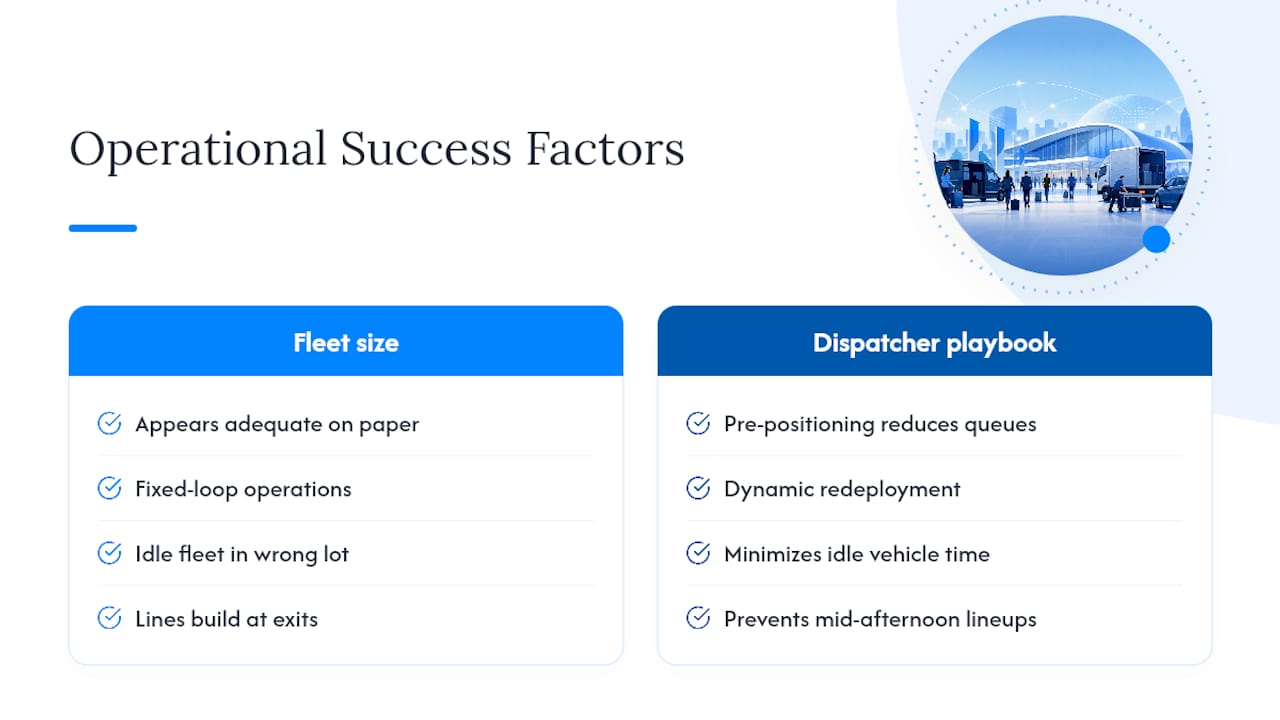
The conventional wisdom treats fleet size as the main lever. It isn’t. A dispatcher playbook built around pre-positioning and dynamic redeployment consistently outperforms a bigger fleet running a fixed loop, because the real bottleneck is almost always coordination, not capacity.
If you take one thing from this guide, prioritize the documentation and dispatch questions over the vehicle spec sheet. Ask for USDOT and MC numbers before you ask about Wi-Fi. Confirm ADA vehicle availability before you finalize headcount. Get the permit conversation started with venue security 7 to 10 days out, not the week of. The operators who answer these questions cleanly and quickly are almost always the ones who run a tight event day, regardless of what’s parked in their lot.
Get A Trade Show Shuttle Quote From Reliant Transportation
If you’re comparing hourly rideshare accounts or asking exhibitors to arrange their own rides, you already know the problem: no single point of contact, no manifest, no way to redeploy when a keynote runs long. Reliant Transportation is the direct alternative for trade-show organizers across the Portland metro, Willamette Valley, and Hood River area, running charter and shuttle service with documented insurance, ADA-compliant vehicles on request, and a fleet built around convention-scale event logistics rather than one-off rides.
Reliant’s team has spent over a decade coordinating group transportation for corporate events, conferences, and large gatherings throughout the region, which means the permit questions, staging logistics, and dispatcher coordination covered in this guide are already part of how they operate. Whether you need a single Sprinter for a VIP group or a mixed fleet running hotel loops all day, Reliant’s services page outlines available vehicle options, and their wedding and event charter overview shows the same coordination approach applied to large group logistics.
Reach out through Reliant Transportation’s home page to share your headcount, pickup addresses, and event dates, and request a quote with USDOT/MC and insurance documentation included from the start.
Frequently Asked Questions About Trade Show Transportation
What’s the best transportation option for trade show attendees?
Charter shuttle service is the most reliable option for moving groups between hotels and convention venues. It consolidates pickup points, runs on a controlled schedule, and avoids the bottlenecks that come with individual rideshare pickups at a single busy curb.
How far in advance should I book trade show transportation?
Book 6 to 12 weeks ahead for events during peak convention season, based on common charter booking guidance. Popular dates and larger vehicle counts fill operator calendars faster than most planners expect.
Do I need to request ADA-compliant vehicles separately?
Yes. Accessible vehicles make up a limited share of most fleets, so request them explicitly during your initial quote and confirm ramp or lift availability in writing before the event.
What insurance should a charter operator carry?
Federal guidance points to $5 million in liability coverage as the relevant minimum for many passenger vehicles with 16 or more seats. Ask for a certificate of insurance and verify the operator’s USDOT and MC numbers directly through FMCSA before booking.
Can I use public transit instead of a private charter for my event?
Usually not as a direct substitute. FTA regulations under 49 CFR Part 604 restrict transit agencies from offering private charter service in most cases, which is why private operators remain the standard route for dedicated event shuttles.
Sources
Planners verifying operator credentials or permit requirements should check these directly rather than relying on secondhand summaries:
- Licensing and insurance requirements to hire motor carriers of passengers — FMCSA
- ADA National Network (Accessibility guidance) — ADATA
- Dispatcher playbook for event shuttle management — Mobisoft
- Logistics guide for event shuttles — Charter a Coach


Pingback: Plan for 20–30 Minute Delays: Bus Snow Chains Planners Must Confirm
Pingback: Hood River: Book Reliant for Portland Conference Centers, 3 Details
Pingback: Cut Cost and Carbon on Portland Event Transit: Shuttles vs Rideshares