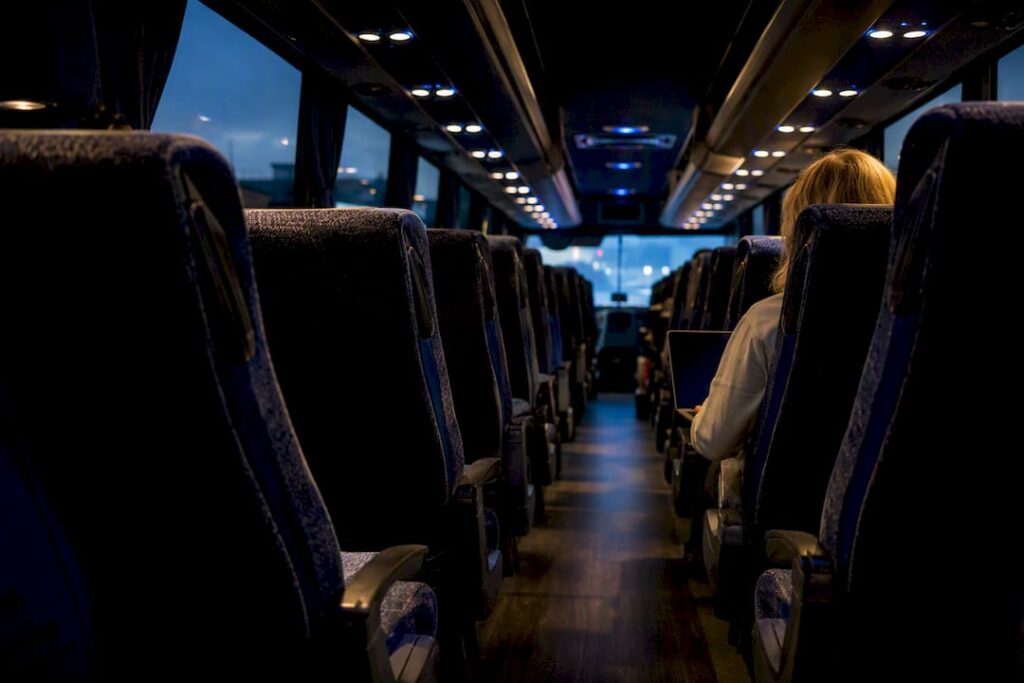
Most charter buses give you reclining seats, working climate control, overhead and undercarriage storage, and Wi‑Fi or power outlets somewhere onboard. Full-size coaches almost always include a restroom; mini coaches often don’t. Every bus carries seat belts, and accessible vehicles include lifts and wheelchair securement per federal rules. The one catch: none of this is universal. Amenities vary by coach model and by operator, so you confirm the specifics in writing before you book. Reliant Transportation, which runs charters across the Portland metro, the Willamette Valley wine region, and Hood River, builds its quotes around exactly that confirmation step.
Here’s the fast version of what’s typically on board:
- Reclining, high-back seats with adjustable legroom
- Climate control, sometimes with individual vents
- An onboard restroom on full-size coaches
- Overhead racks and undercarriage luggage bays
- Wi‑Fi, power outlets, or USB charging
- Entertainment screens, PA systems, and Bluetooth audio
- Seat belts and, on accessible vehicles, ADA-compliant lifts and securement points
Key Takeaways
Charter bus amenities depend on coach class and operator, but confirming seating, restroom access, power, connectivity, and accessibility equipment in writing prevents mismatches on the day of your trip.
| Point | Details |
|---|---|
| Coach class drives comfort | Full-size coaches typically include restrooms and more legroom than mini coaches. |
| Wi‑Fi has real limits | Onboard hotspots slow down with passenger count and weak rural signal, so download media in advance. |
| Power varies by coach | Ask specifically about 110V outlets if your group needs laptop charging, not just USB. |
| Accessibility is federally regulated | ADA-equipped coaches require functional lifts and securement points, often with advance notice up to 48 hours. |
| Get amenities in writing | A written list, photos, and a clear fee breakdown prevent surprises when the coach arrives. |
| Reliant Transportation matches coach to trip | Serving Portland, the Willamette Valley, and Hood River, it pairs amenity packages to weddings, corporate shuttles, and wine tours. |
Table of Contents
- What Comfort Features Come Standard on a Charter Bus?
- How Reliable Are Wi-Fi and Power Outlets on a Charter Bus?
- Where Does Luggage Go on a Charter Bus?
- What Safety and Accessibility Standards Apply to Charter Buses?
- What Premium Amenities Can You Add to a Charter Bus?
- How Do You Confirm Amenities Before You Book?
- How Reliant Transportation Applies These Amenities to Real Trips
- Do Charter Buses Have Laptop Charging, Not Just USB?
- What Comfort Extras Beyond Seating Should You Look For?
- Are Food and Drinks Available on a Charter Bus?
- What Does an Onboard Attendant Actually Do?
- Why Do Amenities Change the Price of a Charter Bus?
- What Actually Matters When You’re Picking a Charter Bus
- Book a Charter Bus Built Around What Your Trip Actually Needs
- Frequently Asked Questions
- Sources
What Comfort Features Come Standard on a Charter Bus?
Comfort starts with the seat, and coach class determines almost everything else. Full-size motorcoaches typically run high-back, cushioned seats with recline, individual armrests, and enough pitch (the space between rows) for adults to sit without their knees against the seatback ahead. Mini coaches and shuttle buses trade some of that legroom for a smaller footprint, which matters if your trip runs longer than an hour or two.
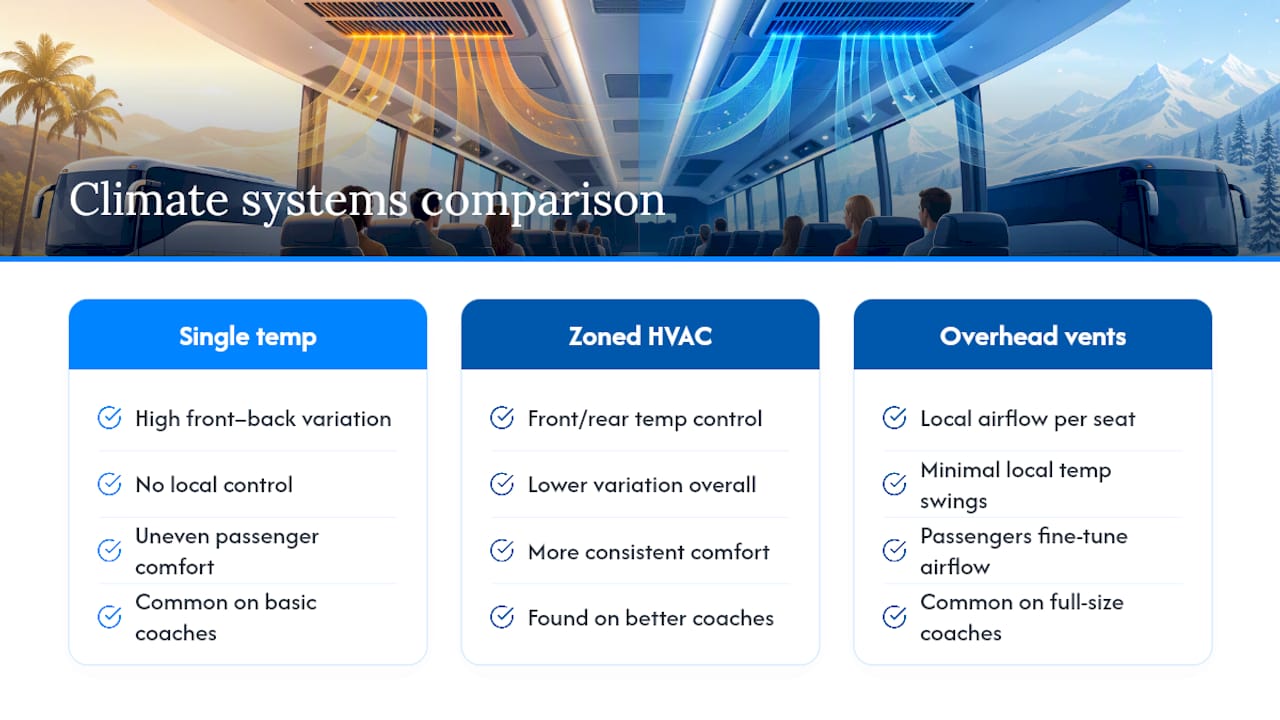
Cupholders and footrests show up on most full-size coaches as standard, not premium, features. Climate control is where coaches genuinely differ: some systems blow one temperature through the whole cabin, while better-equipped coaches offer zoned HVAC or individual overhead vents so passengers near the front aren’t roasting while the back freezes. On a summer wine tour through the Willamette Valley, that zoned airflow is the difference between a pleasant ride and forty grumpy passengers.
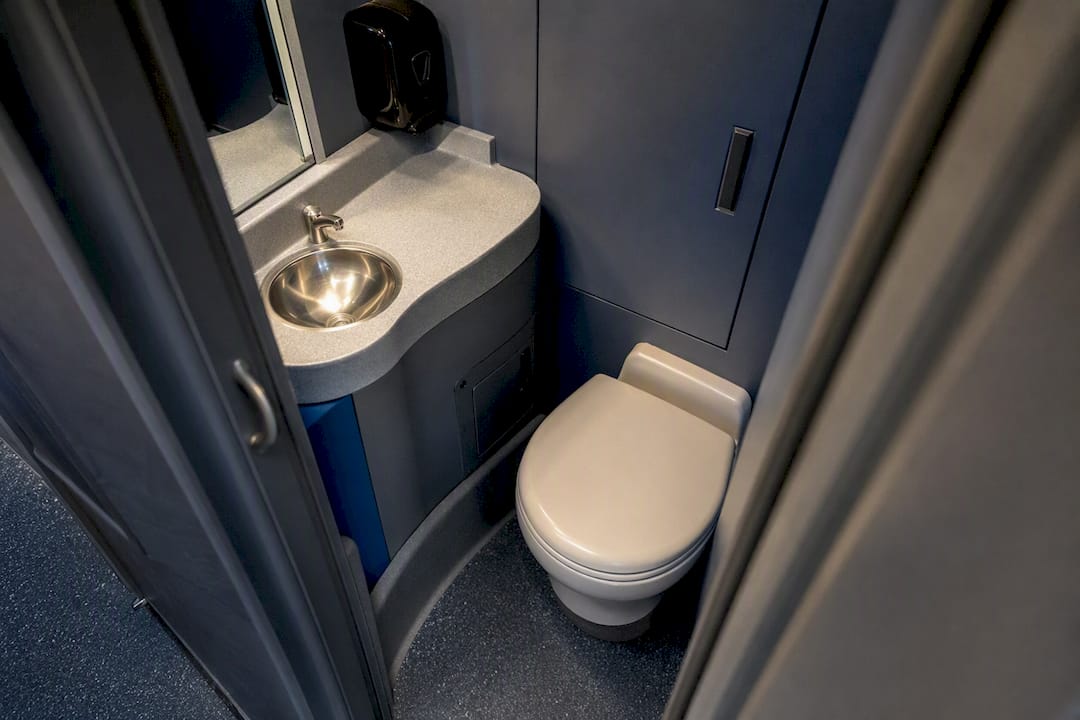
Restrooms follow a predictable pattern. Full-size coaches almost always include an onboard restroom, typically a compact enclosed unit near the rear with a toilet and small sink. Mini coaches and sprinter-style shuttles usually don’t have one, which matters for a wedding party riding forty-five minutes between venues versus a group doing a six-hour Hood River fruit loop tour.
Pro Tip: Match coach class to trip length, not headcount. A 20-passenger mini coach might fit your group fine, but if the ride is over 90 minutes, ask specifically whether a restroom is on board before you book.
How Reliable Are Wi-Fi and Power Outlets on a Charter Bus?
Onboard Wi‑Fi usually comes from a cellular router or mobile hotspot built into the coach, not a fixed broadband line. That distinction matters because hotspot performance degrades as passenger count climbs and drops further in areas with weak cell coverage, which describes a fair amount of the Columbia River Gorge on the way to Hood River. If your group plans to stream video for three hours straight, download it beforehand instead.
Power access varies more than most people expect:
- Some coaches offer 110V household-style outlets at select rows
- Others provide only USB ports built into seatbacks or armrests
- A few premium coaches offer both, spaced throughout the cabin
- Older or budget vehicles may offer neither
Laptop users should ask specifically about 110V outlets, since a USB port alone won’t charge a laptop at a usable rate. Operator guides commonly advise passengers to prepare for spotty connectivity on longer routes rather than count on streaming as a given.
Entertainment systems round out the connectivity picture: dropdown monitors, headrest screens on some upgraded coaches, and Bluetooth audio pairing for music or a wedding playlist. A PA system lets your group leader, tour guide, or wedding coordinator make announcements without shouting over engine noise, which comes in handy more often than you’d think when you’re trying to explain the next stop on a moving bus.
Where Does Luggage Go on a Charter Bus?
Overhead parcel racks handle small bags, jackets, and anything you want within reach. Keep heavier items out of them. Undercarriage bays hold the bulk of your group’s luggage and load from the outside, usually in a straightforward process where the driver or an attendant organizes bags by drop-off order.
- Overhead racks suit small bags, purses, and light layers
- Undercarriage bays hold suitcases, boxes, and bulk gear
- Locked compartments are often available for valuables
- Golf clubs, instruments, and oversized sports equipment usually fit, but tell the operator in advance
Special gear is where advance notice pays off. A wedding party hauling garment bags and gift boxes, or a group bringing wine cases back from a Willamette Valley tasting tour, should flag that when booking so the coach assigned has enough bay space.
What Safety and Accessibility Standards Apply to Charter Buses?
Every charter coach carries baseline safety equipment: seat belts at each seat, marked emergency exits, a fire extinguisher, and a first-aid kit, backed by routine maintenance schedules that keep brakes, tires, and mechanical systems in check. That’s table stakes, not a premium feature.
Accessibility is where federal law, not operator preference, sets the floor. The FMCSA requires over-the-road bus operators to provide timely accessible service, and vehicles equipped for wheelchair users must have functional lifts and designated securement locations. The Access Board’s guidelines go further, specifying boarding aid dimensions, securement system strength, lighting at boarding areas, and handrail placement. 49 CFR Part 38 codifies these into enforceable specifications, covering lifts or ramps, wheelchair securement points, and priority seating signage.
Many operators treat accessible service as a scheduling function, not an afterthought. Requesting a lift-equipped coach commonly requires up to 48 hours notice so the operator can confirm the equipment works and assign it to your trip.
If your group includes a passenger using a mobility device, ask which type of lift the coach uses (platform lift versus ramp), request the vehicle model, and get written confirmation the lift has been tested before departure. That’s a fair question to ask any operator, and a reasonable one for them to answer.
What Premium Amenities Can You Add to a Charter Bus?
Some coaches step up well beyond the basics. Leather seating, increased seat pitch, drop-down tables, footrests, and privacy curtains show up on higher-tier motorcoaches, usually at a price premium over standard cloth-seat models.
- Leather seats and extra pitch for long-distance comfort
- Table layouts and dedicated power for onboard meetings
- Mini-fridges, microwaves, and coat racks as convenience add-ons
Corporate groups running a working session en route to a conference often request the meeting-table configuration paired with reliable outlets, since a laptop-heavy agenda doesn’t work on a bus with only USB ports. Operator guides note that these upgrades typically carry an added fee rather than coming bundled into a standard quote, so ask about pricing before you assume a feature is included.
How Do You Confirm Amenities Before You Book?
Get specifics in writing before you sign anything. A phone call promise doesn’t help you on the day of the event if the coach that shows up doesn’t match what you expected.
- Ask for the coach model, year, and class assigned to your trip.
- Request a written list of included amenities, not a verbal summary.
- Confirm the Wi‑Fi type and any data or streaming limits.
- Ask directly whether the coach has a restroom.
- Find out how many power outlets exist and where they’re located.
- If you need ADA equipment, confirm the lift type and the notice period required.
- Ask about undercarriage bay dimensions if you’re hauling oversized gear.
- Get a price breakdown for any optional or premium features.
- Request photos of the actual coach type, not a stock image.
- Clarify the cancellation and change-fee policy for add-ons.
Pro Tip: Also nail down the pickup and drop-off logistics: who confirms the exact address, who handles timing changes, and where the driver’s responsibility ends and your point of contact’s begins. Miscommunication here causes more day-of headaches than any missing amenity.
How Reliant Transportation Applies These Amenities to Real Trips
Reliant Transportation runs charters across the Portland metro, the Willamette Valley wine region, and Hood River, and matches coach type to the amenities each event actually needs. A wedding shuttle usually prioritizes comfortable seating and simple, reliable logistics between venues. A corporate shuttle often calls for power outlets and a PA system for briefings en route. A winery or Gorge tour benefits from a restroom-equipped coach and generous storage for cases of wine or gear.
- See fleet options and request a quote through Reliant Transportation’s services page
- Wedding parties can review shuttle-specific guidance on why a charter bus works for weddings
Do Charter Buses Have Laptop Charging, Not Just USB?
USB ports charge phones fine but won’t reliably power a laptop, which needs a real electrical outlet. Coaches equipped for business travel or long-distance groups often include standard 110V outlets, similar to what you’d find on an airplane or in a hotel room, usually mounted at or near each seat or spaced every few rows.
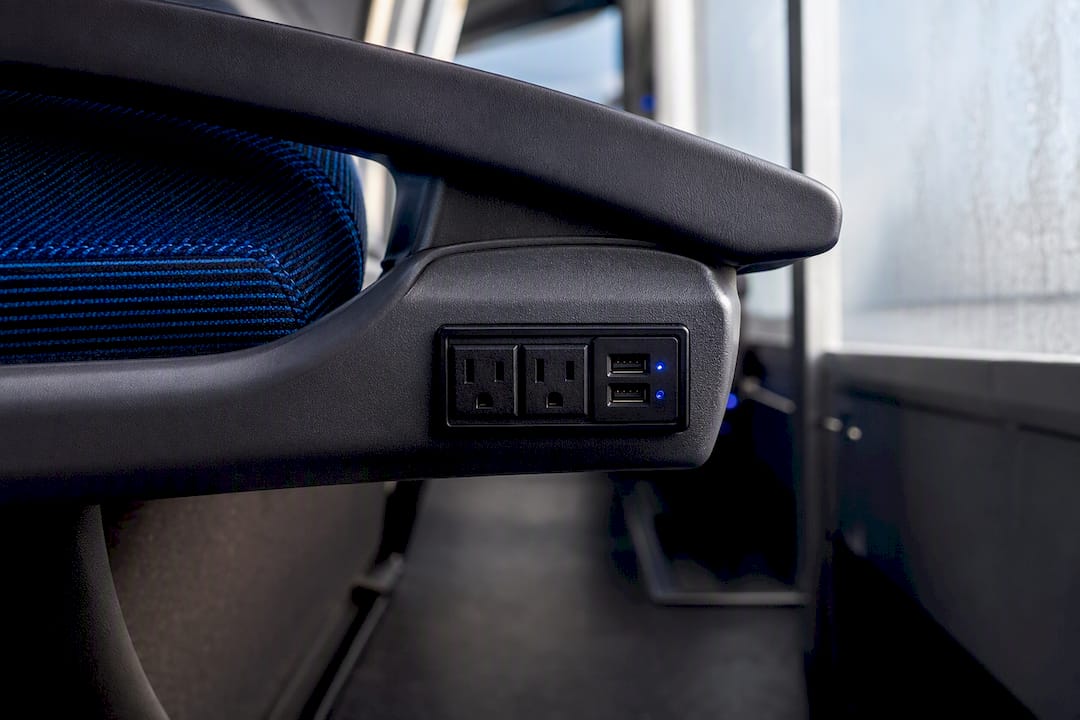
If your trip involves work on the road, laptop charging should be a specific question at booking, not an assumption. Ask how many outlets exist and where they’re located, since a coach with two outlets at the front does little good for someone seated in row twelve. Some operators reserve outlet-equipped coaches for their premium tier, while others build them into standard full-size motorcoaches as a baseline feature.
Power strips and portable battery packs are worth packing regardless. Even a coach with outlets at every row can run into an issue if multiple passengers are drawing power simultaneously on an older electrical system, and a backup battery avoids the scramble of a dead laptop right before a client call.
Corporate groups heading to a conference in the Portland metro area, or a business retreat out toward the Gorge, should treat this as a non-negotiable line item in the request for quote. A wedding party rarely needs laptop power, but a company shuttle full of employees expecting to answer emails during the ride absolutely does. Naming the use case up front helps the operator assign the right coach instead of guessing.
What Comfort Extras Beyond Seating Should You Look For?
Adjustable lighting and window shades don’t headline anyone’s amenity list, but they shape how a trip actually feels. Overhead reading lights let passengers work or read without flooding the whole cabin in glare, and dimmable cabin lighting matters on evening trips, like a wedding shuttle running after dark or a winery tour heading home at dusk.
Window shades control sun glare and heat, which becomes noticeably more relevant on a west-facing route through the Willamette Valley in the middle of a summer afternoon. Some coaches have manual pull-down shades at each window; others rely on tinted glass alone, which helps less than passengers expect once the sun is low and direct.
Noise matters too, even though it rarely appears on an amenities checklist. Newer coaches with better insulation and updated suspension systems ride noticeably quieter than older models, which affects whether passengers can hold a conversation, sleep, or hear PA announcements clearly.
Small comforts add up on longer routes. A footrest that folds down, a seatback pocket that actually holds a water bottle, or a coat hook near each row sounds minor until you’re three hours into a trip and grateful for it. None of these features get advertised heavily, so if they matter to your group, ask the operator directly rather than assuming a coach has them because it looks nice in a brochure photo.
Are Food and Drinks Available on a Charter Bus?
Charter buses generally don’t come with food service built in, unlike a first-class airline seat or a train’s dining car. What you get instead is the space and setup to bring your own, plus occasional operator-arranged options for specific trip types.
Cupholders at each seat are standard on most full-size coaches, so passengers can bring their own beverages. Some operators allow coolers or catering boxes to be loaded in the storage bay, especially for wine tours or wedding shuttles where a group might want champagne on board for a toast. Others restrict alcohol consumption on the vehicle itself due to open-container laws that vary by jurisdiction, so ask specifically about your local rules rather than assuming.
A mini-fridge counts as a premium add-on rather than a standard feature, and it usually shows up on higher-tier coaches or by special request. Microwave availability is rarer still and mostly reserved for extended multi-day charters where a hot meal genuinely matters.
For a Willamette Valley wine tour, groups often coordinate directly with wineries for tastings and food rather than expecting the bus itself to provide catering. For a wedding shuttle, a small cooler with water and light snacks covers most needs without requiring anything from the coach beyond storage space. If your event calls for something more elaborate, like a boxed lunch service for a multi-stop corporate day, raise it during booking so the operator can confirm what their specific coach and driver arrangement can accommodate.
What Does an Onboard Attendant Actually Do?
Not every charter trip includes a dedicated attendant, but larger groups and premium bookings often do. The driver handles the vehicle and the route, but an attendant, when present, handles the passenger experience: helping with luggage loading, managing the PA system during announcements, assisting passengers with mobility needs, and keeping the cabin organized during multi-stop itineraries.
For a wedding shuttle running multiple pickup locations, an attendant can coordinate timing at each stop so the driver stays focused on driving. For a corporate shuttle with a packed agenda, an attendant might manage the microphone during a briefing so the speaker doesn’t have to fumble with equipment mid-presentation. For accessible trips, having a second staff member on board to assist with securement equipment adds a layer of reliability beyond what the driver alone can manage while also watching the road.
Whether an attendant is included often depends on group size and trip complexity rather than coach class alone. A small mini-coach charter for a short transfer typically runs with just a driver. A full-size coach handling a multi-stop wine tour or a large wedding party crossing several venues is more likely to include one. Ask directly whether your quote includes attendant staffing, since it affects both the price and how smoothly a complicated itinerary runs.
Why Do Amenities Change the Price of a Charter Bus?
Amenity level is one of the biggest levers behind charter bus pricing, right alongside trip distance and duration. A basic mini-coach with cloth seats and no restroom costs less to operate and rent than a full-size motorcoach with leather seating, Wi‑Fi, and a restroom, and that price gap shows up directly in your quote.
Premium features carry their own line items more often than people expect. Operators commonly charge extra for upgrades like onboard meeting setups, mini-fridges, or specialty AV equipment rather than bundling them into a flat base rate. ADA-equipped coaches may also carry different pricing depending on availability, since fewer vehicles in a fleet are outfitted with lifts and securement systems compared to standard coaches.
Trip type shapes which amenities are worth paying for. A short wedding shuttle between a ceremony and reception venue rarely needs Wi‑Fi or a restroom, so paying extra for a premium coach with those features may not be worth it. A six-hour Hood River tour is a different calculation entirely, where restroom access and comfortable seating stop being a luxury and start being a practical necessity.
The smartest way to control cost is matching the coach to the actual trip, not defaulting to the most feature-loaded option available. Ask your operator to walk through which amenities matter for your specific itinerary before assuming a bigger price tag means a better fit.
What Actually Matters When You’re Picking a Charter Bus
Most amenity checklists treat every feature as equally important, and that’s the wrong way to think about it. A restroom matters enormously on a six-hour Gorge tour and barely at all on a 30-minute wedding shuttle. Wi‑Fi sounds essential until you realize it degrades exactly when you need it most, on rural stretches with weak cell coverage, which describes a good chunk of the Willamette Valley.
The conventional advice tells you to ask for “amenities” as a category. That’s too vague to be useful. The better approach is matching specific features to your specific trip: distance, duration, group needs, and whether anyone requires accessible equipment. A group that skips this step often ends up paying for premium features they never use, or worse, discovering mid-trip that a feature they assumed was standard simply isn’t on their assigned coach.
The single biggest failure point isn’t a missing amenity. It’s a verbal promise that never made it into the contract. Get the list in writing, and confirm accessibility equipment early enough that scheduling isn’t a scramble.
Book a Charter Bus Built Around What Your Trip Actually Needs
Reliant Transportation puts together charter service for the Portland metro, the Willamette Valley wine region, and Hood River with the amenity questions from this checklist already answered before you have to ask them. Instead of guessing whether a quoted coach has a restroom, working outlets, or ADA equipment, you get that confirmed upfront, matched to your specific event.
Wedding parties can see how coach selection affects the day’s timeline on the wedding shuttle page, and groups planning a wine country trip can check route ideas on The Beauty of Oregon. If your event calls for something more specific, a corporate shuttle, a tour, or a large group outing, request a quote through Reliant Transportation’s services page and get the exact coach details, amenity list, and pricing in writing before you commit.
Frequently Asked Questions
Do all charter buses have restrooms?
No. Full-size motorcoaches typically include one, but mini coaches and shuttle buses often don’t. Confirm this directly when booking, especially for trips longer than an hour.
Is Wi‑Fi reliable on a charter bus?
It varies. Onboard Wi‑Fi runs through a cellular hotspot, and performance drops with more connected passengers or weak signal areas. Download movies or music ahead of long rural routes rather than counting on streaming.
Can I request a coach with wheelchair accessibility?
Yes. Federal rules require accessible over-the-road buses to have functional lifts and wheelchair securement points. Many operators ask for up to 48 hours notice to schedule the right equipment, so request it early.
Do charter buses have outlets for laptops, or just USB?
Some coaches include standard 110V outlets in addition to USB ports, but not all do. If laptop charging matters for your trip, ask specifically about outlet type and location before booking.
What amenities cost extra on a charter bus?
Premium seating, onboard meeting setups, mini-fridges, and specialty AV equipment commonly carry added fees rather than coming included in a base quote. Ask for a full price breakdown before signing.
Sources
- Accessibility for Buses: Americans with Disabilities Act (ADA) Regulations and Rights | FMCSA
- Text of the Guidelines | U.S. Access Board
- PART 38—AMERICANS WITH DISABILITIES ACT (ADA) ACCESSIBILITY SPECIFICATIONS FOR TRANSPORTATION VEHICLES
- Charter Bus Inside: Comfort, Amenities, and Safety Features – Prime Charter Bus