Most game day shuttles start running two to four hours before kickoff, and continue up to an hour after the final whistle, and the overwhelming majority are free or cost just a few dollars. The single best move is to check the venue or transit authority’s official shuttle page the morning of the event, then show up during the first wave of departures. Waiting until traffic peaks means longer lines and slower loading.
TL;DR:
- Check the start times of shuttles on the morning of the event, as schedules vary by sport and can shift due to weather or road conditions.
- Use continuous loops for greater flexibility or choose scheduled waves if you prefer to lock in departures, but always verify timing details beforehand.
- Select pickup points based on convenience and proximity, with stadium staging zones usually offering the shortest walk and fastest access to gates.
- Confirm accessibility needs and pre-register for ADA shuttles to avoid delays, arriving early to ensure proper boarding procedures.
- Book group or private shuttles well in advance, ideally 60 to 90 days before the game, to guarantee availability and streamline boarding.
Table of Contents
- How Do Game Day Shuttle Schedules Actually Work?
- Where Do Shuttles Pick Up and Drop Off?
- What Do Game Day Shuttles Cost?
- How Do You Confirm Accessible or ADA Shuttle Service?
- How Do You Avoid Long Waits Boarding a Shuttle?
- Organizer Checklist: Planning Group Shuttle Service
- What Apps and Tools Track Shuttles in Real Time?
- Where Should You Park If You’re Using a Shuttle?
- What Security Rules Apply on Game Day Shuttles?
- Why Reliant Transportation Sees Game Day Differently
- Book Your Game Day Charter With Reliant Transportation
- Sources
How Do Game Day Shuttle Schedules Actually Work?
Shuttle operators generally run one of two models: continuous loops or scheduled waves. A continuous loop keeps buses cycling nonstop between the lot and the stadium starting at a fixed pre-game window, so you never wait for a specific departure time, just the next bus in the cycle. Scheduled departures work in waves, often tied to ticket gates opening or parking lot closures, which means missing one wave can mean a real wait for the next.
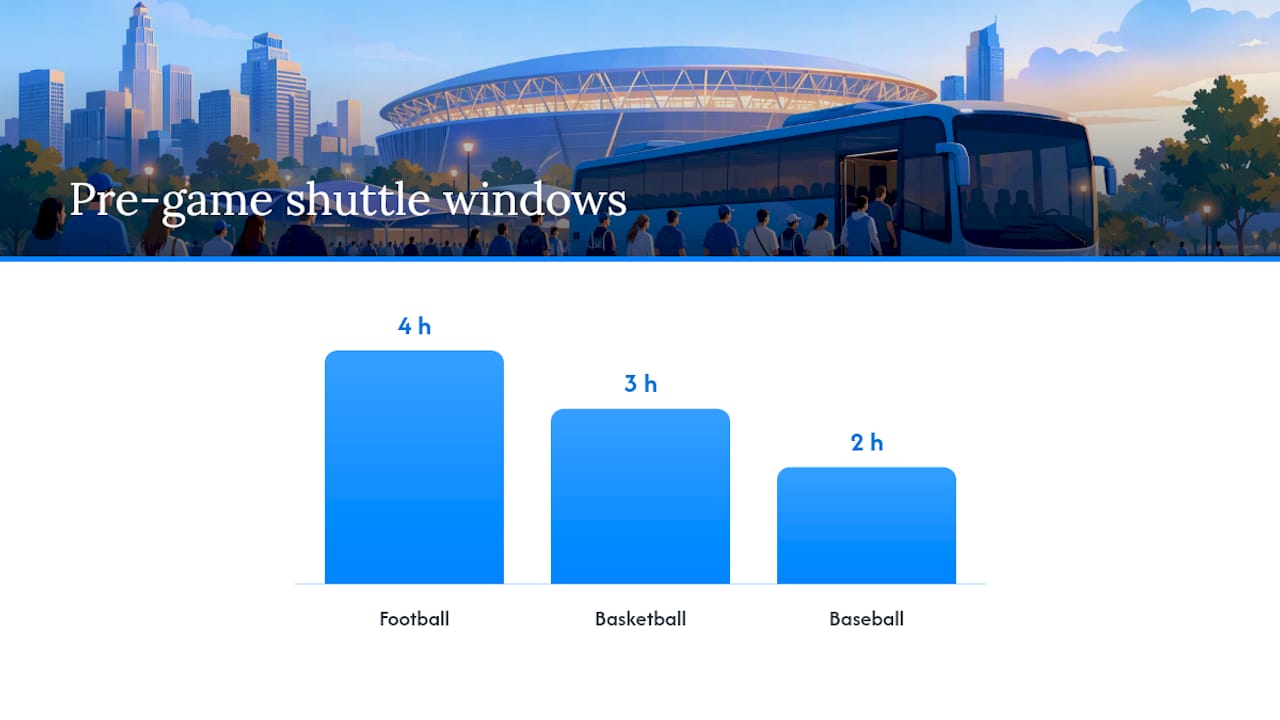
Start times vary by sport and by venue. University and city shuttle pages commonly list specific pre-game windows, such as four hours before kickoff for football, three hours for basketball, and two hours for baseball. Football games draw earlier crowds because of tailgating culture and larger overall attendance, so operators front-load service.
Frequency tightens as game time approaches, then spreads out again during the middle innings or quarters, before spiking hard in the final 30 minutes before the event ends. Build a buffer into your plan and check the operator’s website, transit agency alerts, or social media feed the morning of the game, since weather and road closures shift published times.
- Continuous loop service means less schedule-watching, more flexibility
- Wave-based systems require you to lock in a specific departure
- Frequency drops mid-event, then spikes hard right before and after
- Always verify start times the morning of, not the week before
Where Do Shuttles Pick Up and Drop Off?
Pickup points generally fall into four categories: park-and-ride lots on the edge of town, university or campus shuttle stops, downtown transit hubs, and dedicated staging zones built specifically for stadium events. Each has different walk times and different rules about who can ride.
Route maps published by venues and transit agencies typically use separate markers for staging areas, active drop-off zones, and spectator entrances, and confusing the three is the most common rider mistake. A staging zone is where buses queue before their run, not where you board. Some campus services, like Northwestern University’s student shuttle, restrict ridership to ID holders, so check eligibility rules before you plan around a specific stop.
- Park-and-ride lots usually offer the most parking but the longest ride
- Downtown hubs work well if you’re already staying near the city core
- Dedicated stadium staging zones often have the shortest walk to gates
- Municipal transit programs, like Boise’s Game Day Bus, publish specific stop lists and frequency for exactly this reason.
If you’re driving a group and coordinating a private pickup, confirm curbside access directly with venue operations. Some stadiums flatly restrict where larger vehicles can stop without prior sign off, and getting that confirmation in writing saves you from a last-minute reroute to a distant lot.
What Do Game Day Shuttles Cost?
Fare structures vary with some university and city-run shuttles being free, low-cost municipal or event shuttles charging a low fare, and private or ticketed round-trip shuttles charging higher amounts depending on distance and demand.
Fare pages for major events, like the ones Alabama publishes for home games, show this range clearly: cheap local hops next to pricier reserved round-trip options. Some operators require pre-purchase through a QR-coded pass or printed ticket, partly to manage capacity and partly to guarantee your seat on a specific wave rather than a first-come line.
- Free shuttles: typically university, city, or transit-agency funded
- Low-cost shuttles: usually $1 to $5 per trip, cash or card at boarding
- Paid round-trip shuttles: commonly $10 to $50, often prepaid online
- Pre-purchased passes can bump you into priority boarding lines
Always confirm current fares on the official shuttle page before you leave home. Prices and pass requirements change season to season, and showing up expecting a free ride onto a paid service is a bad way to start game day.
How Do You Confirm Accessible or ADA Shuttle Service?
Look specifically for the words “ADA” or “accessible” on the operator’s shuttle page or route map, since not every shuttle in a fleet runs a wheelchair-accessible vehicle. Some venues, including Berkeley’s football shuttle program, operate dedicated ADA golf carts or vans with their own staging area separate from general boarding.
Capacity on accessible vehicles is often limited, so advance registration matters more here than for general shuttle service. Call the venue’s ADA contact ahead of the game, have your mobility needs ready to describe, and arrive early enough to use the designated ADA staging point rather than the general line.
- Confirm accessible vehicle availability by phone, not just by browsing the webpage
- Ask whether advance registration is required for your specific event
- Arrive at the ADA staging area, not the general queue
- Keep documentation or a contact number handy in case staff need to verify
How Do You Avoid Long Waits Boarding a Shuttle?
Shuttle bus logistics guides describe this as planning around the full trip cycle, not just drive time, because boarding, staging, security checks, and unloading can triple the time you’d expect from mileage alone.
- Check for staggered boarding waves or assigned pass windows and pick the earliest one your schedule allows.
- Bring a printed or mobile pass and photo ID if the operator requires either.
- Expect a security check at boarding, similar to stadium gate screening.
- Watch signage and QR-linked update pages for last-minute changes to pickup points.
Pro Tip: If you’re traveling with more than four people, split into the earliest available wave rather than waiting to board together. Staggered boarding moves faster than a single large group trying to load at once, and you’ll likely still end up seated near each other.
Organizer Checklist: Planning Group Shuttle Service
Booking a shuttle for a group, whether it’s a tailgate crew, a corporate suite, or a wedding party detouring through a game, comes down to locking in specifics early. Event-planning guidance generally recommends starting transportation planning 60 to 90 days out for larger events, since vehicle availability tightens fast during football season.
- Confirm your date, exact pickup and drop-off addresses, and expected headcount.
- Match vehicle type to your group using a charter bus size guide rather than guessing at capacity.
- Verify the operator’s insurance, maintenance records, and operating authority before you sign anything.
- Build a staging map, assign one point of contact, and prep rider signage so nobody gets lost between the lot and the gate.
- Have a contingency vehicle or backup plan in case of a mechanical delay.
Capacity planning trips up more organizers than anything else on this list. Estimate usable headcount conservatively, pad your cycle times for loading and unloading, and add a vehicle if your buffer keeps shrinking as departure gets closer. A seating chart template makes assigning riders far faster on game day itself.
What Apps and Tools Track Shuttles in Real Time?
Most large-scale shuttle programs now pair a published schedule with some form of live tracking, and checking it beats standing at a stop guessing. Transit agencies running game-day supplemental service often push updates through their existing rider apps, the same ones used for daily bus routes, rather than building a separate tool just for event days.
University and stadium shuttle pages frequently link out to a live map or a text alert signup specifically for game days, since static PDFs can’t reflect a bus running behind schedule. If the operator offers a QR code on signage or your ticket confirmation, scan it before you leave home. It often routes to the same live tracking page rather than a generic info screen.
Social media remains one of the most reliable real-time channels, particularly for weather delays or sudden route changes. Transit agencies and university parking departments typically post service alerts faster on social platforms than they update their own webpages, since it takes less staff time to type a quick update than to revise a hosted PDF.
If you’re organizing a private group shuttle rather than relying on public service, ask your operator directly what tracking they offer. Some charter services provide a driver contact number or a shared location link for the day, which matters more for group coordination than any public app, since you’re not trying to find a stop. You’re trying to find your specific bus.
Where Should You Park If You’re Using a Shuttle?
Parking and shuttle planning go hand in hand, and the biggest mistake riders make is picking a lot based on price alone without checking its distance from the actual pickup point. A cheap lot a mile from the nearest shuttle stop can cost you more time than a slightly pricier lot with a stop right at the entrance.
Park-and-ride lots built specifically for game day usually place their shuttle stop near the lot entrance by design, since that’s the entire point of the arrangement. Downtown parking garages near transit hubs work well if you’re already combining the game with dinner or other plans, letting you walk to a hub stop rather than drive closer to the stadium.
If you’re driving a larger group in your own vehicle or a rented charter, confirm with venue operations exactly where oversized vehicles are permitted to park or stage. Some stadiums restrict motorcoach and bus parking to specific lots separate from standard car parking, and showing up without prior coordination can mean getting turned away or redirected to a lot much farther from the gates than expected.
Check whether your chosen lot fills early. Popular park-and-ride locations for major games often reach capacity an hour or more before kickoff, which pushes late arrivals to secondary lots with longer shuttle rides. Arriving during the first wave of the schedule doesn’t just get you a better shuttle boarding position. It also gets you the closer parking.
What Security Rules Apply on Game Day Shuttles?
Shuttle operators generally mirror the security standards of the stadium itself, which means bags, coolers, and certain personal items face the same restrictions on the bus that they would at the gate. Most venues publish a prohibited items list separately from the shuttle page, so it’s worth checking both before you pack for the day.
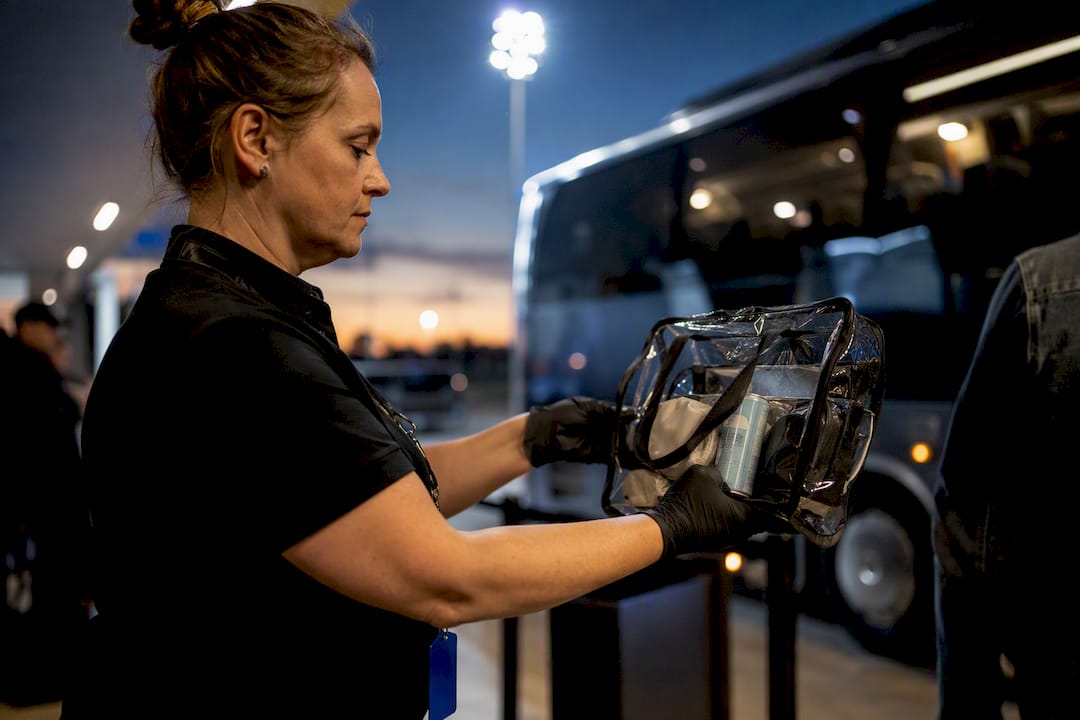
Common restrictions include large bags, glass containers, outside alcohol, and weapons of any kind, with many stadiums also limiting bag size to a clear bag policy that shuttle riders should follow before boarding rather than discovering at the gate. Some operators run a visual check or bag search directly at the shuttle stop, which adds a few minutes to boarding but moves faster than doing it later at the stadium entrance in a bigger crowd.
Drivers and staff have the authority to deny boarding for safety violations, including overcrowding a vehicle past its rated capacity or refusing to follow loading instructions. This isn’t just bureaucracy. A shuttle running over capacity is a real safety issue on sharp turns or sudden stops, and operators enforce these limits strictly for that reason.
Keep valuables on your person rather than in checked bags if the shuttle uses an under-bus storage compartment, since access to that storage during the ride is limited. And if you’re organizing a private charter for your group, ask the operator directly what their security and bag policy looks like. It’s usually more relaxed than a public stadium shuttle, but every operator sets its own standard.
Why Reliant Transportation Sees Game Day Differently
Public shuttles work fine until your group gets split across waves or stuck behind a bag search with kickoff twenty minutes out. After a decade running charter service across the Portland metro, the Willamette Valley wine region, and the Hood River area, Reliant Transportation has learned that the real bottleneck on game day is rarely the drive. It’s the loading.
Staggered boarding and clear signage cut wait times more than any schedule tweak, which is why every charter run gets a staging plan before the vehicle ever leaves the lot. A group that boards together, stays together, and skips the public queue entirely tends to have a better day regardless of the score.
— Dusty
Book Your Game Day Charter With Reliant Transportation
Reliant Transportation is the alternative to guessing at a public shuttle schedule. One reserved vehicle, your group’s exact pickup address, and no standing in a wave line hoping there’s room left. Groups across the Portland metro, the Willamette Valley wine region, and the Hood River area use this instead of splitting up between rideshares or fighting for parking near a stadium lot.
For large tailgate groups or corporate suites, lock in your charter 60 to 90 days ahead of the game to guarantee vehicle availability during peak season. Smaller groups have more flexibility but still benefit from booking a couple of weeks out. Every driver operates under verified insurance and current maintenance records, and Reliant’s team handles the staging and pickup logistics so your group shows up together and leaves on your schedule, not a public timetable’s. Ready to lock in a vehicle for your next game day? Get a quote and reserve your charter today.
Sources
- Gameday Shuttles – Parking and Transportation Services
- Student Game Day Shuttle: Transportation & Parking
- Shuttles
- Event Transportation Options: Your 2026 Planning Guide
- Logistics Guide for Event Shuttles – Charter a Coach