For groups of 1 to 12, book a passenger van. For 13 to 35, look at minibuses. Groups of 36 to 48 fit a mid-size coach, and 49 to 56 riders need a full-size motorcoach. Past 57, you’re either splitting into two vehicles or booking a double-decker. That’s the whole decision in one sentence, but the details determine whether your booking actually works on travel day.
- Upsize when you’re hauling ski bags, golf clubs, AV equipment, or a wheelchair user needs a securement space. Gear eats seats fast.
- Split vehicles when your pickups are spread across three hotels or a venue can’t stage a 45-foot coach at the curb.
A standard full-size coach seats 55–56 passengers, seat width runs about 17–20 inches, and a local operator like Reliant Transportation can walk you through which configuration actually fits your headcount before you sign anything.
Key Takeaways
Usable seating capacity, not the manufacturer’s maximum, determines whether a charter bus actually fits your group, luggage, and access constraints.
| Point | Details |
|---|---|
| Match headcount to vehicle class | Vans fit 1 to 12, minibuses 13 to 35, mid-size coaches 36 to 48, full-size coaches 49 to 56. |
| Restrooms cut seats | A rear lavatory typically reduces a 56-passenger coach to 54–56 usable seats. |
| Seat dimensions matter | Standard seat width runs 17–20 inches with 28–32 inches of pitch between rows. |
| Add a buffer | Build in a 5 to 10 percent headcount buffer or size up one vehicle class to avoid last-minute swaps. |
| Ask a local operator | Reliant Transportation confirms usable booking capacity and itemized pricing for groups across Portland, the Willamette Valley, and Hood River. |
Table of Contents
- What Are the Common Charter Bus Sizes for Full-Size Motorcoaches?
- Mid-Size Coaches for Groups of 32 to 48
- Minibus Sizes and Where the Breakpoints Fall
- Passenger Vans and Limo Buses for Small Groups
- Double-Decker and Specialty Buses for High Headcounts
- School Buses and Basic Shuttle Options
- What Actually Changes Your Usable Seat Count
- How to Choose the Right Charter Bus Size for Your Group
- What Reliant Transportation Tells Groups Before They Book
- If You Want Help Booking, Reliant Transportation Can Assist
- Frequently Asked Questions
- Sources
What Are the Common Charter Bus Sizes for Full-Size Motorcoaches?
Ask most charter companies what their biggest bus holds, and you’ll hear “56 passengers.” That number is the industry default because it’s the sweet spot for luggage room, resale value, and driver visibility, and the 56-passenger spec shows up across nearly every major manufacturer’s lineup. But the number on the spec sheet isn’t always the number you can actually book.
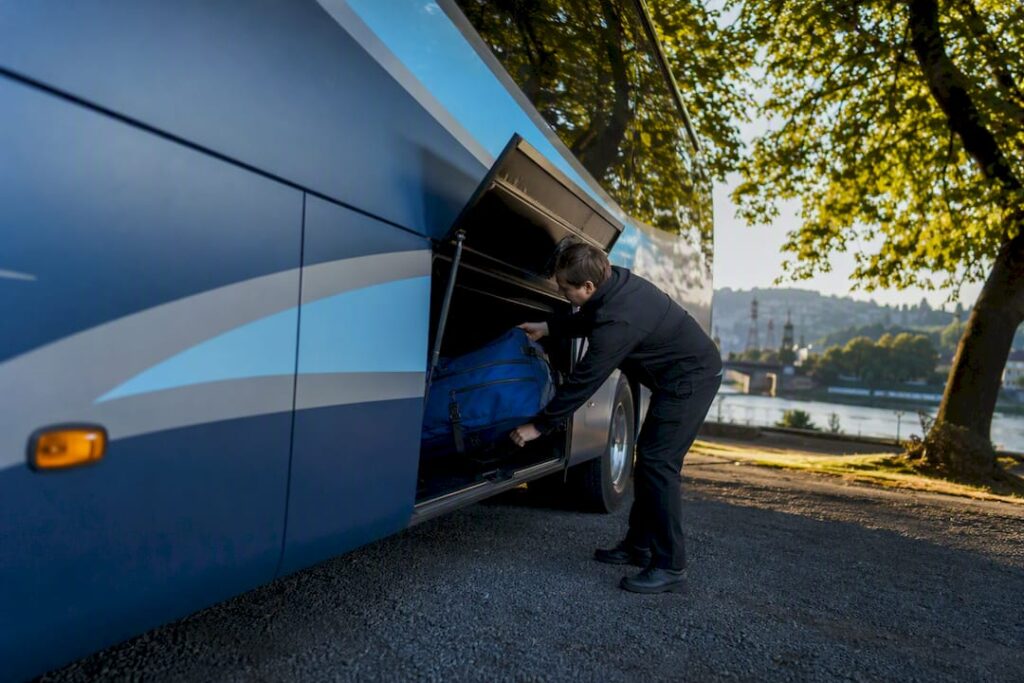
Add a rear restroom, which most full-size coaches carry for trips over two or three hours, and you lose 2 to 4 seats to the lavatory module. That means your real booking capacity is closer to 54–56, not a flat 56. Full-size coaches make the most sense for:
- Conference and convention groups with heavy luggage
- Sports teams traveling with equipment bags
- Any charter running longer than three or four hours
Pro Tip: If your headcount is right at 55 or 56, ask the operator whether that coach has a restroom before you lock in the booking. That detail alone can force you into a second vehicle.
Mid-Size Coaches for Groups of 32 to 48
A mid-size coach splits the difference between a minibus and a full 56-seater, typically seating 36 to 48 passengers. It’s the vehicle planners reach for when a group is too big for vans but doesn’t need the luggage bay of a full-size rig. You trade some underbelly storage for a tighter turning radius and a lower hourly rate, which matters if your route winds through downtown streets or a winery’s gravel driveway.
Mid-size shines in specific scenarios:
- Corporate shuttles between a hotel and a downtown office
- Regional day tours with light-to-moderate luggage
- Wedding groups of 40 guests who don’t need a 56-seat coach half empty
Minibus Sizes and Where the Breakpoints Fall
Minibus capacity typically ranges from 15 to 35 seats, and most fleets build around a handful of common breakpoints: 15, 18, 20, 25, 30, and 35. Groups up to roughly 20 to 30 passengers rarely need anything larger, especially for shorter transfers.
Picking the right minibus size comes down to three steps:
- Count your confirmed headcount, including any staff or vendors riding along.
- Estimate luggage and gear, since minibuses carry far less than a coach.
- Check pickup access, since smaller streets and private venues often can’t accommodate anything bigger.
The tradeoffs are straightforward: minibuses cost less and maneuver into tight spaces, but storage is limited and comfort drops on longer rides. A minibus beats a passenger van once you cross about 15 riders, and it beats a full-size coach whenever your group doesn’t justify the extra length or the restroom.
Passenger Vans and Limo Buses for Small Groups
Passenger vans seat 8 to 15 people and work best when speed and access matter more than space. A van slips into a hotel loading zone a 45-foot coach never could, and boarding takes seconds instead of minutes.
- Maneuverability: vans win in tight urban settings or narrow venue driveways.
- Boarding speed: fewer steps, lower floor, faster loading.
- Storage: limited trunk space, so gear-heavy trips need a minibus instead.
- Cost: generally the lowest hourly rate in the fleet.
Limo buses fill the executive niche, offering premium seating and amenities for VIP airport runs or small wedding parties who want more than a standard van.
Double-Decker and Specialty Buses for High Headcounts
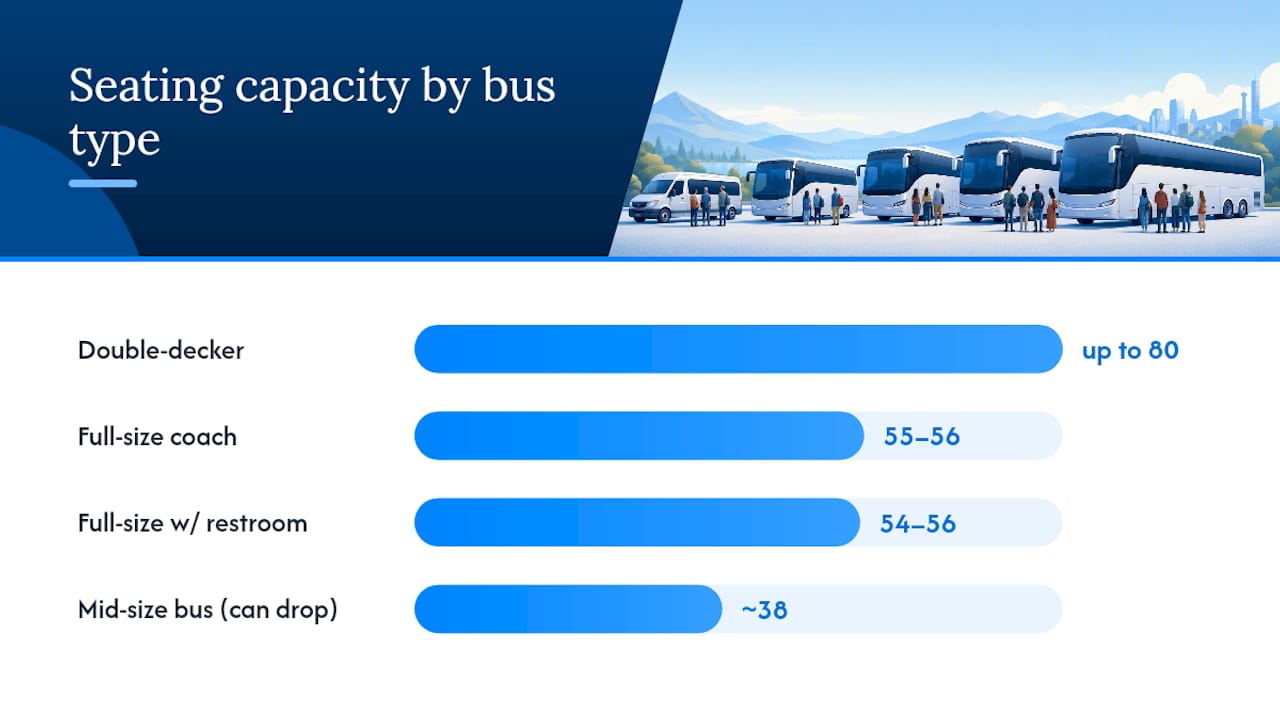
When a single group tops 56 passengers and you’d rather not split vehicles, a double-decker can hold a high number of passengers, typically around eighty according to common coach capacity data from Wikipedia’s overview of coach specifications). That’s a real option for large conventions or one-off events where keeping everyone together outweighs the added height and slower loading.
- Trolleys and party buses trade luggage space and comfort for atmosphere and photo appeal.
- Novelty vehicles fit short city tours well but rarely make sense for a five-hour charter with luggage.
School Buses and Basic Shuttle Options
A traditional yellow school bus or a cutaway shuttle can move a lot of people cheaply, but comfort, legroom, and luggage space are minimal, and there’s no restroom or reclining seat in sight. These vehicles fall into a different category from a passenger coach, according to general bus classification standards.
- Good fit: short campus shuttles, budget-limited field trips, quick point-to-point moves.
- Poor fit: weddings, corporate events, or any trip longer than an hour where guests expect comfort.
What Actually Changes Your Usable Seat Count
The number printed on a manufacturer’s spec sheet and the number you can actually book are rarely identical. Several factors chip away at that top-line figure:
- Restroom modules typically cut 2 to 4 seats from a 56-passenger layout.
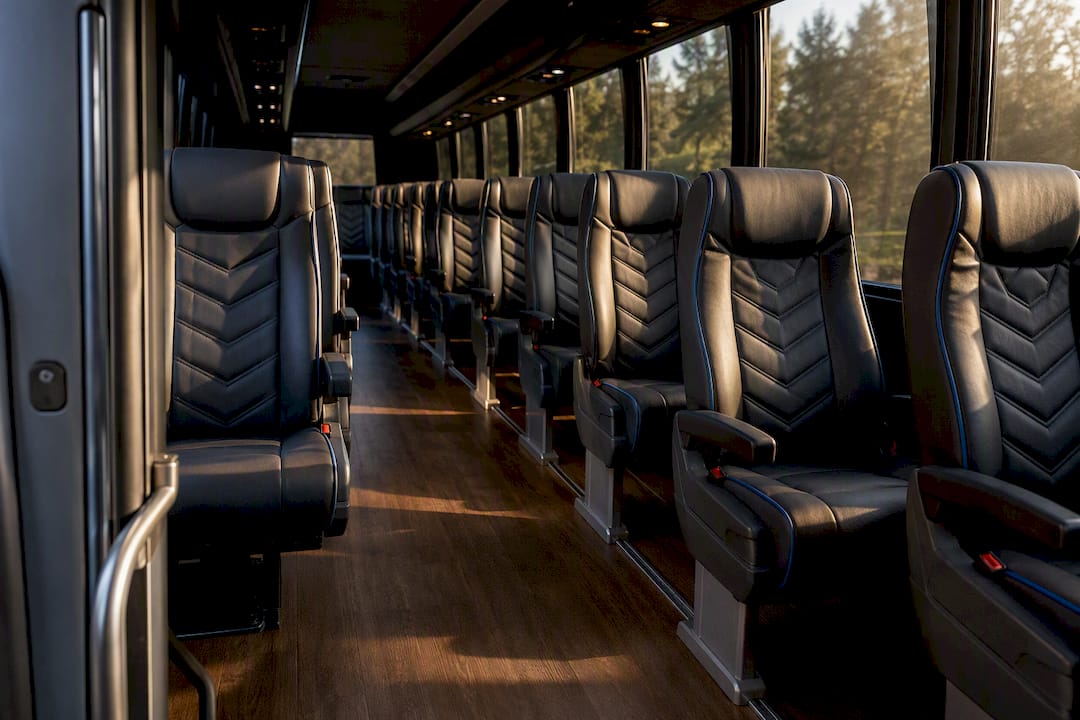
- Seat width runs roughly 17 to 20 inches, and seat pitch (the space between rows) sits around 28 to 32 inches on most coaches.
- Undercarriage luggage volume varies by model and shrinks further if a wheelchair lift or ramp takes up bay space.
- ADA securement areas for wheelchair users often remove one or two standard seats to create the space.
Here’s a case that surprises a lot of planners: a coach spec’d for 56 seats, once fitted with a rear restroom and a wheelchair lift, can book out at 52 or 53 usable seats. That’s nearly a full row lost to equipment most riders never notice. Ask any operator for the usable booking capacity and luggage bay cubic footage, not just the manufacturer’s maximum, before you commit a headcount to a vehicle.
How to Choose the Right Charter Bus Size for Your Group
Run through this checklist before you request a quote:
- Confirm your final headcount, including staff, chaperones, or vendors who need a seat.
- List every piece of luggage or equipment riding with the group, not just carry-on bags.
- Map your route and duration so you know whether a restroom is a must-have.
- Check pickup and drop-off access at every stop for width, curb space, and low-hanging obstacles.
- Set your comfort bar based on trip length; a 45-minute transfer tolerates more crowding than a four-hour ride.
When you talk to an operator, ask directly about usable booking capacity, whether the coach has a restroom, luggage bay dimensions, deadhead charges, hourly pricing structure, and ADA capability. Providers who evaluate usable capacity rather than manufacturer maximums tend to avoid the last-minute scramble of swapping vehicles the week of the event. As a rule of thumb, add a 5 to 10 percent buffer to your headcount, or size up one vehicle class, rather than booking to the exact seat max.
What Reliant Transportation Tells Groups Before They Book
Local knowledge changes the math. A vehicle that fits comfortably on a Portland downtown street might not fit down a gravel lane at a Willamette Valley winery, and that’s the kind of detail that shapes which bus Reliant Transportation recommends for the same headcount.
- Confirming usable capacity against your actual luggage and staff count, not just the seat chart.
- Handling last-minute headcount changes without blowing up your quote.
- Itemizing hourly, mileage, and any deadhead charges separately so you see the real cost.
Pro Tip: Give your operator the full pickup list up front. Grouping stops in the right order cuts deadhead miles and speeds up boarding at multi-stop weddings and corporate events across Portland, the Willamette Valley wine area, and Hood River.
A planner’s take on sizing decisions
Usable capacity matters more than the number printed on a spec sheet. In Portland-area work, curbside rules and staging limits at wineries and venues often decide the vehicle before headcount ever does.
If You Want Help Booking, Reliant Transportation Can Assist
Working through seat pitch, restroom modules, and luggage bay math on your own is a lot to sort out before an event date locks in. Reliant Transportation handles that sizing conversation directly, matching your headcount, gear, and pickup locations to the right vehicle instead of leaving you to guess between a mid-size coach and a full-size motorcoach.
If your event falls anywhere in the Portland metro area, the Willamette Valley wine region, or Hood River, request an itemized quote that breaks down hourly rates, mileage, and any deadhead charges before you commit. Reliant Transportation’s team can also walk you through fleet options for wedding transportation or a Willamette Valley wine tour, and confirm usable booking capacity on the spot. Reach out through the Reliant Transportation site to get a quote started for your group.
Frequently Asked Questions
What is the largest charter bus capacity available?
A standard double-decker can hold up to roughly 80 passengers, making it the highest-capacity option most operators offer without splitting a group across two vehicles.
How many seats are on an average coach bus?
Most full-size coaches seat 55–56 passengers, though that number typically drops to 54–56 once a rear restroom is installed.
What are the standard seat dimensions on a charter bus?
Seat width generally runs 17 to 20 inches, with seat pitch, the distance between rows, falling between 28 and 32 inches on most coaches.
How many seats does a 38-passenger bus actually have available?
A 38-passenger bus falls in the mid-size range, and its usable count can drop slightly if it includes a restroom or extra luggage racks, so confirm the exact configuration with your operator.
What’s the difference between minibus and passenger van capacity?
Passenger vans typically seat 8 to 15, while minibuses run from 15 up to about 35, making minibuses the better fit once your group crosses 15 riders or needs more luggage room.
Sources
When in doubt, always ask your operator for a spec sheet.