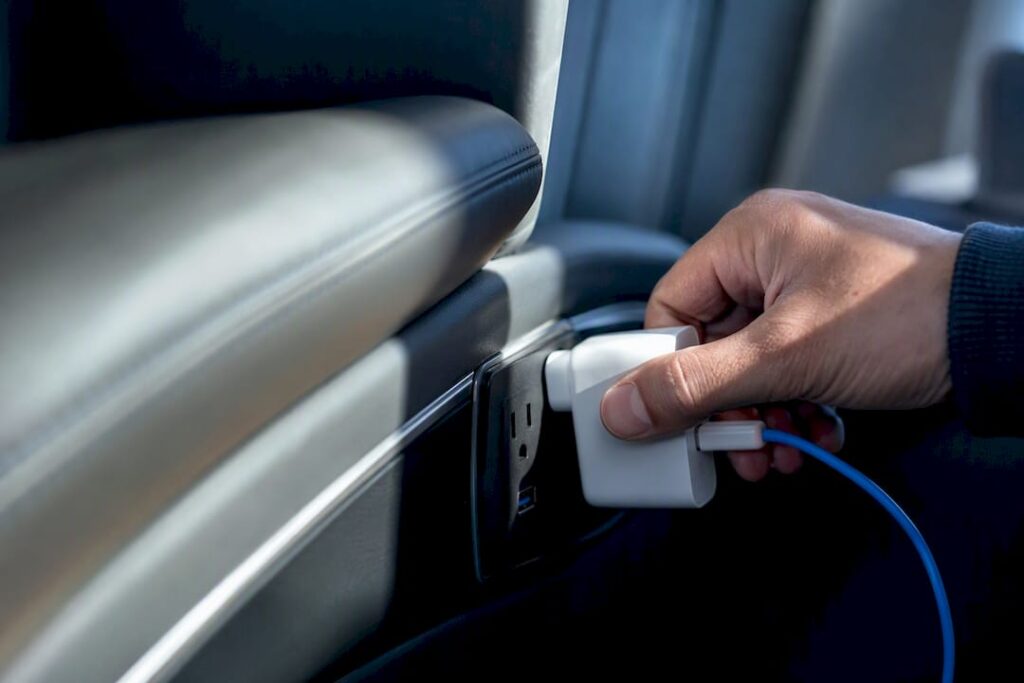
Yes, most modern motorcoaches include passenger power outlets, usually a mix of 110V AC and USB ports. Older shuttles and mini buses are less consistent, so don’t assume. Pack your charging cables and a power bank just in case, and confirm with your operator before you lock in travel plans.
TL;DR:
- Most new motorcoaches come equipped with both 110V AC and USB charging ports at each seat, but older buses are less likely to have them.
- Outlets are typically located under the seat in front, in seatback panels, or in overhead parcel racks, so check beforehand to ensure availability.
- USB-C ports with Power Delivery are faster and more reliable for charging modern devices, while 12V outlets are generally reserved for onboard systems.
- Confirm outlet presence and type in writing from the operator before booking, especially for trips relying on device connectivity or prolonged use.
- Preparing with a power bank, short cables, and checking with crew about shared outlets can help avoid dead devices during travel.
Table of Contents
- What to Expect: Outlet Availability and Locations on a Charter Bus
- Types of Outlets and Realistic Charging Expectations
- Why Outlet Availability Varies by Coach and Fleet
- How to Confirm Outlet Availability Before You Travel
- Practical Charging Tips for Passengers
- How Reliant Transportation Handles Charging Amenities
- What Really Matters When You’re Planning Around Charging
- Ask Us to Confirm Your Bus’s Charging Setup
- Sources
- FAQ
What to Expect: Outlet Availability and Locations on a Charter Bus
Newer motorcoaches, along with coaches that have gone through a recent interior refresh, typically come equipped with passenger charging built right into the seating area. Smaller shuttle vans and older minibuses are a different story. Many were built before charging was standard, and retrofitting them isn’t always worth the cost to the operator, so you’ll want to check before you assume anything.
When outlets are present, you’ll usually find them in one of these spots:
- Mounted under the seat in front of you, within easy reach while seated
- Built into the seatback or armrest, often paired with a USB port
- Housed in the parcel rack overhead, sometimes shared between two seats in a row
A good way to check ahead of time is to look at the operator’s amenities page, fleet spec sheets, or interior photos of the actual coach. If an operator lists charging as an amenity and backs it up with photos or specs, it’s a solid sign you’ll have power when you need it.
Types of Outlets and Realistic Charging Expectations
Not all outlets are created equal, and knowing the difference will save you from a dead phone at the worst possible time. A 110V AC outlet works like the one in your living room wall and can run a laptop or charge most devices, though it’s tied to the coach’s inverter capacity, so don’t expect to run a hair dryer.
USB ports vary too. USB-A is the older, familiar style, while USB-C with Power Delivery charges modern phones and some laptops noticeably faster, so bring a PD-capable charger if you have one. Some coaches also have 12V outlets, but those are typically wired for onboard equipment like Wi-Fi routers, not passenger devices, so treat them as off-limits unless a crew member says otherwise.
- 110V AC outlets: best for laptops and standard electronics, limited by inverter capacity
- USB-A ports: reliable but slower charging for phones and small devices
- USB-C PD ports: fastest charging available on board, ideal for newer phones and laptops
- 12V outlets: reserved for onboard systems, not intended for passenger use
Industry reporting shows that operators are increasingly building coaches with both 110V outlets and USB-A/USB-C ports integrated at each row, according to manufacturer and fleet coverage from Metro Magazine. That’s a meaningful shift from years past when charging was an afterthought. Keep in mind that if everyone on the bus plugs in at once, especially with higher-draw devices, charging speed can slow down across the board.
Why Outlet Availability Varies by Coach and Fleet
If you’ve ever wondered why one charter bus has outlets at every seat and another has none, it comes down to timing and cost. Building charging into a coach during manufacturing or a scheduled major overhaul is far more practical than retrofitting it later, since retrofits mean routing new wiring through interior panels and sometimes upgrading the inverter or battery system entirely.
Manufacturers have responded to demand directly. Coach builders like MCI, Van Hool, and Mercedes-Benz Tourrider commonly offer passenger charging as part of their amenity packages, and operators choose which bundles to include when placing new orders. Fleet announcements covering the Van Hool CX45 show operators specifically calling out USB-C, USB-A, and 110V outlets as selling points when modernizing.
- New builds make it cheapest to add charging from the start
- Retrofits require more labor and are usually saved for major overhauls
- Operators often prioritize Wi-Fi and charging over seatback entertainment systems
That last point matters for travelers. Many fleet buyers have shifted spending toward what industry coverage of passenger device trends describes as charging and connectivity, rather than the shared video screens that used to be standard.
How to Confirm Outlet Availability Before You Travel
Don’t leave this to guesswork, especially if you’re planning a longer trip or need to stay connected for work. A quick round of questions before you book can save you a headache later.
- Ask directly: “Are there 110V AC outlets at each seat?”
- Follow up with: “Do you have USB-A or USB-C ports, and are there any usage restrictions?”
- Check the operator’s service page, fleet spec sheets, or interior photos for confirmation.
- Request written confirmation if you’re booking for a large group or if charging is critical, like when your group needs to stay connected for work during the ride.
Getting this in writing isn’t overkill. It’s a simple way to make sure everyone’s expectations match reality before the wheels start rolling.
Practical Charging Tips for Passengers
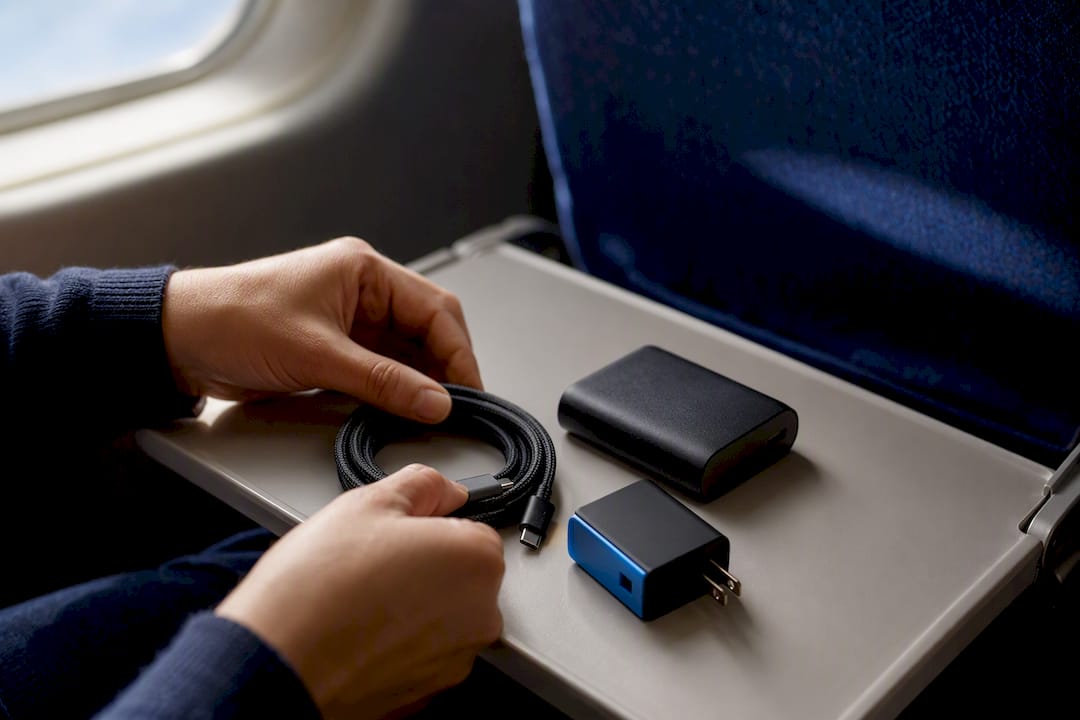
A little preparation goes a long way here. Bring a short charging cable, a multi-port USB-C charger, or a power bank sized for a full day of use, since outlets on board may be limited or shared. If your group is bringing a small power strip, check with the crew first to make sure it’s allowed.
Basic etiquette matters too. Don’t monopolize a shared outlet for hours, keep your cables tidy so they’re not a trip hazard, and follow crew instructions if they ask you to unplug something. If outlets are tight, plan to top off devices during rest stops, switch on battery-saving mode, or take turns charging with your group.
- Pack a power bank as backup, even if the operator confirms outlets
- Bring your own short cables since shared ones aren’t always available
- Check with crew before using a power strip or high-draw device
Pro Tip: Charge your phone to 100% before boarding so you’re not relying on a shared outlet the moment you sit down.
How Reliant Transportation Handles Charging Amenities
A reputable charter operator won’t leave you guessing about what’s on board. Amenity details, including charging access, are often part of the fleet information shared by charter operators when you request a quote, especially for events where staying connected matters. Our charter bus amenities resource breaks down what to expect across different vehicle types.
If you’re calling around to different operators, try this script: “Can you confirm whether this specific coach has 110V outlets and USB ports at each seat, and can you send that in writing?” A good operator will answer clearly and back it up with fleet specs, not vague reassurances.
What Really Matters When You’re Planning Around Charging
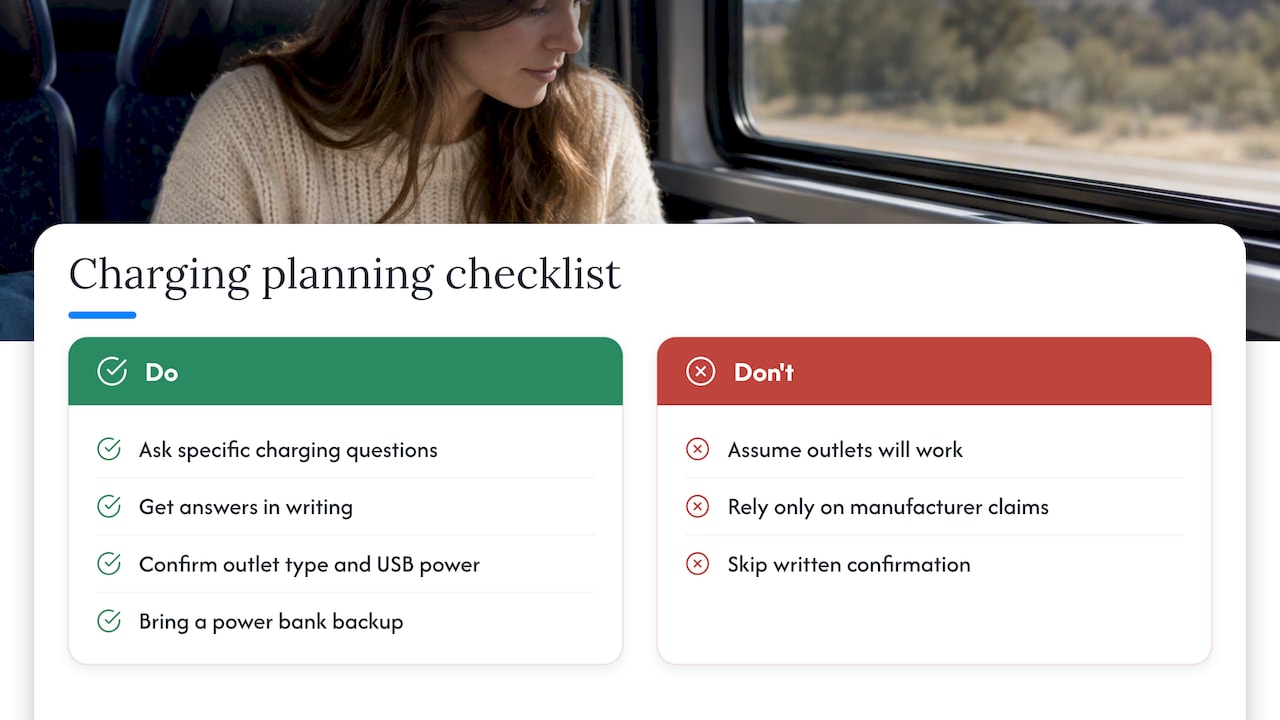
Here’s the thing most guides get wrong: they treat charging outlets like a simple checkbox, present or not present. The real variable is confirmation, not existence. Plenty of coaches have outlets that don’t work reliably, or USB ports that trickle-charge so slowly they’re barely useful for a modern phone. The manufacturer specs and industry data back up that charging is now common on newer coaches, but common isn’t the same as guaranteed for your specific trip.
If you take one thing from all this, make it the habit of asking specific questions and getting answers in writing, especially for group trips where charging matters for work or coordination. Skip the assumption that “most buses have outlets these days” is good enough. A power bank costs less than the stress of a dead phone halfway through a long drive.
— Dusty
Ask Us to Confirm Your Bus’s Charging Setup
When you request a quote from a charter provider, you can ask directly whether your coach includes 110V outlets, USB ports, or both, and get confirmation before your trip.

Charter providers often serve specific regions such as the Portland metro area, the Willamette Valley wine region, and Hood River, and some may provide amenity details in writing so your group knows what to expect. Ready to lock in your charter and confirm the specs that matter to you? Book a charter bus and ask us about charging amenities when you request your quote.
Sources
Claims about onboard electrical capacity and passenger charging draw from the FTA’s Bus Exportable Power Systems program, Metro Magazine’s coverage of coach manufacturer specs, and Bus & Motorcoach News reporting on passenger device use.
- Metro Magazine — coverage of coach manufacturer specs and onboard amenities
- Bus & Motorcoach News — passengers using electronic devices on buses
- Buses
FAQ
Do buses have power outlets?
Most modern motorcoaches include passenger power outlets, typically a mix of 110V AC and USB ports, according to manufacturer and fleet reporting. Older shuttles and mini buses are less consistent, so it’s worth confirming with your operator before you travel.
Do charter buses have charging outlets?
Many charter buses do, especially newer coaches or ones that have gone through a recent interior refresh. Coverage of coach builders like MCI and Van Hool shows charging packages are now a common part of new orders, per industry reporting, though it’s still smart to ask your specific operator to confirm.
What is a 12V outlet used for on a bus?
A 12V outlet on a bus is typically wired for onboard equipment like Wi-Fi routers, not for passenger device charging. It runs on a separate circuit from passenger outlets, so passengers shouldn’t count on it as a charging source.
Do coaches have USB charging ports?
Many newer coaches include both USB-A and USB-C ports at passenger seats, often alongside 110V AC outlets, based on manufacturer and industry sources. USB-C with Power Delivery charges modern phones and some laptops faster than USB-A, so it’s worth bringing a PD-capable charger if you have one.
How can I confirm if my charter bus will have outlets?
Ask your operator directly whether the specific coach has 110V outlets or USB ports at each seat, and request that confirmation in writing if charging matters for your trip. Reliant Transportation includes amenity details like charging access when you request a quote for events across the Portland metro area, the Willamette Valley wine region, and Hood River.