
Charter one dedicated vehicle for the bridal party and book a separate bridal car for the couple. That combination gives you the best mix of reliability, safety, and timeline control on a day with zero room for error. For a small group of two to four, a town car for the couple plus one SUV or stretch limo for attendants usually covers it. For a party of nine to fifteen, plan on a bridal car plus a sprinter van or minibus, with a 5 to 6 hour minimum booked around your ceremony and photo blocks. Either way, get quotes and lock in your date as soon as your venue is confirmed, since vehicles for peak wedding dates can sell out 9 to 12 months in advance.
Key Takeaways
Reliable bridal party transportation comes down to matching vehicle count to party size, booking early, and putting one clear contact in charge of day-of logistics.
| Point | Details |
|---|---|
| Decide vehicle count first | Match vehicle type to your bridal party size before comparing quotes so you’re pricing apples to apples. |
| Book 9 to 12 months ahead | Peak-season vehicles like sprinter vans and vintage cars sell out fast, so lock in your date early. |
| Designate one day-of contact | Give every driver a single phone number to call if pickup details change last minute. |
| Budget for gratuity and minimums | Most vendors enforce a 3 to 5 hour minimum, and gratuity of 15 to 20% is often separate from the quote. |
| Reliant Transportation covers Portland, Willamette Valley, and Hood River | Local route knowledge and on-site planning support help keep wedding-day timelines on track. |
Table of Contents
- Choosing the Right Bridal Party Transportation Vehicle
- Sample Setups and Timelines by Bridal Party Size
- What Bridal Party Transportation Typically Costs
- Who Pays for Bridal Party Transportation?
- How to Choose a Bridal Party Transportation Vendor
- When Should You Book Bridal Party Transportation?
- Money-Saving Alternatives to a Full Bridal Party Charter
- Why a Dedicated Charter Solves the Hardest Logistics Problems
- A Planner’s Quick Take on Bridal Party Transportation
- Let Reliant Transportation Handle Your Wedding Day Logistics
- Frequently Asked Questions
- Sources
Choosing the Right Bridal Party Transportation Vehicle
The vehicle you choose shapes everything else about your day, from how many trips a driver needs to make to how your photos look pulling up to the venue. Most couples land on one of seven common options, and each fits a different combination of party size, budget, and style.
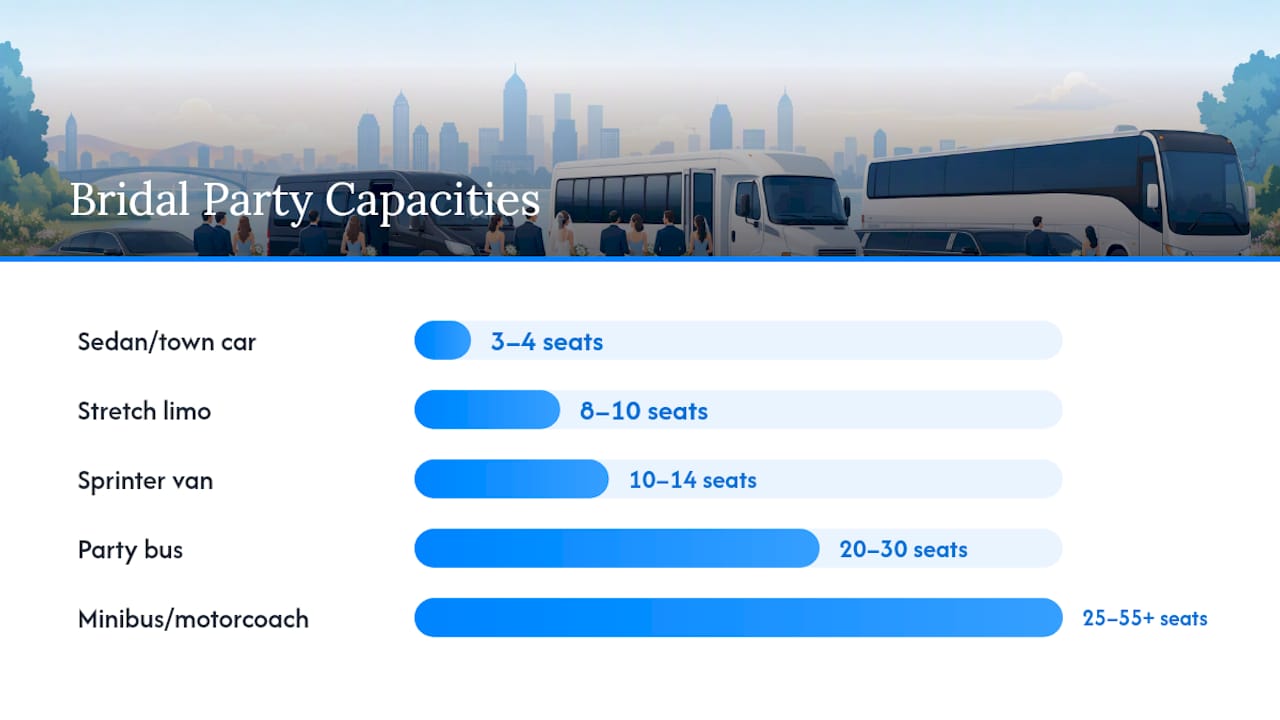
Bridal or getaway car. A classic sedan, vintage convertible, or luxury coupe reserved just for the couple. It seats two comfortably, works best for the ceremony-to-reception transfer or a dramatic exit, and costs less than group vehicles since it typically only needs a few hours of service.
Sedan or town car. A practical option for parents, officiants, or a maid of honor who needs a separate ride. Seats three to four passengers and rents at the lowest hourly rate of any professional vehicle on this list.
Stretch limo. Seats 8 to 10 and still reads as formal and photogenic. Loading gowns and suits takes more care than in a van because of the lower roofline and narrower doors, so budget extra boarding time if your bridal party is in full formalwear.
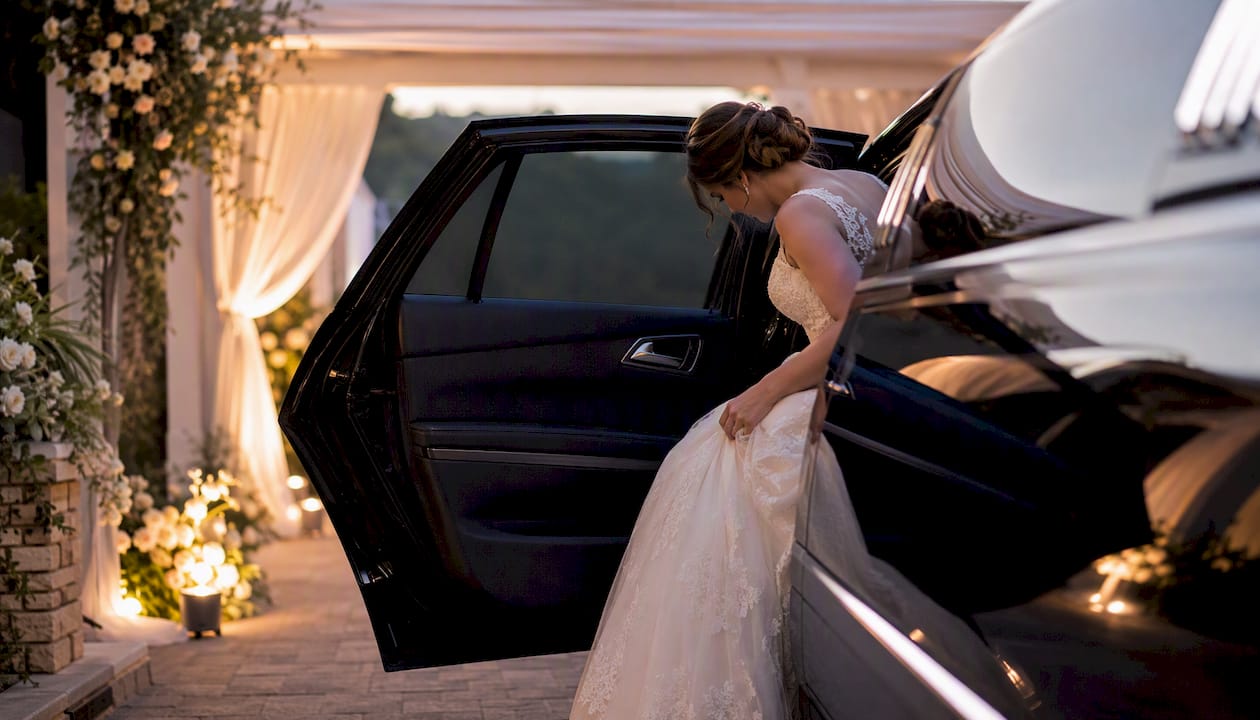
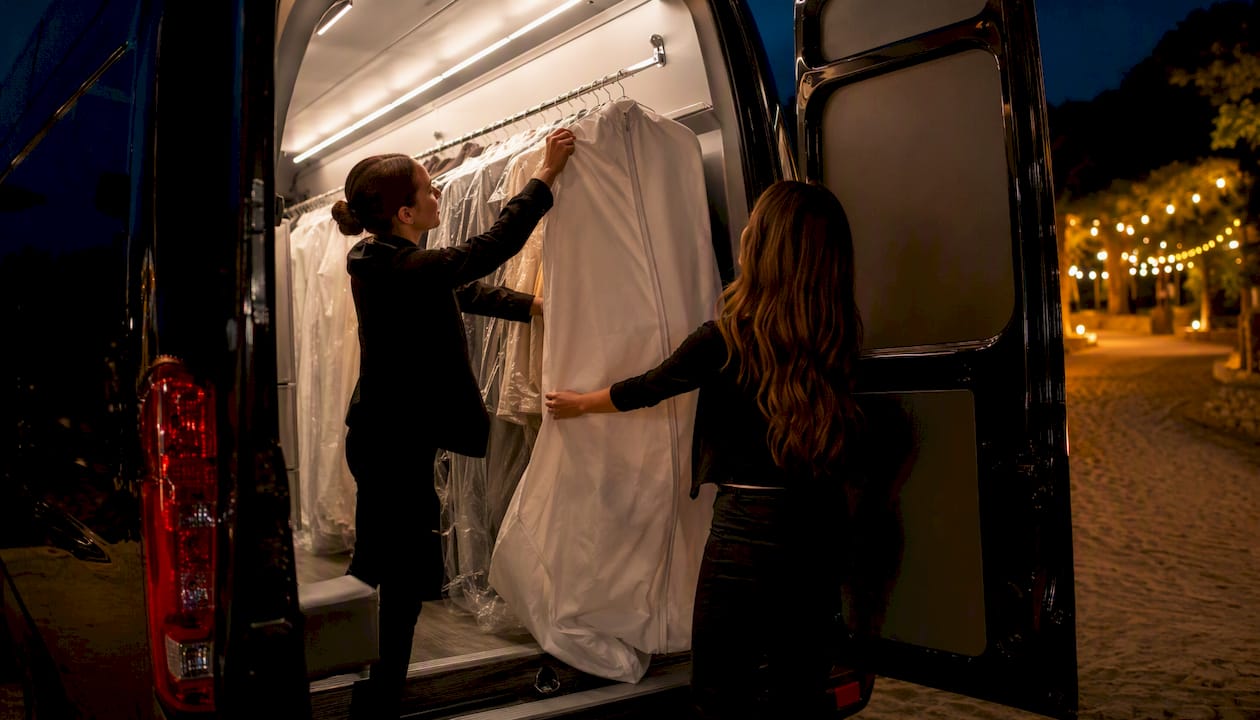
Sprinter van. Seats 10 to 14, offers a higher roofline that makes loading dresses and garment bags far easier than a limo, and works well for wineries or venues with gravel or unpaved lots. It’s become the default pick for mid-size wedding parties for a reason.
Party bus. Seats 20 to 30, often with a sound system, mood lighting, and sometimes a small bar setup. Great for a group that wants the ride itself to feel like part of the celebration, though the higher ceiling energy can clash with a more formal, traditional aesthetic.
Minibus or motorcoach. Seats 25 to 55+ and is the standard choice once you’re moving guests, not just the wedding party, especially for remote venues or weekend-long celebrations with multiple pickup points.
Vintage or classic car. A styling choice more than a logistics one. Beautiful for photos, but limited in seating (usually two) and less reliable for tight timelines since older vehicles come with more mechanical variability.
| Vehicle type | Capacity | Best for | Typical cost range | Minimum hours | Amenities |
|---|---|---|---|---|---|
| Bridal/getaway car | 2 | Couple’s exit or transfer | $75–$150/hour | 2–3 hours | Formal styling, privacy glass |
| Sedan/town car | 3–4 | Parents, officiant | $60–$100/hour | 2–3 hours | Basic comfort, professional driver |
| Stretch limo | 8–10 | Formal bridal party | $100–$200/hour | 3–4 hours | Bar area, sound system, mood lighting |
| Sprinter van | 10–14 | Mid-size bridal party | $120–$180/hour | 3–5 hours | High roofline, A/C, easy dress loading |
| Party bus | 20–30 | Bridal party wanting a lively ride | $150–$300/hour | 4–5 hours | Sound system, lighting, sometimes bar |
| Minibus/motorcoach | 25–55+ | Guest shuttles, multi-day events | $150–$350/hour | 4–6 hours | A/C, restroom (larger coaches), PA system |
| Vintage/classic car | 2 | Photo-driven exits | $200–$400 flat/package | 2–3 hours | Character styling, limited flexibility |
Wedding transportation spending averages $1,075 nationally, and most couples land somewhere between $800 and $1,500 once vehicle type, hours, and region are factored in.
Sprinter vans tend to be the sweet spot for parties of 8 or more: enough headroom to load dresses without crushing them, enough seats to keep everyone in one vehicle, and a lower per-hour rate than a party bus. Stretch limos look sharp in photos but punish larger parties with tight, low-clearance doors that slow boarding right when you need speed most.
Sample Setups and Timelines by Bridal Party Size
Once you know roughly how many people need a ride, the vehicle math gets simple. Here are four setups you can adapt directly to your own headcount.
- Party of 2 to 4: One sedan or bridal car for the couple, plus a second sedan or small SUV if parents or the officiant need a separate pickup. Total booking: 3 to 4 hours.
- Party of 5 to 8: One stretch limo or sprinter van for the full bridal party, plus a bridal car for the couple’s exit. Total booking: 4 to 5 hours.
- Party of 9 to 15: A sprinter van or minibus for the bridal party, a separate bridal car, and a third vehicle for parents if the getting-ready location is far from the ceremony site. Total booking: 5 to 6 hours.
- Large party with guest shuttle: Add a motorcoach or minibus running a continuous loop between the hotel block and venue, on top of your bridal party vehicle and bridal car. This works best when parking is limited or the venue sits off the beaten path.
A sample timeline for the 9 to 15 person setup looks like this:
- 2:00 PM: Vehicles arrive at the getting-ready location, 20 to 30 minutes before the planned departure, so drivers can confirm the route and everyone can finish last details without rushing.
- 2:30 PM: Bridal party boards the sprinter van; couple boards the bridal car separately if doing a first look elsewhere.
- 3:00 PM: Arrival at the venue with a buffer built in for photos before the ceremony.
- 3:30 PM: Ceremony begins.
- 6:30 PM: Return transfer to the reception or hotel, scheduled with the same buffer logic in reverse.
Building in that 20 to 30 minute arrival buffer matters more than most couples expect. Arriving early gives everyone room to finish hair touch ups, load garment bags without panic, and gives your driver a chance to scout the actual loading zone instead of guessing at it from a map.
A simple call sheet keeps everyone on the same page. Copy this format directly:
Pro Tip: Assign one bridal party member, not the couple, as the day-of transportation contact. Put their phone number on the call sheet and give it to every driver. This single change eliminates the single most common breakdown in wedding-day logistics: a driver who can’t reach anyone when a pickup location changes at the last minute.
What Bridal Party Transportation Typically Costs
Most couples spend between $800 and $1,500 total, though the range stretches wider depending on how many vehicles you book and how far apart your locations are. Intimate weddings with a single bridal car can run $300 to $600, while full-service setups that include a guest shuttle loop often reach $2,500 to $4,000 or more.
| Setup | Vehicles | Typical hours | Estimated cost |
|---|---|---|---|
| Intimate wedding | 1 bridal car | 2–3 hours | $300–$600 |
| Mid-size wedding | Bridal car + sprinter van | 5–6 hours | $800–$1,500 |
| Full-service with guest shuttle | Bridal car + sprinter + motorcoach | 6+ hours | $2,500–$4,000+ |
A few factors drive the final number more than anything else:
- Vehicle count. Every additional vehicle adds its own hourly rate and its own minimum booking window.
- Hours booked. Most companies enforce a 3 to 5 hour minimum, so a short ceremony-only booking still costs close to a half-day rate.
- Positioning and return legs. A driver has to get to your pickup location and often back to base afterward, and many contracts bill for that travel time.
- Peak dates and locations. Saturdays in June through October, and venues in high-demand wine country corridors, carry premium pricing.
- Gratuity. Typically 15 to 20% and sometimes included in the quote, sometimes not, so always ask directly.
Here’s a quick budget example: a bridal car booked for 3 hours at $100/hour runs $300, and a sprinter van booked for 6 hours at $150/hour runs $900. Together that’s $1,200 before gratuity, landing squarely inside the national average $1,075 most couples report spending.
One detail that catches couples off guard: it’s sometimes cheaper to keep a vehicle parked on site through the ceremony and photos than to book two separate transfers, since idle time on location often costs less than a second positioning fee.
Who Pays for Bridal Party Transportation?
Traditional etiquette places responsibility for wedding-day transportation on the couple or their families, while attendants are usually expected to cover their own travel to reach the wedding city, meaning flights and hotel stays. Modern couples increasingly absorb the local logistics too, covering shuttles and bridal-party transfers as part of the overall wedding budget rather than splitting them among attendants.
That expectation shifts, though, once destination weddings, multi-event weekends, or out-of-town attendants enter the picture. When you’re already asking your wedding party to book flights and hotel rooms, adding a transportation bill on top can strain the goodwill you’re counting on.
Etiquette experts generally advise that when a couple asks attendants to absorb significant travel costs, offering to offset local logistics, whether through a partial stipend, covered hotel nights, or a shared shuttle, keeps the ask fair without requiring the couple to cover everything.
Three short scripts you can adapt when setting expectations with your wedding party:
- “We’ve got the shuttle covered from the hotel to the venue, so you just need to worry about getting into town.”
- “We’re splitting a sprinter van for the whole group. It’s already booked. Just be ready by 2:30.”
- “We know travel is a lot to ask, so we’re covering your hotel night and the local rides.”
Fair-splitting options worth considering: cover local transfers while attendants handle their own flights, split a group shuttle cost evenly among attendants who opt in, or simply absorb the full bill if your bridal party is small and the ask elsewhere (destination travel, outfits) is already significant.
How to Choose a Bridal Party Transportation Vendor
Getting a good quote is only half the job. The questions you ask before signing determine whether your wedding day runs smoothly or turns into a logistics scramble.
- Ask about insurance and licensing. Confirm the company carries commercial liability coverage and that drivers hold the appropriate commercial license for the vehicle class.
- Ask what happens if the vehicle breaks down. A reputable operator has a backup vehicle and a documented plan, not a vague promise.
- Confirm the alcohol policy. Some vehicles allow open containers, others don’t, and rules vary by state and vehicle type.
- Check ADA accessibility. If any guest or attendant needs accessible boarding, confirm the specific vehicle can accommodate it, not just the company’s fleet in general.
- Ask how routes and GPS are handled. Drivers unfamiliar with your venue should have a routing plan reviewed in advance, not just a phone with directions.
Before you sign anything, check the contract for these clauses:
- Exact hours booked and what counts as overtime, plus the overtime rate.
- Positioning fees for getting the vehicle to your pickup location.
- Cancellation policy and how far out you can change your date without penalty.
- Whether gratuity is included in the quote or added separately.
- Damage policy, especially language that might hold you liable for normal wear.
Watch for red flags: a quote that seems far below the going rate for your region, vague answers about backup vehicles, or pressure to sign before you’ve seen the contract in writing. A reliable vendor-selection process treats these questions as standard, not an inconvenience.
Use this checklist to compare three or four vendors side by side: insurance confirmed, backup vehicle plan in writing, hours and overtime rate clear, positioning fee disclosed, gratuity policy stated, cancellation terms reviewed.
When Should You Book Bridal Party Transportation?
Book as soon as your venue and date are locked in. In peak markets, the vehicles couples want most, sprinter vans, vintage cars, larger party buses, can sell out 9 to 12 months ahead of a popular Saturday.
Vehicle minimums shape how much you end up reserving. If a company requires a 4 hour minimum and your actual need is closer to 2.5 hours, you’re paying for time you won’t use, so it’s often smarter to plan your day around that minimum rather than fight it.
A coordination checklist worth working through with your vendor:
- Share every pickup and drop-off address at least two weeks before the wedding.
- Map the full route, including any venue with a gravel lot, gate code, or unusual loading zone.
- Identify staging locations, especially if the venue’s main entrance can’t accommodate vehicle loading.
- Confirm parking arrangements for drivers during ceremony and reception blocks.
- Assign one day-of contact whose phone number goes to every driver.
Build in contingency planning too. Ask what the backup plan looks like if a vehicle has mechanical trouble, and keep a simple group text thread running between your day-of contact and the transportation company. A good rule of thumb for your itinerary: pad every transfer by 20 minutes beyond what the map says, since venue check-in, loading, and unexpected traffic almost always eat into that window.
Money-Saving Alternatives to a Full Bridal Party Charter
A full charter setup isn’t always necessary, and knowing when to scale down saves real money without sacrificing reliability.
- Rideshare works well for weddings under 50 guests with short, predictable distances, though it becomes unreliable for larger groups or venues where surge pricing and driver availability can’t be counted on at 11 PM.
- Coordinated carpooling among guests who already know each other cuts vehicle needs significantly, especially for local weddings with ample parking.
- Hotel-provided shuttles are worth asking about directly. Many venues with an attached hotel block already run a shuttle loop you can piggyback on for free or a small fee.
- A single guest shuttle loop running continuously between hotel and venue beats booking several one-off transfers, since it reduces billable hours and avoids repeated positioning fees.
- Limiting vehicle count to one bridal party vehicle plus one bridal car, rather than splitting into three or four smaller cars, keeps your total hours and fees down.
The decision usually comes down to guest count and venue remoteness. Under 50 guests at an accessible, well-parked venue, rideshare or carpooling makes sense. Larger groups, remote wineries, or venues with limited parking call for a charter vehicle or a guest shuttle loop, full stop.
Why a Dedicated Charter Solves the Hardest Logistics Problems
A chartered vehicle gives you something rideshare and carpooling can’t: one point of contact and one fixed schedule for your entire bridal party. That single change removes the biggest risk on a wedding day, which is people arriving at different times because someone’s rideshare driver canceled or a carpool got separated at a light.
A dedicated vehicle also protects your photo timeline directly. Keeping the bridal party together and on schedule is the core benefit planners point to, since a scattered arrival eats into the buffer built around golden hour photos or a tight ceremony start.
There are practical safety and handling benefits too: a charter vehicle transports alcohol legally and safely between locations, has room to load garment bags and dresses without crushing them, and gives your driver flexibility to adjust pickup staging if a venue’s main entrance is blocked or under construction.
One recurring pattern among couples who book a single dedicated vehicle for the full transfer window, rather than two separate one-way trips, is that it avoids the extra positioning fee and cuts hours of dead time out of the day entirely.
A well-maintained fleet and a driver who already knows the local roads matter more than most couples realize until the day of. A driver unfamiliar with a gravel vineyard entrance or a downtown Portland loading restriction can cost you 15 minutes you don’t have. Local route knowledge, not just a clean vehicle, is what actually protects your timeline.
A Planner’s Quick Take on Bridal Party Transportation
Most couples treat transportation like an afterthought, something to book once the venue, catering, and photographer are locked in. That ordering is backwards. Vehicle availability for your specific date can disappear faster than almost any other vendor category, especially for sprinter vans and vintage cars during peak wedding season.
If you take one action today, make it this: get a written quote and lock in a deposit the moment your date and venue are confirmed, even if your guest list isn’t finalized. You can adjust vehicle count later. You can’t undo a sold-out fleet in June.
The other thing worth saying plainly: fairness with your bridal party isn’t optional. If you’re asking attendants to travel, spend money on outfits, and take time off work, covering their local transportation is a small gesture that costs you comparatively little and removes real friction from your relationships during an already stressful season.
Let Reliant Transportation Handle Your Wedding Day Logistics
Reliant Transportation runs charter buses, sprinter vans, and limo buses for weddings across the Portland metro, the Willamette Valley wine country, and the Hood River area, and that local focus is exactly what solves the routing and staging problems this article just walked through.

Rather than handing your wedding day to a call center booking agent who’s never seen your venue, Reliant works directly with couples on site visits and route planning so your driver already knows the gravel lot at your vineyard or the loading restriction outside your downtown reception space before your wedding day arrives. That local knowledge is the difference between a driver guessing at a map and a driver who has staged a vehicle at that exact venue before.
The team supports day-of coordination too, syncing pickup times with your photographer’s schedule and your ceremony start so the buffers this article recommends actually hold up in practice. If you’re planning a wedding shuttle setup for your bridal party or need guest transportation across the Willamette Valley or Hood River area, request a quote now and lock in your date before peak season availability tightens.
Frequently Asked Questions
How much does bridal party transportation typically cost?
Most couples spend between $800 and $1,500 total, with a national average around $1,075. Intimate weddings can run as low as $300 to $600, while full guest shuttle setups often reach $2,500 to $4,000 or more.
How far in advance should we book wedding party transport?
Book as soon as your venue and date are confirmed. Peak-season vehicles can sell out 9 to 12 months ahead in high-demand markets.
Who pays for bridal party transportation, the couple or the attendants?
Traditional etiquette places transportation costs on the couple, while attendants typically cover their own travel to the wedding city. Many couples today cover local shuttles and transfers as part of their overall budget.
What’s the best vehicle for a mid-size bridal party?
A sprinter van fits most parties of 8 to 14 comfortably, with easier dress and garment loading than a stretch limo and a lower hourly rate than a party bus.
Do transportation companies charge for the vehicle’s travel time to the venue?
Many companies bill positioning and return-leg time separately, and most enforce a 3 to 5 hour minimum regardless of how long you actually need the vehicle.
Sources
- The Knot: Wedding transportation costs, tips & trends
- Paperlust: How much does wedding transportation cost? (2026 guide)
- WithJoy: Wedding transportation guide (2026)