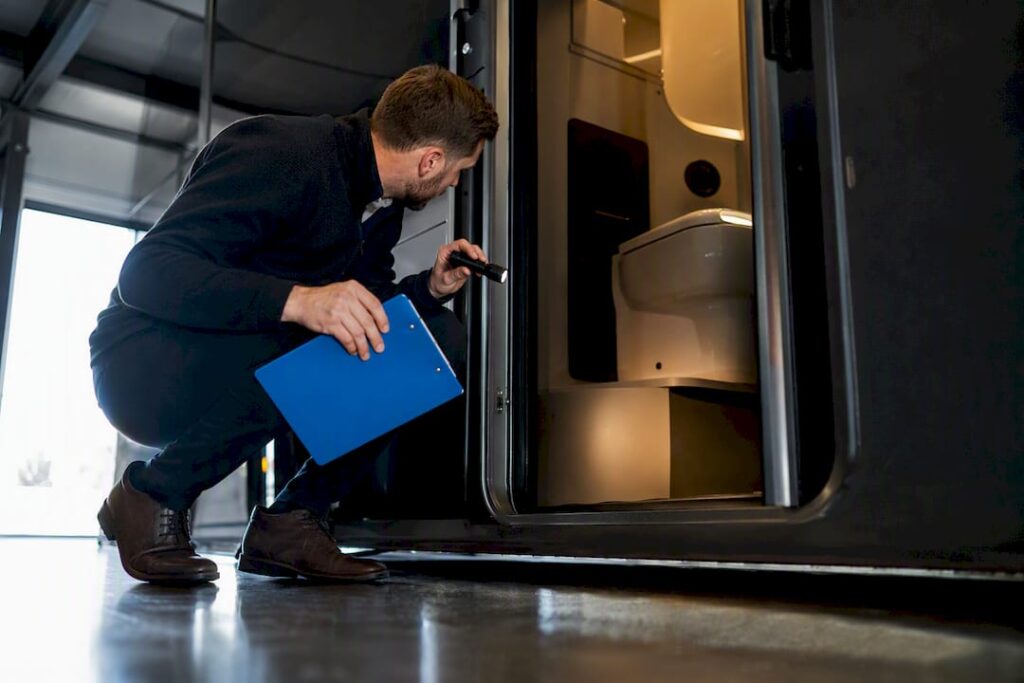
A limo bus typically combines lounge-style perimeter seating, programmable mood lighting, a built-in refreshment center, and a high-fidelity AV setup. Charging ports and USB outlets are standard on most builds. What isn’t standard: restrooms and underfloor luggage bays. Before you sign anything, confirm which of these features your specific vehicle actually has and whether they’ll be working the day of your event.
TL;DR:
- Restrooms are only available on larger coach or cutaway platforms; smaller Sprinter-based limo buses rarely include this feature.
- Confirm in writing whether the vehicle’s electrical and entertainment systems will operate fully on the event day to avoid surprises.
- The vehicle’s chassis, not its marketing name, determines amenity options, with larger platforms offering more comprehensive features like luggage bays and restrooms.
- Ask for specific, written details about seating configurations, power capacity, luggage space, and AV equipment before signing the rental agreement.
- Interior customization policies vary widely; always clarify allowed decorations and external branding restrictions during booking to prevent misunderstandings.
Table of Contents
- What Limo Bus Features Actually Mean for Your Event
- Sprinter, Minibus, and Coach: How the Chassis Shapes the Features
- Safety and Technical Checks Before You Sign
- Event Checklists: Matching Features to Your Occasion
- How Reliant Transportation Confirms These Features in Practice
- Accessibility Features for Disabled Passengers
- Customizing and Decorating Your Limo Bus
- Prioritize Logistics Over Looks
- Book a Limo Bus With Confirmed Features, Not Assumptions
- Sources
- FAQ
What Limo Bus Features Actually Mean for Your Event
The term “limo bus” gets used loosely across the rental industry, and that’s exactly the problem. One operator’s limo bus is a converted Sprinter van with mood lighting and a mini fridge. Another’s is a 40-foot coach with a restroom, dual bars, and a sound system that could fill a small nightclub. Because the layout and amenity list aren’t standardized, you have to look past the label and get specific about what’s inside.
Here’s what tends to show up across builds, and what quality actually looks like at each level:
- Seating: Perimeter lounge seating (bench-style, facing inward) fits more people in less space and works well for conversation and group photos. Captain chairs, common in executive builds, offer more personal space but cut capacity.
- Bar setup: A basic bar console might just be a countertop with cup holders. A well-built one includes an ice well, small refrigeration unit, and dedicated glassware storage. Ask specifically what’s included, not just whether there’s “a bar.”
- Lighting: RGB LED strips that shift color with the music are common. Higher-end builds add fiber-optic star ceilings for a more polished look. Programmable lighting matters because it lets your driver or event host shift the mood from arrival (calmer, warmer tones) to celebration (color-shifting, upbeat) without flipping a dozen switches.
- Audio and video: Expect built-in speakers and often a subwoofer, plus one or more flat-screen monitors. Ask about input sources (Bluetooth, aux, HDMI) and whether there’s a backup if the primary system fails mid-event.
- Charging: USB ports are nearly universal now. Full 110V outlets are less common and matter if guests need to charge laptops or camera equipment on longer trips.
Pro Tip: Ask your rental coordinator to confirm, in writing, whether the restroom and the entertainment power system will be fully operational on your event date. Vehicles sometimes get pulled from a fleet for repairs, and a “similar vehicle” swap can quietly downgrade features you were counting on.
Restroom availability depends almost entirely on the vehicle’s underlying platform, which is the next thing to sort out.
Sprinter, Minibus, and Coach: How the Chassis Shapes the Features
The vehicle’s chassis, not the marketing name, determines what’s physically possible inside. Sprinter-based limos and cutaway platforms carry very different amenity bundles, and knowing the difference saves you from booking something that can’t fit your group or your gear.
- Sprinter vans (generally for smaller groups): Best for intimate groups like wedding parties or small executive teams. Expect perimeter seating, LED lighting, and a compact bar. Restrooms and underfloor luggage bays are rare on this platform.
- Cutaway and minibus builds (typically medium-sized groups): These step up to bigger bars, multiple screens, and sometimes an onboard restroom or dedicated luggage compartment, though it varies by operator.
- Full coach platforms (large groups): These are the most likely to include a permanent restroom, underfloor luggage bays, and air-ride suspension for a smoother ride over longer distances.
Ride quality and access matter as much as capacity. Air-ride suspension on larger platforms smooths out highway travel, but a big coach can struggle at a narrow hotel driveway or a tight vineyard entrance. If your venue has tight turns or low clearance, a smaller Sprinter or minibus might actually serve your group better than a bigger vehicle with more amenities. There’s also a real difference between executive partitioned builds, designed for quieter conversation and business use, and open lounge/party layouts built around entertainment. Choosing based on your event’s tone beats choosing based on the vehicle’s marketing name every time.
Safety and Technical Checks Before You Sign
Comfort features get all the attention, but the technical specs behind the scenes are what keep your event running without a hitch. Reputable operators document safety and maintenance features as a matter of course, and you should ask for specifics rather than assume they’re standard.
- Safety systems: Confirm ABS, onboard cameras, GPS tracking, and emergency communication equipment are present and functioning, not just listed on a spec sheet from three years ago.
- Maintenance records: Ask when the vehicle was last serviced and how often it’s on a maintenance rotation. A reputable operator won’t hesitate to answer.
- Electrical capacity: If you’re running lights, a sound system, and multiple screens for hours, ask for the inverter rating and house-bank amp-hours. Smaller house banks may drain after several hours under heavy entertainment use, while more robust builds have higher-capacity electrical systems with multiple inverters to handle longer events without power loss.
- Build durability: Look for commercial-grade metal actuator tracks on partition doors and professionally mounted AV hardware, not equipment bolted on as an afterthought.
- Insurance and credentials: Request written confirmation of the operator’s insurance coverage and the driver’s commercial license and training.
None of this is paranoia. It’s the difference between a smooth event and a vehicle that loses power to the sound system halfway through your first dance.
Event Checklists: Matching Features to Your Occasion
Different events put pressure on different features. A wedding lives or dies on climate control and timing buffers. A corporate trip lives or dies on quiet and Wi-Fi. Matching your checklist to your event type keeps you from paying for features you won’t use, or worse, missing ones you desperately need.
For weddings: Confirm climate control works reliably (formalwear and August heat don’t mix), ask about discreet storage for gifts and garment bags, and build in a timing buffer for photos running long. This kind of wedding shuttle logistics planning matters as much as the interior itself.
For corporate and executive trips: Prioritize partitions for privacy, small work surfaces, dependable Wi-Fi, and low cabin noise so people can actually hold a conversation or a call.
For airport transfers: Focus on luggage capacity, door and step design for fast loading, and realistic timing for group pickup and drop off.
For nightlife and party groups: Audio power and lighting controls matter most, along with durable finishes that hold up to a full night of use. Ask about the operator’s cleanup and behavior policy up front so there are no surprises on the invoice later.
Pro Tip: Paste this into your booking email: “Please confirm in writing: seating capacity, restroom availability, luggage space, inverter/power rating, and AV equipment list for the specific vehicle assigned to our date.” A specific request gets a specific answer.
How Reliant Transportation Confirms These Features in Practice
Reliant Transportation has built more than a decade of consistently high ratings around exactly this kind of detail work. Every quote starts with a checklist conversation, not a generic vehicle list, because a tailored passenger experience depends on knowing what your event actually needs before the vehicle gets assigned.
That means vehicle walkthroughs when requested, driver briefings tied to your specific itinerary, and fleet upkeep records available for review rather than buried in fine print. If restroom access, luggage space, or entertainment power matter to your event, Reliant’s coordination team will confirm those specifics in writing, along with photos of the actual vehicle you’re booking, not a stock image from a catalog. That’s the kind of itinerary coordination that turns a features checklist from a worry into a solved problem.
Accessibility Features for Disabled Passengers
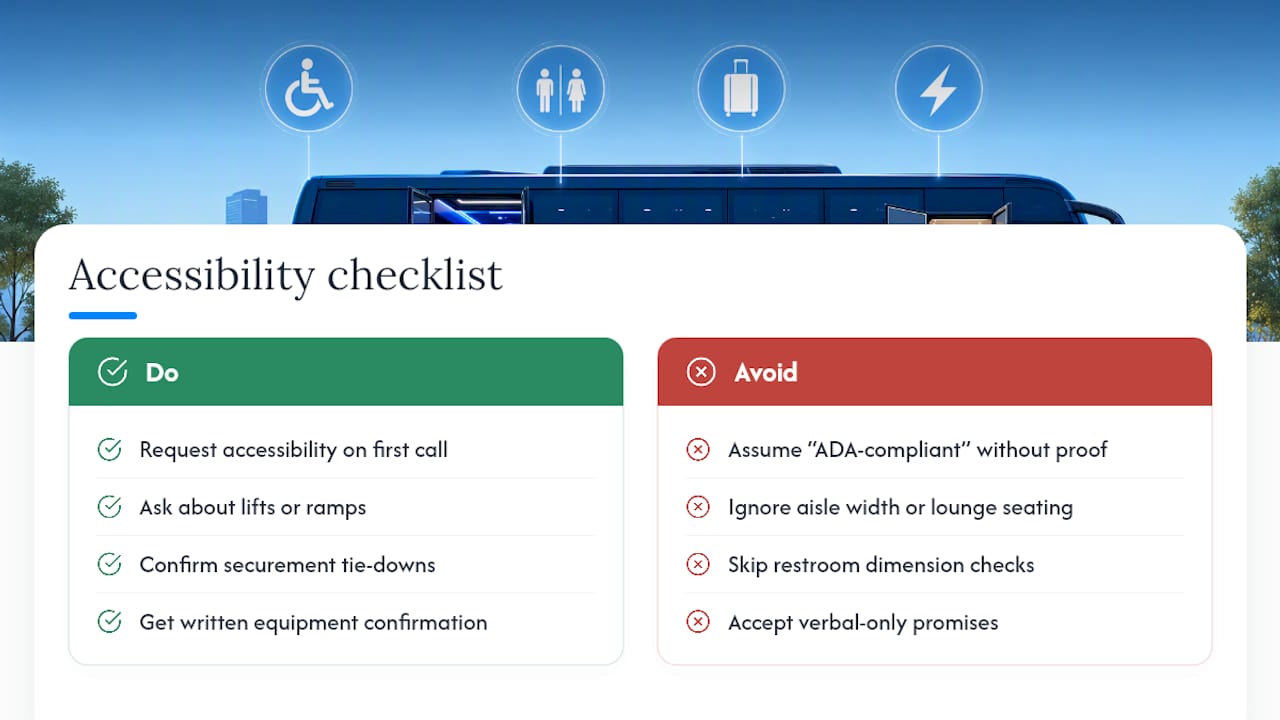
Wheelchair-accessible limo buses exist, but they’re less common than standard builds, and availability varies significantly by operator and vehicle age. If accessibility is a requirement for your group, raise it during your very first call, not after you’ve narrowed down other features.
Ask specifically about wheelchair lifts or ramps, securement points and tie-down systems, and interior aisle width, since lounge-style perimeter seating can sometimes narrow the walking path more than standard forward-facing rows. Door height and step design matter too. A vehicle with a single high step can be a real obstacle for guests with limited mobility, even if it technically has a ramp.
Also confirm accessible restroom dimensions if a restroom is included, since compact onboard bathrooms are rarely built to accommodate a wheelchair. If your group includes passengers who need specific accommodations, request written confirmation of exactly which accessibility equipment will be on the vehicle assigned to your date. “ADA-compliant” gets used loosely in this industry the same way “limo bus” does, so a specific written confirmation protects you from a last-minute mismatch between what was promised and what shows up.
Customizing and Decorating Your Limo Bus
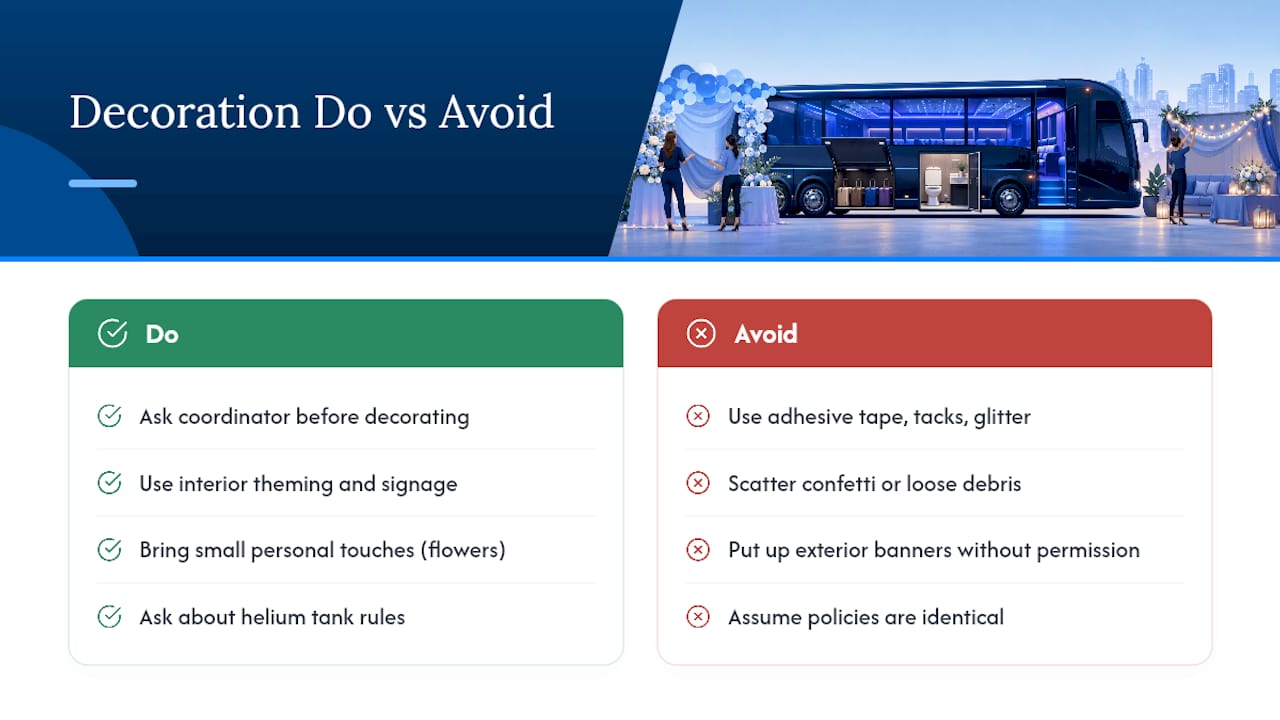
Most operators allow some level of interior customization, though the extent varies by vehicle and company policy. Ask before you assume.
Interior theming, seasonal decorations, welcome signage, and small personal touches like flowers or table runners are usually fine, especially for weddings and celebrations. Where operators tend to draw the line is anything involving adhesive tape, tacks, confetti, or glitter that could damage upholstery or leave cleanup problems for the next renter. Balloons are often allowed but ask about helium tank restrictions inside the cabin.
External branding, like a temporary banner or magnetic sign for a corporate event, is sometimes negotiable but far less standard than interior decorating. If your event needs exterior visibility, mention it during booking rather than showing up with a banner and hoping for the best.
The bigger point: decoration policies vary enough between operators that assuming anything is a mistake. A five-minute conversation with your booking coordinator about what you want to bring saves you from a surprise “no” the morning of your event.
Prioritize Logistics Over Looks
The conventional advice on limo bus features leans hard on the exciting stuff: LED colors, sound system wattage, how many screens are onboard. That’s not wrong, but it’s the wrong starting point. The features that actually make or break an event are the boring ones: whether the restroom works, whether the power system can run your entertainment for the full event window, whether luggage actually fits, and whether the contract locks in the specific vehicle you were shown.
Ask about inverter capacity before you ask about lighting color. Ask about luggage bay dimensions before you ask about screen count. A gorgeous interior with a house bank that dies two hours into your reception is a worse outcome than a plainer vehicle that just works. The gap between what’s advertised and what’s guaranteed in writing is where most bad group transportation experiences actually start, not in the vehicle itself, but in the assumptions made before booking. Get specifics in writing first. Let the amenities be a bonus, not the deciding factor.
— Dusty
Book a Limo Bus With Confirmed Features, Not Assumptions
The operator serves various events such as weddings, corporate events, and general charter needs across the Portland metro area, the Willamette Valley wine region, and the Hood River area, with quotes based on specific event requirements rather than generic vehicle lists. When requesting a quote, it’s advised to ask for vehicle photos, written confirmation of restroom availability, power and inverter specifications, and driver credentials to ensure clear information.
If you’re planning a wedding, start with the services page to see what’s available for your date, or head straight to book a charter bus to request a written quote. Either way, call or submit a request now and get the specifics confirmed before you commit your event date to a vehicle you haven’t fully vetted.
Sources
For deeper build-level detail, see the Sprinter limo conversion pricing guide for chassis-specific specs, and the party bus amenities guide for platform-by-platform comparisons of restrooms and luggage capacity.
FAQ
Does a limo bus have a bathroom?
Not always. Restrooms show up mainly on larger coach-style or cutaway platforms and are rare on smaller Sprinter-based conversions, so always confirm restroom availability for your specific vehicle before booking.
What are the features of a limo car interior style?
Limo-style interiors typically include perimeter lounge seating, mood lighting, a small bar or refreshment area, and premium audio, all built around a lounge-like experience rather than rows of forward-facing seats.
What are the different types of limo buses?
They range from Sprinter-based conversions for smaller groups, to cutaway and minibus builds for medium-sized groups, up to full coach platforms for large groups, each with different amenity bundles and restroom availability.
What is the difference between a limo bus and a party bus?
Both terms overlap heavily, but limo buses tend to emphasize conversation-friendly lounge seating, while party buses lean toward open floor space and entertainment-first layouts. Confirming the actual seating and amenity list matters more than the name on the listing.
How do I confirm which features are actually included before I book?
Request written confirmation of seating capacity, restroom status, power and inverter ratings, and AV equipment for your assigned vehicle. Reliant Transportation builds every quote around a checklist of confirmed amenities rather than a generic vehicle description.