
Hire a certified charter or school bus provider, verify their FMCSA credentials before you sign anything, and get the quote in writing. For families in the Portland metro, Willamette Valley, and Hood River area, Reliant Transportation is a local option built around exactly this kind of camp logistics. Your next move: request a written quote along with the carrier’s USDOT/MC numbers, a current insurance certificate, and a recent FMCSA BASICs printout. The rest of this guide walks through those checks, plus vehicle options, pricing, and what to expect on pickup day.
Key Takeaways
Safe camp transportation comes down to verifying a carrier’s FMCSA credentials, insurance, and driver qualifications before signing, then confirming those same details again on pickup day.
| Point | Details |
|---|---|
| Verify before you book | Check FMCSA BASICs, USDOT/MC numbers, and insurance certificates before signing any contract. |
| Match vehicle to trip | Use motorcoaches for long or multi-day trips and certified school buses for repeated daily routes. |
| Normalize pricing | Compare quotes by per-seat cost, not total trip price, to avoid underestimating cost per child. |
| Verify again on pickup day | Check vehicle ID, driver endorsements, inspection sticker, and seatbelt function before departure. |
| Local option available | Reliant Transportation serves Portland, the Willamette Valley, and Hood River with documented safety verification for camp routes. |
Where to Verify Carrier and Vehicle Safety
Use these official tools to confirm any provider’s credentials yourself rather than taking their word for it.
- FMCSA Passenger Carrier Search: confirms USDOT registration and BASICs performance scores.
- NHTSA school-bus regulation FAQs: explains FMVSS certification requirements for student transport vehicles.
- NTSB safety alert on chartered vehicles: outlines recommended pre-trip briefing and seatbelt practices.
Table of Contents
- Which Vehicle Fits Your Summer Camp Transportation Needs?
- How Do You Verify a Carrier’s Safety and Compliance?
- How Do You Plan Routes and Staffing for Camp Pickup?
- What Does Summer Camp Transportation Actually Cost?
- When Should You Book and What Should You Ask First?
- What Should Be in the Contract and On-Day Checklist?
- Questions to Ask Transportation Providers Before Hiring
- How Reliant Transportation Supports Camp Organizers
- Sources
Which Vehicle Fits Your Summer Camp Transportation Needs?
Not every camp trip calls for the same rig. A single day of neighborhood pickups needs something different than a five-day overnight camp two hours away.
- Charter motorcoach: Best for long-distance or multi-day trips. Comfortable seating, overhead storage, restrooms on board, and enough room for gear. Higher cost per trip but fewer stops needed.
- Certified school bus: Built to FMVSS school-bus standards with reinforced seating and compartmentalization, making it a strong fit for repeated daily student routes over shorter distances.
- Day-camp shuttle van: Good for smaller groups and shorter hops, but check seatbelt availability and confirm it isn’t a nonconforming 15-passenger van pressed into routine student service.
- Multi-stop neighborhood shuttle: Efficient for spread-out families, though more stops mean longer ride times for kids picked up first.
Bigger vehicles mean fewer drivers and less chaperone strain, but also more luggage planning per trip.
How Do You Verify a Carrier’s Safety and Compliance?
Anyone can put “charter bus” on a website. Verifying the paperwork behind it takes ten minutes and saves you from a very bad phone call later.
Start with the FMCSA Passenger Carrier Search. Punch in the company’s USDOT or MC number and pull up their BASICs scores, which cover vehicle maintenance, driver fitness, unsafe driving, and hours-of-service compliance. A carrier with red flags in any of these categories is not one you want hauling kids to camp.
For interstate motorcoach work, FMCSA operating authority rules generally require $5 million in insurance coverage. Ask for the certificate of insurance directly, not a verbal assurance.
There’s also a legal distinction worth knowing: a vehicle marketed as a “school bus” must meet FMVSS school-bus standards under 49 U.S.C. §30125, which differ from standard charter motorcoach design in crashworthiness and interior protection. That distinction matters if your camp runs the same route daily all summer.
Before booking, request:
- Driver’s CDL class and any P/S endorsements
- Recent vehicle inspection logs under 49 CFR Part 396.3 maintenance requirements
- Proof of a documented pre-trip inspection routine
- Driver background check and hours-of-service records
NTSB safety alerts have traced serious injuries directly back to skipped pre-trip briefings and unused seatbelts, so this isn’t paperwork for paperwork’s sake.
Pro Tip: Ask the carrier, point blank, whether the driver runs a verbal pre-trip safety briefing covering emergency exits and belt use before every trip. If they hesitate, that’s your answer.
How Do You Plan Routes and Staffing for Camp Pickup?
Good routing isn’t just about speed. It’s about keeping kids off busy roads during loading and giving parents a window they can actually plan around.
Design stops away from main traffic flow, keep loading single-direction so nobody crosses in front of a moving bus, and pick locations where the vehicle can pull fully out of traffic. Decide early whether you want one centralized pickup point or several neighborhood stops. Centralized pickup is faster to staff; neighborhood stops are more convenient for families but stretch total ride time.
- Confirm chaperone-to-camper ratios before the route is finalized.
- Build a rider manifest and check names against it at every pickup.
- Send families a specific arrival window, not just “morning.”
- Label all luggage and confirm the vehicle’s storage capacity fits it.
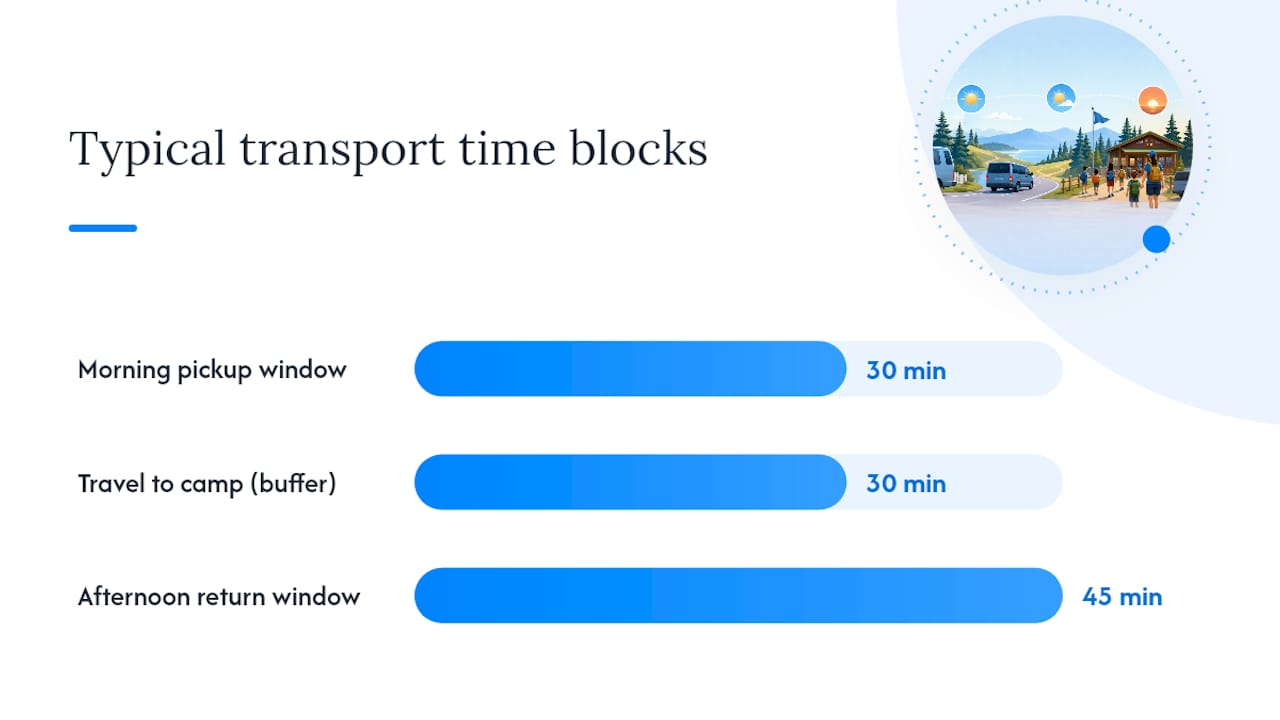
- Build in a travel buffer, not just point-to-point drive time.
A typical day might run: 7:15 AM pickup start, 7:45 AM final stop, 8:15 AM arrival at camp with buffer, 4:00 PM return loading, 4:45 PM last drop-off.
What Does Summer Camp Transportation Actually Cost?
Quotes vary more than most parents expect, and the reasons usually come down to a handful of factors.
- Distance and total drive time
- Vehicle type (a motorcoach costs more per trip than a shuttle van)
- Driver hours, including overtime for early or late runs
- Deadhead miles the carrier drives empty to reach your pickup point
- Fuel surcharges, tolls, and permits
- Time-of-day staffing, since early-morning or weekend runs often cost more
When comparing quotes, ask for the same breakdown from each provider: base rate, hourly versus per-trip pricing, per-mile charges, deposit terms, cancellation policy, and gratuity expectations. To compare fairly, normalize the price by seat rather than by trip. A cheaper quote for a smaller van can cost more per child than a pricier motorcoach with double the capacity. Build a contingency line into your budget too. Weather delays, an added stop, or a last-minute date change can shift the final bill.
When Should You Book and What Should You Ask First?
Peak summer weeks fill up fast, especially with school-bus fleets pulling double duty for both academic-year contracts and summer programs.
- Reserve two to four months ahead for standard weekly camp runs.
- Book earlier, sometimes five to six months out, for multi-day or long-distance trips.
- Lock in deposit and final payment deadlines in writing.
- Confirm the manifest submission deadline and how late changes can be made.
Before you sign anything, ask:
- What are your USDOT and MC numbers?
- What are your current insurance limits?
- Can you share your most recent FMCSA BASICs printout?
- What training and endorsements does the assigned driver hold?
- How old is the vehicle, and are seatbelts available at every seat?
- What’s your cancellation policy, and what’s the weather contingency plan?
What Should Be in the Contract and On-Day Checklist?
A verbal handshake doesn’t protect anyone. Put these terms in writing before deposit money changes hands.
Require clear cancellation and refund language, insurance minimums with additional-insured status for your organization, a driver-replacement policy for illness or emergency, and clarity on who covers fuel and tolls. Add an operational addendum covering manifest requirements, a mandatory pre-trip safety briefing, and a breakdown contingency plan.
On pickup day, walk through this fast:
- Match the vehicle ID and registration to what’s on the contract.
- Check the driver’s CDL and any required endorsements.
- Look for a visible current inspection sticker.
- Confirm seatbelts function and emergency exits are unobstructed.
- Have the driver run the pre-trip briefing for kids before departure.
Jot down vehicle ID, driver name, and departure time at pickup. It takes thirty seconds and matters enormously if anything goes sideways later.
How Were These Safety Recommendations Verified?
These recommendations rest on federal oversight sources, not opinion.
- FMCSA Passenger Carrier Search for USDOT/MC lookups and BASICs scores
- NHTSA school-bus regulation guidance for FMVSS standards
- NTSB safety alerts on pre-trip briefings and belt use
Federal oversight data, not marketing copy, is what should decide who drives your kids to camp.
Save PDFs or screenshots of every BASICs printout and insurance certificate as part of your booking file.
Questions to Ask Transportation Providers Before Hiring
The right questions upfront save you from discovering problems mid-trip.
Start with registration: “Can you provide your USDOT and MC numbers so I can look up your BASICs scores myself?” A provider confident in their safety record will hand this over without hesitation. Follow with insurance: “What are your current coverage limits, and can I get a certificate naming our organization as additional insured?”
Ask about the driver specifically, not just the company. “Who is assigned to this route, and what’s their CDL endorsement history?” Camp routes often repeat all summer, so consistency matters. Find out if the same driver runs the route daily or if it rotates.
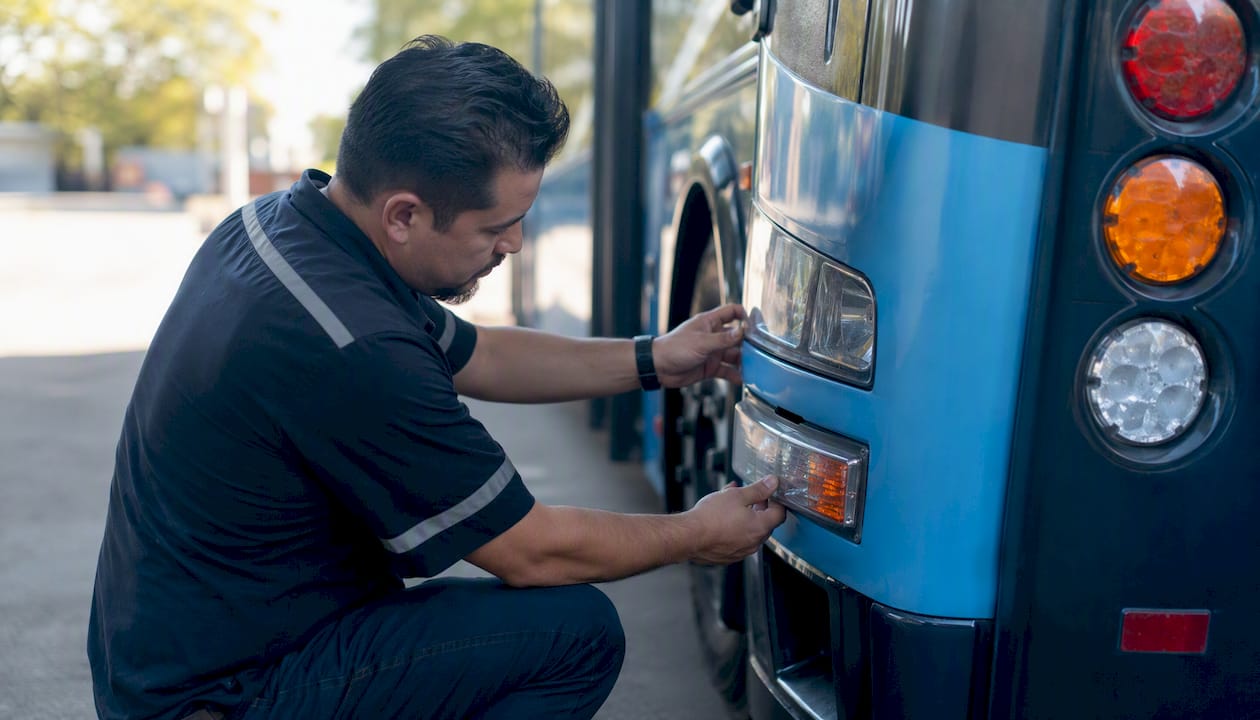
Push on vehicle specifics too: “What’s the age of the vehicle assigned to us, and does every seat have a working belt?” Follow up on maintenance: “Can I see your most recent inspection log?”
Finally, cover the scenarios nobody wants to think about. “What’s your plan if the bus breaks down mid-route?” and “What happens if weather forces a schedule change?” A provider with a clear, rehearsed answer to both questions has likely dealt with these situations before. One who fumbles the answer probably hasn’t planned for them at all.
A local carrier’s take on camp logistics
Reliant Transportation has run group transportation across Portland, the Willamette Valley, and Hood River for over a decade, and camp routes bring their own rhythm. We build in documented pre-trip inspections, ongoing driver training, and direct communication with parents so pickup windows stay predictable. Contingency plans exist before day one, not after something goes wrong.
How Reliant Transportation Supports Camp Organizers
Reliant Transportation is the local answer for camp organizers in Portland, the Willamette Valley, and Hood River who need routing built around real pickup windows rather than a generic charter template. We match fleet size to your group, whether that’s a single shuttle van for a day camp or a full motorcoach for an overnight trip, and every driver comes with documented training and inspection records ready to hand over.
Request a written quote and ask for our safety packet directly. It includes our USDOT/MC printout, current insurance certificate, and driver roster, the same documents this guide told you to verify with any provider. Browse our fleet and service options to see what fits your group size, or head to our home page to start the conversation.
Sources
- Passenger safety: company search | FMCSA
- School bus regulations FAQs | NHTSA
- School District Checklist: Charter the Safest Vehicles | NTSB