
A licensed charter coach is the safest, most reliable way to move a team to away games and tournaments, and it beats a caravan of parent cars almost every time. Before you pay a deposit, get three things in writing: an itemized quote, a signed service contract naming the vehicle and hours, and a certificate of insurance. Then verify the carrier’s USDOT number through FMCSA SAFER. Teams in the Portland, Willamette Valley, and Hood River area can get all three directly from Reliant Transportation.
TL;DR:
- Using a licensed charter coach reduces liability risks and operational chaos compared to organizing a caravan of parent vehicles, especially for multi-day tournaments.
- Proper vehicle size selection requires accounting for gear and personnel, with full-size coaches being ideal for varsity and multi-day trips due to ample undercarriage storage.
- Teams must obtain an itemized quote, signed service contract, and insurance certificate before booking, verifying the carrier’s safety rating via the FMCSA SAFER System.
- Finalizing the full itinerary before requesting quotes ensures accurate pricing and better group rates, preventing gaps or surprises on game day.
- A thorough day-of checklist and post-trip review help catch delays or issues early and improve future booking accuracy.
Table of Contents
- Why a Charter Coach Beats a Caravan of Cars
- Choosing the Right Vehicle for Your Roster and Gear
- What Documents Should You Request Before Signing?
- Why Should You Finalize the Full Itinerary Before Getting Quotes?
- Day-of Checklist Before Anyone Boards
- What a Post-Trip Review Actually Fixes
- Book Reliant Transportation for Your Next Away Game or Tournament
- Sources
- FAQ
Why a Charter Coach Beats a Caravan of Cars
A licensed charter carrier operates under commercial insurance and federal safety oversight that a lineup of parent minivans simply doesn’t have. When you charter, the liability for the vehicle, the driver, and the miles on the road sits with the carrier, not with whichever assistant coach volunteered to drive. Send a group of families in their own cars, and that risk lands on each driver and, often, on the organization that asked them to make the trip.
There’s also the logistics side, which matters more than most coaches realize until game day goes sideways. One point of contact for the route, the schedule, and the luggage removes a dozen small failure points: no lost caravans, no confusion about who’s picking up gear from the field, no drivers who got turned around on the way to the hotel.
That operational simplicity shows up directly in player performance:
- Players arrive together and rested, instead of trickling in over 40 minutes in three separate cars.
- Equipment travels in one place, under one bay, instead of split across trunks.
- Coaches manage one schedule instead of coordinating five volunteer drivers’ availability.
Chartering shifts both legal exposure and day-of chaos onto a licensed carrier, which is exactly what a team needs heading into a tournament weekend.
Choosing the Right Vehicle for Your Roster and Gear
Vehicle size decisions go wrong most often because coaches count heads and forget bags. A soccer team hauling duffels, a baseball squad with bat bags and a cooler, or a wrestling team with mats and gear bins all need real cargo space, not just seats.
Here’s how the main categories break down:
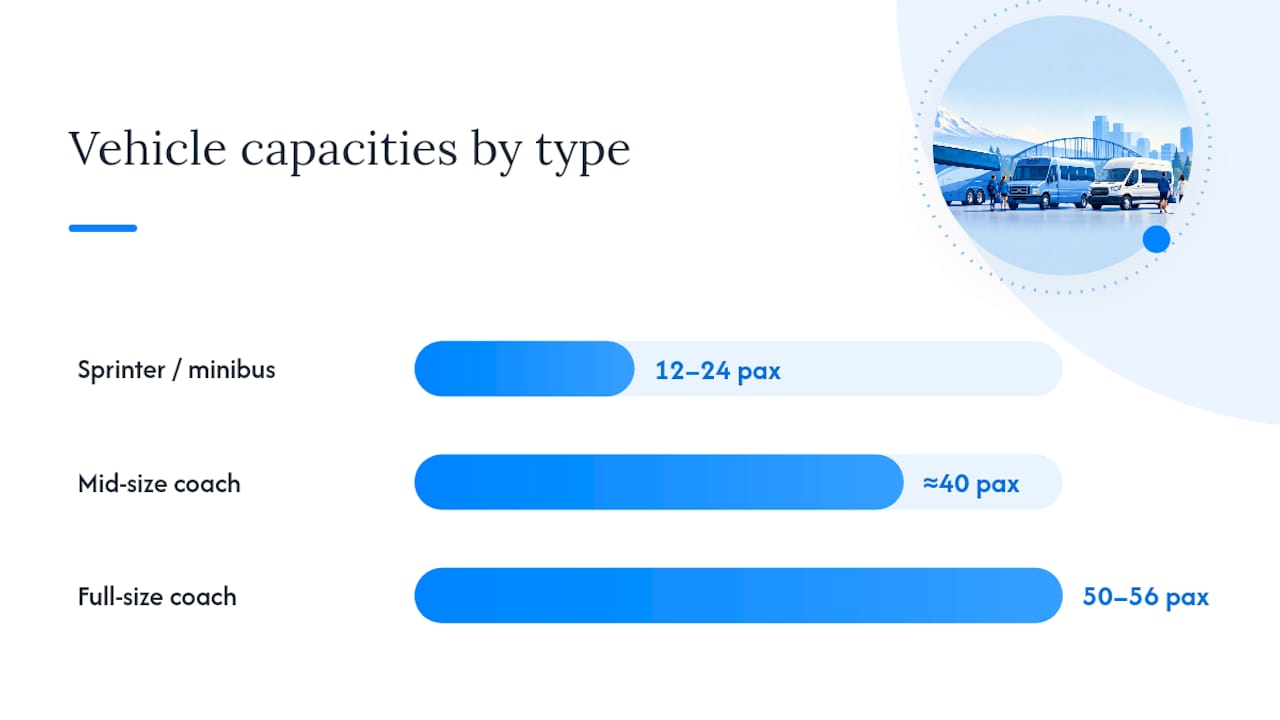
- Sprinter van or minibus (12 to 24 passengers): Works for small rosters or staff-only trips, but storage is limited. Fine for a short league game, tight for a weekend tournament with full gear.
- Mid-size coach (around 40 passengers): A common fit for junior varsity or club teams with moderate equipment needs and one overnight stop.
- Full-size coach (50 to 56 passengers): Comes with multiple large undercarriage bays that hold full team rigs, making it the better call for varsity travel or multi-day tournaments, according to charter industry capacity breakdowns.
Always count coaches, trainers, and team managers in your headcount, not just athletes. Amenities matter more on longer routes: a working restroom and decent seat pitch make a three-hour drive tolerable, while power outlets and Wi-Fi keep players occupied instead of restless. Check the charter bus sizes and seating chart guides before you request a quote so your numbers are accurate the first time.
Pro Tip: Send the carrier your actual equipment list, not just your roster size. Vehicle recommendations often change once bag counts, mats, or coolers get factored in.
What Documents Should You Request Before Signing?
Get three documents before any deposit changes hands. Skipping this step is the single most common way teams end up with hidden fees or a no-show vehicle on game day.
- An itemized quote breaking out base rate, mileage, driver hours, tolls, and any overnight or waiting fees.
- A signed service contract naming the exact vehicle type, scheduled hours, and the cancellation policy in plain language.
- A certificate of insurance (COI) confirming commercial auto and general liability coverage, which many venues and tournament organizers now require before they’ll allow a bus on the property.
Reputable procurement guidance from Ithaca College recommends this exact three-document standard before any payment is made, and it applies just as well to a youth soccer club as it does to a university athletic department.
Beyond the paperwork, verify the carrier itself. The FMCSA SAFER System lets you look up a carrier’s USDOT number, inspection history, and out-of-service rate for free, and it takes about two minutes. Look for a “Satisfactory” safety fitness rating before you commit. Ask directly about driver screening policies, parking and loading access at your venues, and how the carrier handles same-day schedule changes. A contract clause on cancellation terms, detailed further on our charter bus contract page, protects you if a tournament bracket shifts or a game gets rescheduled.
Why Should You Finalize the Full Itinerary Before Getting Quotes?
Piecemeal booking requests are how teams end up with mismatched pricing and gaps in coverage. A carrier can’t accurately price driver hours, hotel proximity, or deadhead miles (the empty return trip) if you’re sending them one leg at a time.
- Map every stop first. List every venue, hotel, and return leg before you contact a single carrier.
- Send one multi-city request. A full itinerary lets vendors quote honestly and often unlocks better group rates than piecemeal bookings would, according to team travel management guidance.
- Build in timing buffers. Add 30 minutes for a local single-leg trip, 60 to 90 minutes for tournament mornings with check-in lines, and extra time for urban traffic or any drive over two hours.
Teams that skip this step tend to discover the gaps the hard way, usually the morning of a 7 a.m. tournament check-in.
Day-of Checklist Before Anyone Boards
Most disputes and delays trace back to a handful of missed checks, and they take five minutes to run through before the bus leaves the lot.
- Confirm the driver’s name matches what’s in your contract.
- Walk the interior and confirm the vehicle type, seat count, and storage match what you booked.
- Check that the restroom and climate control actually work, not just that they’re present.
- Locate the emergency exits and confirm the driver has your hotel, venue addresses, and your emergency contact.
- For youth teams, confirm the driver’s screening status and whether your venue requires the carrier to list your organization as an additional insured.
A quick walk-through before boarding catches most mismatches between what was booked and what showed up, before it becomes a problem thirty minutes into the drive.
Pro Tip: Assign one adult, not the head coach, to run this checklist every trip. Consistency matters more than who does it.
What a Post-Trip Review Actually Fixes
Most coaches skip the debrief because the season keeps moving, but a five-minute review after every trip is the cheapest fix for repeated logistics problems. Document the headcount against what you booked, note any luggage or equipment that didn’t fit, and record any late arrivals or communication breakdowns with the carrier.
Rate the vendor on punctuality and responsiveness while it’s fresh, and write down any charges that weren’t in the original quote. This kind of debrief, similar to the cost reconciliation habits hospitality vendors track, is what separates programs that get smoother every season from ones that hit the same snags every spring. Feed those notes into a short internal checklist before your next booking request, and you’ll walk into the next quote conversation already knowing what to ask for.
— Dusty
Book Reliant Transportation for Your Next Away Game or Tournament
A licensed charter transportation company is the direct alternative to piecing together parent cars or gambling on an unverified carrier for team travel across the Portland metro, the Willamette Valley wine region, and Hood River. A reputable carrier coordinates the full itinerary with you upfront, provides credentialed drivers, and backs its service with the documentation this article just walked you through: an itemized quote, a signed contract, and a certificate of insurance, no chasing required.
Reliant Transportation supports a range of trip types beyond weddings and corporate shuttles, including general charter needs for teams heading to tournaments, away games, and multi-day travel. When you request a quote, include your roster count, equipment list, full itinerary with all stops, and any venue insurance requirements so the numbers come back accurate the first time. Check the charter bus sizes guide to match a vehicle to your gear before you submit your request. Then, book a charter bus directly to get your quote started.
Sources
- FMCSA SAFER System
- Bus chartering procedures and sample contracts and certificate insurance — Ithaca College Procurement
FAQ
How Far in Advance Should We Book Team Bus Travel?
Most teams should start requesting quotes several weeks before a tournament, and sooner for peak season weekends when coaches book up fast. Locking your full itinerary first, before you request quotes, keeps pricing accurate and avoids the scramble of a last-minute booking.
What Should Be Included in a Team’s Bus Travel Quote Request?
Send your full itinerary with every stop, your roster count including coaches and staff, and a detailed equipment list covering bags, mats, or coolers. Carriers price vehicle size and driver hours more accurately with complete information up front, which avoids surprise upgrades later.
How Do We Verify a Charter Bus Company Is Legitimate?
Look up the carrier’s USDOT number on the FMCSA SAFER System and confirm a “Satisfactory” safety fitness rating. Also request a certificate of insurance showing commercial auto and general liability coverage before you sign anything.
What Fees Should We Watch for in a Charter Bus Contract?
Ask specifically about tolls, driver waiting time, overnight parking, and fees for schedule changes, since these often aren’t in the base quote. An itemized quote and a signed service contract naming the cancellation policy protect you from surprise charges after the trip.
Does Reliant Transportation Serve Sports Teams Outside Portland?
Reliant Transportation serves the Portland metro area, the Willamette Valley wine region, and the Hood River area. Teams within that service area can request an itemized quote through the booking page, and current pricing is available directly on the site.