
For most corporate retreats, a layered plan works best: a chartered motorcoach for bulk group moves, scheduled shuttle loops for staggered arrivals, and rideshare reserved for edge cases only. Before you sign anything, confirm your motorcoach vendor’s USDOT registration and insurance coverage. Some charter providers offer bookings for groups organizing retreats within the Portland metro area and surrounding regions.
TL;DR:
- Charter buses are ideal for groups larger than 30 people traveling on a fixed schedule, offering efficiency and simplified coordination with a single pickup.
- Verify a vendor’s insurance coverage meets the FMCSA minimum of 5 million dollars and confirm active USDOT and operating authority registration before booking.
- Private shuttles and vans suit staggered arrivals and short-distance transfers, but require careful scheduling, staging, and contingency planning to avoid delays and extra costs.
- Rideshare should only supplement group transport for small groups under 15, with a set budget and pickup zones to avoid budget overruns during peak times.
- Plan transportation in three phases: cluster attendee flights during arrival, choose shuttle options on-site based on venue layout, and schedule departures with buffer time for late flights.
Table of Contents
- Charter buses and motorcoaches: when to pick a coach and what to verify
- Private shuttle and van services: the flexible middle ground
- Rideshare and on-demand: gap-filler tactic and corporate-account best practices
- How to choose and vet a transportation vendor: a single consolidated checklist
- Operational phases: arrival, onsite movement, and departure, practical steps
- Planner perspective: 3 rules of thumb and common mistakes
- How Reliant Transportation can support your retreat
- Sources
- FAQ
Charter buses and motorcoaches: when to pick a coach and what to verify
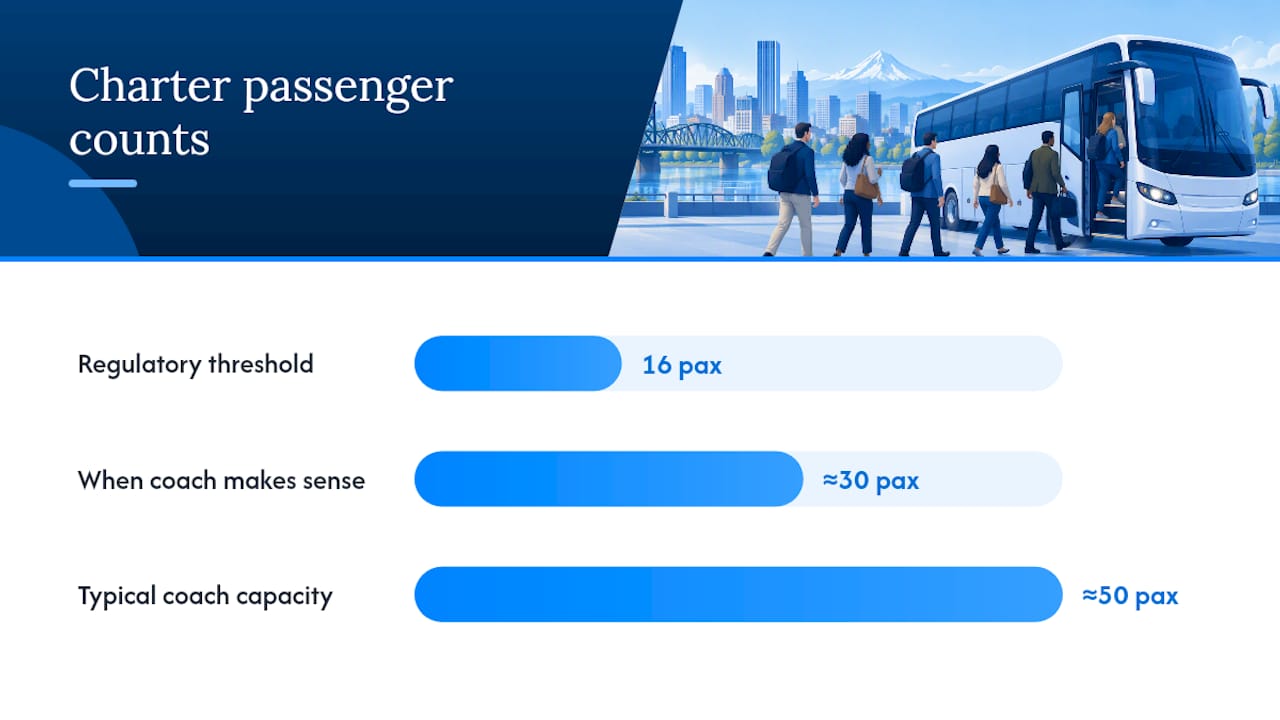
A full-size motorcoach makes sense once your group crosses roughly 30 people traveling together on the same schedule. Most coaches seat around 50 passengers, so a single vehicle can often handle an entire team offsite in one run instead of juggling multiple smaller vans. That efficiency comes with real coordination benefits: one pickup time, one route, one driver to communicate with.
Pricing on a coach charter typically comes down to a handful of factors:
- Hourly rates and minimum hours, since most operators charge for a set block of time even if your actual trip runs shorter.
- Overnight driver lodging, required when your retreat spans multiple days and the driver can’t return home between shifts.
- Deadhead miles, the cost of the bus traveling to and from your pickup location before and after your booked hours.
The tradeoff is flexibility. A motorcoach isn’t ideal for staggered arrivals spread across a full day, since you’d either run multiple trips or ask early arrivals to wait. Parking is another practical constraint. Not every venue has space for a 45-foot coach, and loading or unloading 50 people takes longer than planners often expect, especially with luggage.
Verify $5 million in liability insurance before booking. FMCSA licensing and insurance rules require vehicles designed to carry 16 or more passengers to carry that minimum coverage, along with valid USDOT and operating authority registration. Any vendor unwilling to produce this documentation is a vendor to walk away from.
Before requesting quotes, get a sense of vehicle capacity so you’re comparing apples to apples. A charter bus sizing guide can help you match group size to the right vehicle class instead of overpaying for excess capacity or underestimating what you need.
Private shuttle and van services: the flexible middle ground
When your group arrives in waves rather than all at once, a private shuttle or van fleet usually beats a single large coach. Mini-buses and passenger vans handle the repeated short runs that airport transfers and venue-to-venue hops demand, without the parking and turning-radius headaches of a full motorcoach.
- Match vehicle class to route length. Shorter, frequent loops favor 15 to 25 passenger vans; longer transfers with heavier luggage loads favor mini-coaches.
- Expect hourly or day-rate pricing with minimums. Most van operators set a floor of several hours per booking, so a two-hour airport run may still bill at a three or four hour minimum.
- Build a loop schedule, not a single pickup time. Staggered arrivals work best when a shuttle circulates on a fixed interval rather than waiting for a full vehicle.
- Stage luggage at a single designated point. This keeps loading times predictable and prevents vans from idling at the curb while bags get sorted.
The coordination cost is real: overtime charges apply if flights run late, staging areas need someone managing them, and you’ll want at least one contingency vehicle on standby in case a shuttle breaks down mid-rotation. For a retreat with attendees flying in across a four to six hour window, this model generally outperforms both a single coach and a pile of individual rideshare trips on cost and reliability combined.
Rideshare and on-demand: gap-filler tactic and corporate-account best practices
Rideshare has a role in retreat logistics, just a narrow one. It works well for small retreats under 15 people, last-mile coverage after a shuttle drops attendees near but not at the venue, or replacing a missed shuttle without derailing the whole schedule.
The risks show up at scale. Surge pricing during peak arrival windows can blow through a transportation budget fast. Availability in rural or vineyard-adjacent venues can be thin, and rideshare drivers carry none of the contractual liability protections a chartered vendor does.
- Set up a corporate rideshare account so trips bill centrally instead of relying on employee reimbursements.
- Designate a specific pickup zone at the airport and share it in advance, since generic terminal pickups create confusion and delay.
- Build a surge allowance into your budget for peak-hour trips rather than getting surprised by it after the fact.
Pro Tip: Cap rideshare use to a modest portion of your total attendee trips. Beyond that, it is more efficient to add a shuttle loop.
How to choose and vet a transportation vendor: a single consolidated checklist
Vetting a charter vendor is where most planners either protect themselves or expose their organization to real liability. Start by requesting documentation, not just a quote.
- USDOT and MC numbers, confirming the carrier holds active operating authority for interstate service.
- Proof of insurance, showing coverage that meets FMCSA’s threshold of $5 million for vehicles carrying 16 or more passengers.
- Maintenance and inspection logs, which reputable operators keep on file and should hand over without hesitation.
- CDL verification for drivers, along with confirmation of hours-of-service compliance so a driver isn’t running on an illegal shift.
- A written drug and alcohol testing policy, a standard FMCSA chartering guidelines call out explicitly.
Once the paperwork checks out, move to the contract. Cancellation terms and overtime rates matter more than they seem to at signing, especially if your retreat agenda shifts (and it usually does). Ask how deadhead miles and fuel surcharges get calculated, whether a contingency vehicle is guaranteed if the primary bus breaks down, and how invoicing works if your final headcount changes close to the event date. A charter bus contract guide lays out the specific terms worth negotiating before you sign.
On the operational side, ask about fleet age, whether vehicles meet ADA accessibility standards, and what backup plan exists if a bus goes out of service mid-retreat. FMCSA’s motorcoach guidance requires wheelchair lift accommodations with 48 hours’ notice, so confirm your vendor can meet that window if any attendee needs it. Ask for references from other corporate events of similar size, not just wedding or school trip testimonials.
Pre-booked charter arrangements guarantee vehicle allocation and documented driver standards in a way on-demand models can’t match, particularly for coordinated group movements where duty-of-care matters.
Red flags to walk away from: a vendor with no interstate operating authority when your retreat crosses state lines, reluctance to share insurance details in writing, or no clear answer when you ask about backup vehicles.
Operational phases: arrival, onsite movement, and departure, practical steps
Break the transportation plan into three phases and work each one backward from your event schedule.
- Arrival phase. Collect flight information from attendees four to six weeks out, then cluster arrivals into 2 to 3 hour windows rather than treating every flight as a separate pickup. Run shuttle loops every 60 to 90 minutes and staff a meet-and-greet point so attendees know where to go.
- Onsite phase. Decide between fixed shuttle loops and on-demand pickups based on venue layout, then print shuttle times directly onto agenda cards so nobody has to ask. Designate a single luggage staging area to keep loading times predictable, and reference a seating chart template if boarding order matters for a large group.
- Departure phase. Plan backward from the earliest outbound flight, cluster departures into similar windows, and build in buffer time. Keep one standby vehicle available for anyone whose flight or schedule shifts late.
Planner perspective: 3 rules of thumb and common mistakes
Book charters six to eight weeks ahead, verify every regulatory document before you sign, and always have a backup vehicle lined up. Those three habits prevent most retreat transportation disasters.
The mistakes I see most often: treating rideshare as a substitute for group transport instead of a supplement, skimming contract terms until a cancellation fee surprises everyone, and underestimating how long it actually takes to load 40 people and their luggage onto a bus.
— Dusty
How Reliant Transportation can support your retreat

Certain transportation companies coordinate corporate shuttles, conference transfers, and multi-stop retreat itineraries for groups organizing travel within the Portland metro area, the Willamette Valley wine region, and the Hood River area. Planners may receive itinerary coordination, tailored fleet options, and logistics support handled by a single point of contact instead of piecing together multiple vendors.
| Scenario | Best fit |
|---|---|
| Airport arrivals to a single venue | Charter coach or shuttle loop |
| Multi-day retreat with several venue stops | Charter coach with scheduled loops |
| Conference transfers between hotel and event space | Private shuttle or van service |
Request a custom quote for your retreat and get a clear proposal before your booking window closes.
Sources
- Licensing and insurance requirements for hire motor carriers of passengers | FMCSA
- Tips for chartering a bus | FMCSA
- Legal notice: motorcoach operations | FMCSA
- Ground transportation for corporate retreats: charter buses, shuttles, and rideshares | Offsite
FAQ
Are corporate retreats still a thing?
Yes, companies continue to organize corporate retreats for team building and offsite planning, and transportation logistics remain a core part of executing them well. The format has shifted toward tighter budgets and more detailed logistics planning rather than disappearing.
What is corporate transportation?
Corporate transportation covers the vehicles and logistics used to move employees or clients for business purposes, including retreats, conferences, and client events. It typically includes charter buses, private shuttles, and rideshare arrangements coordinated around a specific event schedule.
How much does a corporate retreat cost?
Transportation costs vary based on group size, vehicle type, and trip length, with charter coaches, shuttles, and rideshare each carrying different rate structures. Reliant Transportation provides pricing on request through a custom quote request based on your specific group size and itinerary.
How does a shuttle service work?
A shuttle service runs vehicles on a scheduled loop between fixed points, such as an airport and a hotel or between venues on a retreat itinerary. Shuttles typically operate on a set interval, commonly every 60 to 90 minutes, rather than waiting for a single large group to assemble before departing.