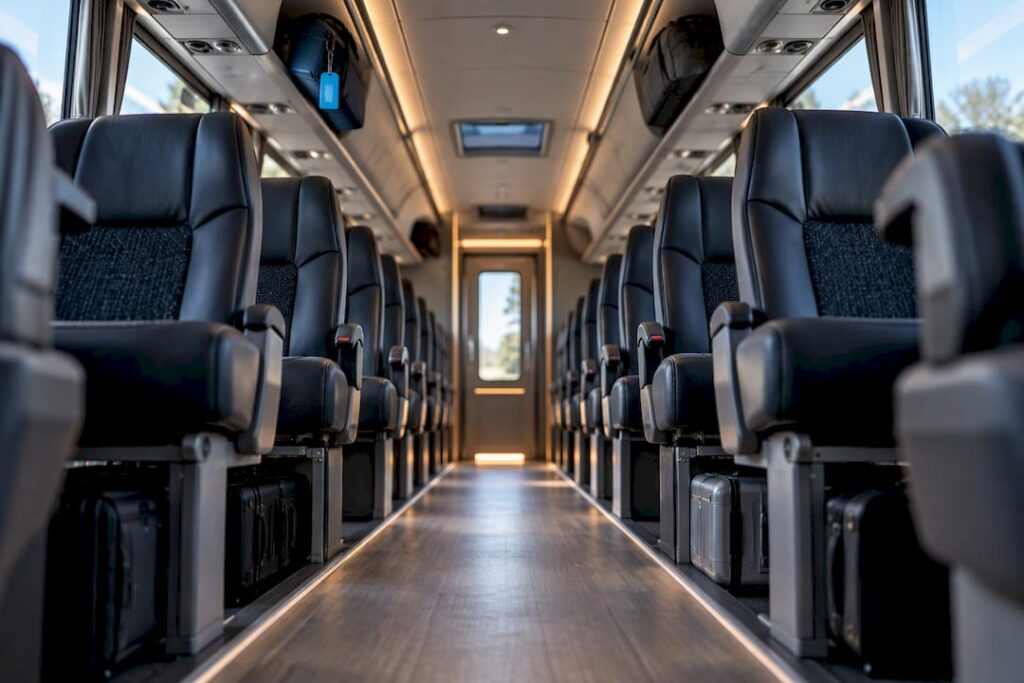
Keep everything you need within arm’s reach and keep the aisle clear. That’s the whole rule. Your carry-on should hold three things above all else: your photo ID and itinerary, any medications you take, and your phone with its charger or a power bank. Everything else can go in the luggage bay below. The checklist below fills in the rest.
TL;DR:
- Keep your carry-on limited to essential items like your ID, medication, phone, and snacks, as everything else should go in the luggage bay.
- Secure all bags and personal belongings to prevent shifting during braking and avoid blocking aisles or exits for safety compliance.
- Pack differently based on trip length, with more comfort items and backups for long trips over eight hours or multi-day journeys.
- Download entertainment beforehand and bring comfort accessories like travel pillows and noise-canceling headphones to improve the ride.
- Label and organize your luggage to speed up loading and unloading, and always follow safety rules to ensure a safe and smooth trip.
Table of Contents
- Charter Bus Packing List: Carry-On vs. Under-Bus Items
- Adjusting Your Packing List by Trip Length and Type
- Comfort and Entertainment That Actually Improve the Ride
- Snacks, Water, and Medications: What to Pack and How to Store It
- Safety Rules That Shape What You Pack
- Packing Smart: Labels, Organization, and Boarding Routine
- A Quick Checklist for Group Leaders and Planners
- Why These Habits Make for Safer, Smoother Trips
- Book Reliant Transportation for Your Next Group Trip
- Where This Packing Advice Comes From
- Sources
- FAQ
Charter Bus Packing List: Carry-On vs. Under-Bus Items
Sort your gear into two piles before you even open a suitcase: what rides with you in the cabin, and what goes underneath. Mixing these up is the fastest way to end up digging through a duffel bag at 65 miles per hour, or worse, blocking the aisle while you do it.
Your carry-on bag should hold:
- Photo ID, printed or digital itinerary, and any event tickets or reservation confirmations
- Medications in their original containers, plus a note listing dosages if you take several
- Wallet, phone, charging cable, and a fully charged power bank
- Travel-size hygiene items: hand sanitizer, wet wipes, tissues
- One change of clothes, especially on trips over a few hours
- Snacks and a refillable water bottle for the first leg of the ride
Everything bulky belongs under the bus: full-size suitcases, garment bags, golf clubs, extra shoes, gift bags for a wedding, or coolers for a wine tour stop. If it doesn’t fit under your seat or in the overhead rack without spilling into the walkway, it goes below. Charter operators size their luggage bays to the vehicle. A larger coach holds noticeably more than a minibus, so check your vehicle size before you assume there’s room for many checked bags per person.
One habit matters more than any item on this list: secure what you bring. A bag wedged loosely in an overhead rack can shift hard during braking, and anything left in the aisle or blocking a doorway creates a hazard the driver has to stop and address before moving. Federal guidance on motorcoach safety is explicit that aisles and exits stay clear the entire trip, not just during boarding.
Adjusting Your Packing List by Trip Length and Type
A two-hour ride to a vineyard tasting and a fourteen-hour trip to a wedding out of state call for two different bags. Scale your packing to the clock, not just the destination.
- Day trips (under 4 hours): Pack light. A small daypack with your ID, phone, snacks, and a light jacket covers most of it.
- Overnight or multi-day trips: Add a toiletry kit, a change of clothes for each day, a compact pillow, and a light blanket.
- Long-haul trips (8+ hours): Bring a second charging cable, a full-size travel pillow, and a printed backup of your itinerary in case your phone dies.
- Event-specific trips: Weddings need garment bags and shoes packed separately from everyday items; corporate trips benefit from a spare charger and printed materials.
- Trips with kids: Pack extra snacks, a favorite small toy or tablet loaded with offline shows, and a change of clothes within easy reach, not buried in a checked bag.
Comfort and Entertainment That Actually Improve the Ride
The right gear turns a long bus ride from something you endure into something you barely notice, highlighting how convenience is the top priority in business travel. A few choices make a real difference, and a lot of extras just take up space.
- An inflatable or memory-foam travel pillow beats a rolled-up jacket every time
- A compact fleece blanket or a large scarf that doubles as a wrap
- Over-ear noise-canceling headphones for music or movies; foam earplugs as a lighter backup
- A downloaded playlist, podcast episodes, or offline movies since cell service gets spotty in rural stretches of the Willamette Valley
- Layers you can add or shed, since bus climate control runs cold for some riders and warm for others
Pro Tip: Download your entertainment before you leave the driveway. Streaming over a moving bus’s cell signal drains your battery twice as fast and drops constantly once you’re outside city limits.
Snacks, Water, and Medications: What to Pack and How to Store It
Food and medication rules on a charter bus are simpler than airport security, but a little planning keeps things smooth for you and the people sitting near you.
- Pack shelf-stable, single-serve snacks: granola bars, pretzels, dried fruit, nuts
- Bring a refillable water bottle and plan to top it off at rest stops rather than hauling six bottles from home
- Keep all medications in your carry-on, in original containers, never in checked luggage
- Carry a written list of your prescriptions and dosages if you’re on more than one
TSA guidance on medically necessary liquids allows larger quantities than the standard limit when declared, and TSA’s general food guidance permits solid snacks in carry-on without issue. Keeping meds on your person, not in a bag under the bus, means you’re never without them if a stop runs long or plans shift.
Safety Rules That Shape What You Pack
Charter bus safety rules aren’t bureaucratic red tape. They’re the reason your driver can react fast in an emergency and the reason your trip stays on schedule.
- Keep aisles and doorways completely clear at all times, not just during boarding
- Don’t overpack the underbody luggage bay; heavy, unevenly distributed bags stress tires and axles
- Skip hazardous materials: propane canisters, flammable liquids, and large amounts of aerosol don’t belong on a bus
- If you use a wheelchair or need lift-equipped boarding, notify your operator well in advance
FMCSA’s advisory on motorcoach loading points out that overloaded luggage bays, especially on certain coach designs, have contributed to tire failures on the road. That’s not a small detail. It’s the difference between a driver who can distribute weight safely and one working around a bay stuffed past its limit. Federal rules also require accessible service, including wheelchair lifts and securement, when operators get 48 hours’ notice.
Packing Smart: Labels, Organization, and Boarding Routine
A well-organized bag saves you time at every stop and keeps your valuables where you can see them.
- Use packing cubes or clear zip pouches to separate electronics, toiletries, and snacks inside your carry-on
- Label every bag, checked and carry-on, with your name and phone number
- For large groups, use colored tags or numbered stickers so bags sort quickly at loading and unloading
- Pack an “exit kit” at the very top of your carry-on: phone, wallet, ID, and any meds you might need at a rest stop
- Take your carry-on with you whenever you leave the bus, even for a quick stop; drivers often lock the vehicle during longer breaks
Pro Tip: If you’re traveling with a group of ten or more, hand out colored luggage tags before boarding. It sounds minor, but it cuts loading confusion dramatically and speeds up claiming bags at the other end.
A Quick Checklist for Group Leaders and Planners
If you’re organizing the trip, your prep list looks a little different from your passengers’.
- Confirm the final headcount, emergency contacts, and any ADA accessibility needs with your operator
- Verify the driver’s contact information, the itinerary, and planned stop times
- Send passengers a short packing guide covering carry-on essentials and the aisle-clear rule before departure
- Pack a small group kit: a spare charging cable, a basic first aid kit, and extra hygiene wipes
Why These Habits Make for Safer, Smoother Trips
Passengers who keep their carry-ons secured and aisles clear aren’t just following a rule. They’re helping the driver stick to the schedule and respond fast if anything unexpected happens on the road. At Reliant Transportation, we build our amenities and seating layouts around exactly this kind of smooth, predictable ride for groups across the Portland metro, the Willamette Valley wine region, and Hood River.
— Dusty
Book Reliant Transportation for Your Next Group Trip
A good charter bus company handles the logistics so your group doesn’t have to think twice about luggage bays, seating charts, or ADA accommodations. Our drivers manage the loading, our vehicles come with the amenities your group actually uses, and we give 48 hours’ notice enough time to arrange wheelchair-accessible coaches when needed.

Whether you’re coordinating a wedding shuttle through the wine country or a corporate trip across Portland, our services page lays out what’s included for weddings, corporate events, and limo buses. Ready to lock in a date? Get a clear quote and reserve your charter today.
Where This Packing Advice Comes From
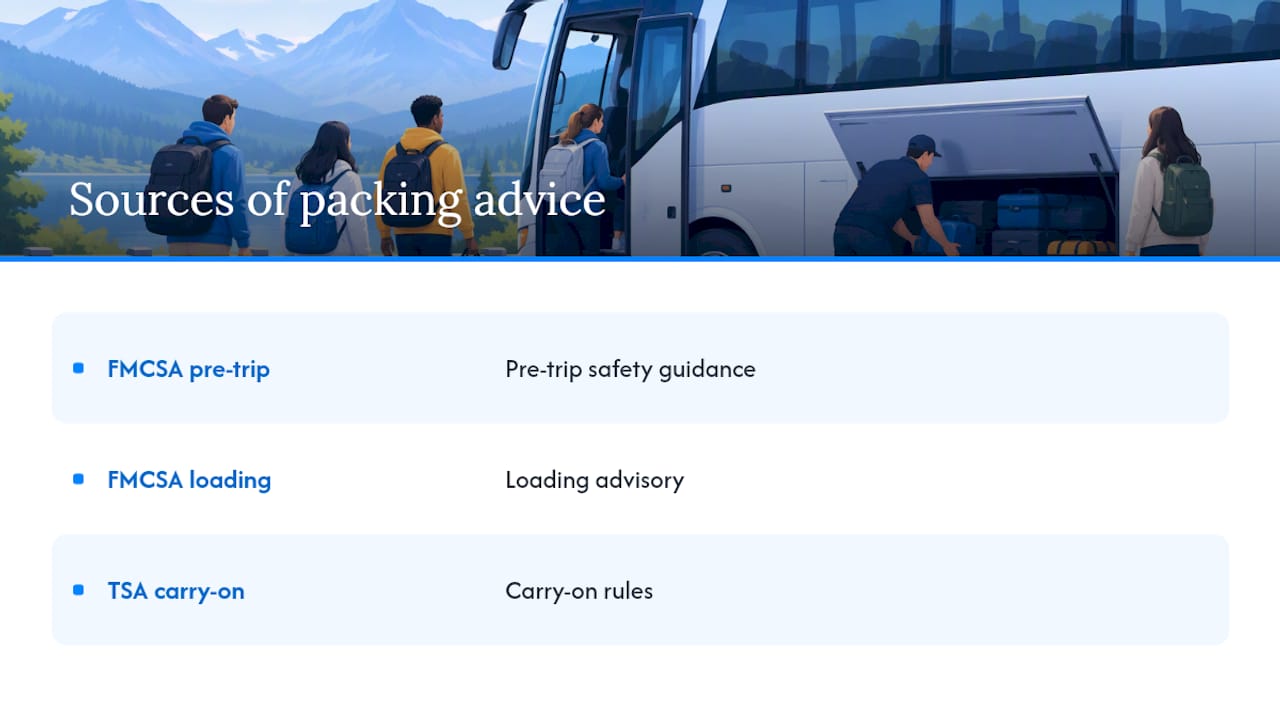
This guide draws on FMCSA pre-trip safety guidance, FMCSA’s loading advisory, and TSA’s carry-on rules.
Sources
FAQ
How many bags can you take on a charter bus?
Most charter operators allow one checked bag and one carry-on per passenger, though this varies by bus size and group headcount. Always confirm bag limits with your operator before the trip, especially for weddings or events with extra gear like garment bags or gifts.
How do you survive a 20-hour bus ride?
Pack a real travel pillow, noise-canceling headphones or earplugs, and offline entertainment downloaded before departure. Layer your clothing for temperature swings, bring shelf-stable snacks, and get up to stretch at every rest stop the driver allows.
How much should you tip a charter bus driver?
Tipping isn’t required, but many groups give a customary gratuity for a private charter driver, with higher amounts often given for weddings or multi-day trips involving heavy logistics. Check with your event coordinator or the charter company, since some corporate contracts already build gratuity into the total.
Do charter bus restrooms flush?
Most charter and motorcoach restrooms use a self-contained holding tank system rather than a traditional flush, and they work reliably when used properly. Read more about what to expect on our charter bus bathroom guide before your trip.