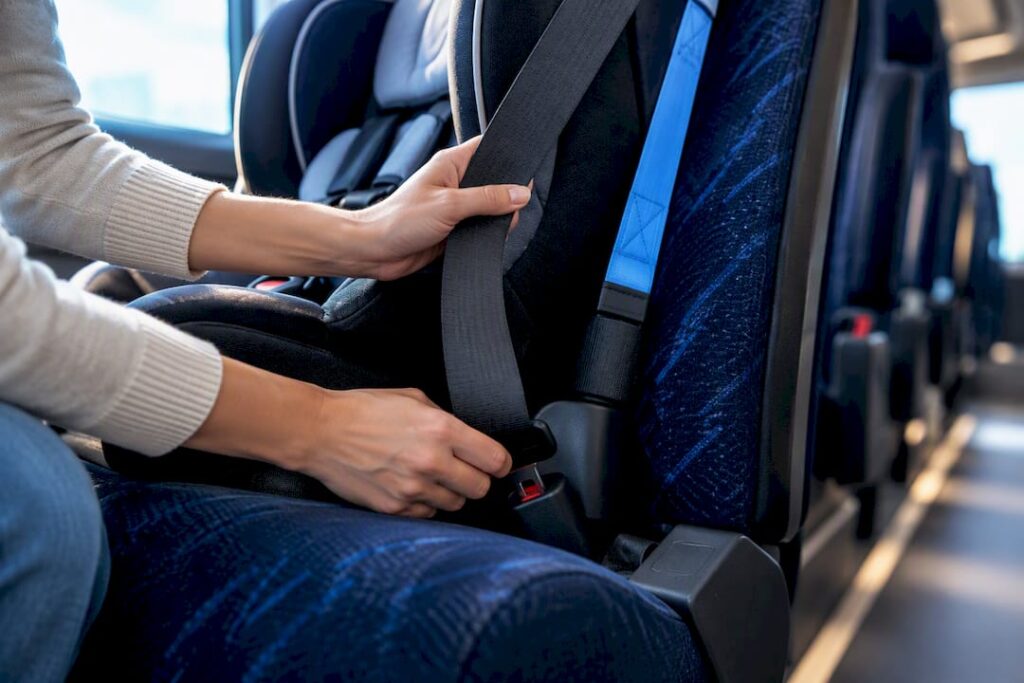
You can only use a car seat on a charter bus when the coach’s seat belt or anchorage matches the exact belt path your car seat’s manual requires. No compatible belt or anchorage means no safe installation, full stop. Before you book, get it in writing from the operator: does the assigned coach have lap-shoulder belts, and will it accommodate your car seat model in a forward-facing position?
TL;DR:
- Many older charter and city buses lack seat belts or anchorages, making car seat installation impossible on those vehicles.
- Only newer motorcoaches equipped with lap-shoulder belts and matching hardware allow safe installation of car seats, requiring verification beforehand.
- Proper installation requires routing the belt through the manufacturer’s designated path and possibly attaching tethers or anchors, following exact instructions.
- Booking should include written confirmation of vehicle type, belt availability, and explicit approval for your specific car seat model in advance.
- If a suitable coach isn’t available, consider separate transportation or staggered travel arrangements to ensure child safety compliance.
Table of Contents
- Can You Use a Car Seat on a Charter or Motorcoach Bus?
- What Hardware Makes a Car Seat Actually Installable
- How to Plan and What to Ask the Operator Before You Book
- Installation Checklist for a Safe Fit on a Charter Bus
- If You Can’t Secure a Car Seat: Safe Alternatives
- What Federal Guidance Says About Bus Restraints and Child Safety
- From Reliant Transportation: Common Mistakes and Realistic Planning Tips
- How Reliant Transportation Helps Families Travel Safely
- Sources
- FAQ
Can You Use a Car Seat on a Charter or Motorcoach Bus?
The answer depends entirely on which type of bus shows up. City transit buses and a lot of older charter coaches were built without any seat belts at all, which means there’s nothing to thread a car-seat harness through. No belt, no anchorage, no installation. Period.
Motorcoaches are a different story, but it’s still not guaranteed. The FMCSA does not require seat belts on every type of motorcoach, though many newer coaches in active fleets now come equipped with lap-shoulder belts. Whether your assigned vehicle has them comes down to the operator’s fleet and their policy, not a blanket federal rule.
This is exactly why the underlying safety principle matters more than the vehicle type. NHTSA guidance built for school buses recommends child safety restraint systems for preschool-age kids whenever a seat can be properly secured. That logic carries straight over to charter travel:
- No belts or anchorages on the coach means no installed car seat, regardless of the child’s age.
- Newer motorcoaches with lap-shoulder belts open the door to a compatible installation.
- Fleet age and maintenance standards vary widely by operator, so never assume based on one past trip.
What Hardware Makes a Car Seat Actually Installable
A car seat resting on a padded coach bench isn’t secured. It’s just sitting there, and in a sudden stop it will move exactly like an unbelted suitcase. For a genuine installation, the seat needs one of three things: a lap-shoulder belt routed through the manufacturer’s designated belt path, a lap belt if your specific seat manual allows lap-belt-only installation, or a certified anchorage and tether if the seat calls for one.
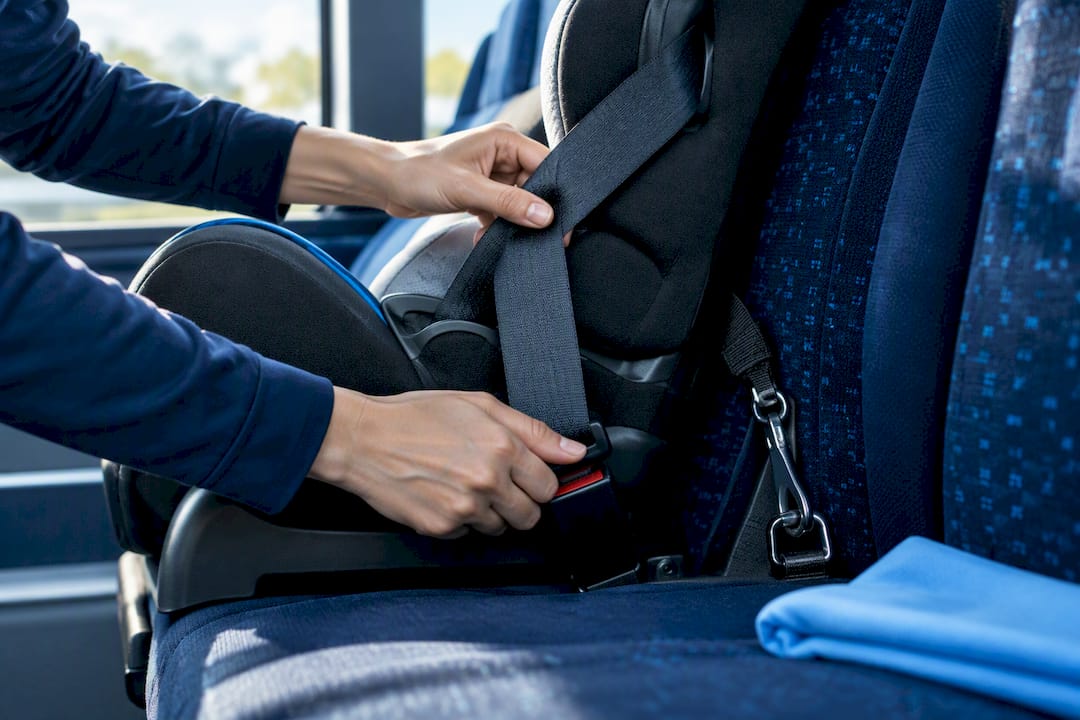
NHTSA’s own installation guidance is unambiguous here. Every car seat has to go in using either the lower anchors or a seat belt, following the manufacturer’s instructions exactly, with the correct belt path and tether when the seat requires it. Skipping that step because the coach “seemed fine” is how misuse happens.
Before you even step onto the bus, verify against your car seat’s manual:
- The seating position must be forward-facing, with belt geometry that matches what your seat manual specifies.
- A belt-equipped bus is not automatically compatible. The belt still has to route through the exact path your car seat manufacturer designed for it.
- If the manual doesn’t permit the configuration the coach offers, that seat position is off the table. Find another plan instead of forcing it.
How to Plan and What to Ask the Operator Before You Book
The single biggest planning mistake is booking a coach without confirming what’s actually inside it. Fix that with a short, direct process:
- Request written confirmation of the assigned vehicle type, whether seats have lap or lap-shoulder belts or anchorages, forward-facing seat availability, and explicit permission to install your specific car-seat model.
- Share the details upfront: each child’s age, height, and weight, the car-seat model and its required installation method, how many seats you need installed, and your route and pickup points.
- Add a contract clause requiring the operator to confirm coach assignment and belt availability before your final payment goes through. Reliant Transportation’s charter bus contract guide breaks down exactly what language to include.
Pro Tip: Ask for the vehicle’s make, model, and seating diagram, not just a vague “yes, it has belts.” Fleets often mix motorcoaches, shuttles, and limo buses with completely different seat orientations, so the specific vehicle assignment is what actually matters.
Installation Checklist for a Safe Fit on a Charter Bus
Bring three things onto the bus: the car-seat manual, your child’s current height and weight, and any tools the installation calls for. Before you seat your child, physically inspect the belt path and confirm the seating orientation matches what the manual requires.
- Route the belt through the correct path exactly as diagrammed in the manual, and lock the belt if your seat requires a locking clip.
- Attach the top tether or anchorage if the seat calls for one, and check for a snug harness fit with no slack at the shoulders.
- Keep the aisle and every emergency exit clear. Don’t place a car seat next to an exit if it could block a quick evacuation.
- Recheck the straps periodically during the trip. Coach seats shift slightly with vibration and turns, and a harness that was snug at boarding can loosen over hours.
This level of care isn’t overkill. CDC-cited research estimates roughly 46% misuse across studies of car-seat installations, and that number climbs higher when boosters are excluded from the count. A charter bus, with its unfamiliar seat geometry, is not the place to guess.
If You Can’t Secure a Car Seat: Safe Alternatives
Sometimes the coach simply doesn’t have what your seat needs. That’s a real possibility, and it calls for a real plan instead of a shortcut.
- Ask the operator directly for a belt-equipped coach, or request that your group’s vehicle assignment be swapped before departure.
- Arrange separate transport, like a personal vehicle, for the youngest passengers while the rest of the group travels on the coach.
- Stagger the trip so car seats travel where they can actually be installed correctly.
Never hold a child on your lap as a substitute. It provides no crash protection whatsoever and puts the child at direct risk if the bus stops suddenly. For older kids who might use a booster instead of a full car seat, age alone doesn’t determine readiness. CDC and NHTSA guidance both tie booster readiness to a proper lap-and-shoulder belt fit, not a birthday.
What Federal Guidance Says About Bus Restraints and Child Safety
Three agencies shape the guidance parents and organizers should lean on. The FMCSA recommends using available lap or shoulder belts on motorcoaches and advises operators to run a pre-trip safety briefing, since belt requirements genuinely vary by vehicle type. NHTSA’s school-bus CSRS guidance shows preschool-age children are safest in a properly secured restraint system whenever anchorages or belts exist, and any retrofit has to follow the manufacturer’s instructions to the letter. CDC data on misuse rates backs up why correct installation, not just having a seat, is what actually protects a child.
A car seat that isn’t installed to the manufacturer’s exact belt path and tether specification offers little more protection than no car seat at all. The hardware match is the whole safety equation, not a formality.
- FMCSA: recommend available belts, brief passengers before departure.
- NHTSA: secure CSRS whenever anchorages or belts allow it, follow manufacturer instructions exactly.
- CDC: misuse rates are high enough that a certified Child Passenger Safety Technician is worth consulting for an unfamiliar installation.
From Reliant Transportation: Common Mistakes and Realistic Planning Tips
The mistake we see most often is a group booking a generic party bus without ever confirming seat type, then discovering there’s nowhere to install a car seat. Require the coach assignment and belt type in writing before you pay. Request front-row seating for CSRS installations, build in time for a quick on-site check at boarding, and if you’re unsure about the fit, a certified CPST inspection before departure beats guessing on the day of travel.
— Dusty
How Reliant Transportation Helps Families Travel Safely
Expert transportation providers help organizers match the right coach to the trip, assisting with identifying belt-equipped vehicles and planning seating so the front rows work for CSRS installation instead of leaving families to improvise mid-trip.
Services are available to groups across the Portland metro area, the Willamette Valley wine country, and the Hood River area, with seating conversations encouraged early in the booking process. If you’re planning a family reunion, a wedding shuttle with young guests, or a school or community group outing, start with our charter bus seating chart guide to map out where child seats will actually fit, then head to our services page to see the vehicle types available for your group. Ready to lock in a coach that fits your family’s safety requirements? Request a quote and reserve your charter bus and tell us about your car-seat needs when you book.
Sources
- Pre-trip Safety Information for Motorcoach Passengers | FMCSA
- Guideline: Safe Transportation of Preschool-Age Children — NHTSA
- Stacks
FAQ
Does My Toddler Need a Car Seat on a Bus?
Yes, whenever the vehicle provides a compatible belt or anchorage, NHTSA recommends securing preschool-age children in a properly installed car seat. If the coach has no compatible hardware, the seat cannot be safely installed, and you’ll need one of the alternatives covered above instead.
Can a 7-Year-Old Ride Without a Car Seat or Booster?
Readiness depends on fit, not age. A child is ready to skip the booster only once a regular lap-and-shoulder belt fits properly across the hips and chest, which CDC and NHTSA guidance both tie to size, not a specific birthday.
Can I Ride the Bus With My Baby on My Lap?
No. Holding an infant on your lap offers no crash protection and puts the child at serious risk if the bus stops suddenly or is involved in a collision. Always use a properly secured car seat when the vehicle allows it, or arrange alternate transport when it doesn’t.
Can I Bring a Car Seat on a Charter Bus?
You can bring one, but it only helps if the assigned coach has a belt path or anchorage that matches your car seat’s manual. Confirm this with the operator in writing before booking, since belt availability varies by vehicle and fleet.
Does Reliant Transportation Offer Vehicles That Work With Car Seats?
Reliant Transportation can help identify belt-equipped coaches and plan seating positions suited to car seats and boosters for groups traveling in the Portland metro area, the Willamette Valley wine country, and the Hood River area. Reach out through the booking page with your car-seat requirements before you finalize a reservation.