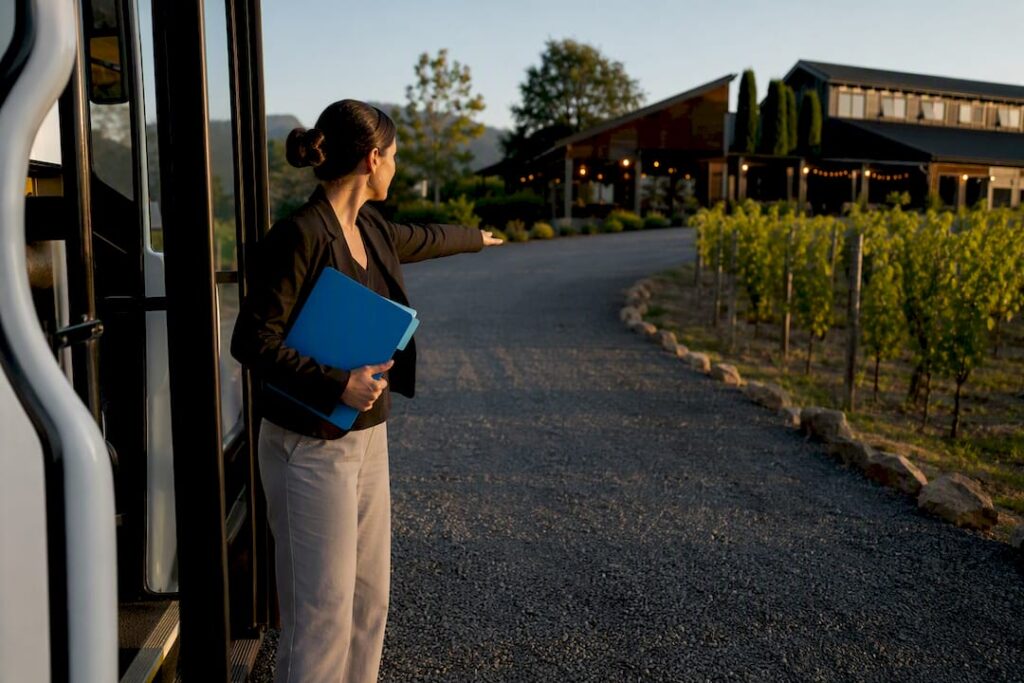
For Portland-area weddings, Reliant Transportation is the local standout for charter bus and shuttle service, backed by a decade of strong ratings, hands-on Portland metro and Willamette Valley routing knowledge, and a well-kept fleet sized for everything from a small bridal party to a full guest list. Get quotes from at least two operators, but start your comparison here, and lock in your date early. Peak Saturdays fill fast.
TL;DR:
- Booking early, especially for June through September weekends, ensures availability of preferred vehicles for peak wedding dates.
- Confirm venue access beforehand to avoid issues with gravel driveways, low-hanging branches, or narrow roads that could block large coaches.
- Comparing detailed quotes is vital, as hidden charges like wait time, fuel surcharges, or gratuity may significantly increase costs on the wedding day.
- Matching vehicle size to guest count is crucial; undersizing leads to delays and stressed guests, while sizing up provides more flexibility.
- Choose an operator with local route experience and a well-maintained fleet to ensure safety, punctuality, and proper handling of venue-specific access challenges.
Table of Contents
- Best Wedding Venues Portland: What Reliant Transportation Provides
- How to Compare Shuttle Quotes and What to Ask Every Vendor
- Building Buffer Time Into Boarding, Traffic, and Photo Blocks
- Checking Venue Access Before the Coach Arrives
- Who Handles What: Day-of Coordination Roles
- Insurance and Safety Standards Every Operator Should Meet
- Customizable Packages: Refreshments, Decorations, and Add-Ons
- Why Driver Professionalism Matters More Than People Expect
- How Booking Works, Step by Step
- Why Portland Weddings Need Local Transportation Expertise
- Get a Quote From Reliant Transportation
- Sources
- FAQ
Best Wedding Venues Portland: What Reliant Transportation Provides
When couples search for the best wedding transportation in Portland, they’re usually trying to solve three problems at once: how many vehicles they need, whether the operator actually knows local roads, and whether the company will show up on time and stay flexible when the day runs long. Reliant Transportation is built around those three questions.
The fleet covers the full range of wedding-day needs:
- Sprinter vans for bridal party transport or small VIP runs, typically seating up to about a dozen riders.
- Shuttle vans for mid-size guest groups, generally seating from the low to mid twenties.
- Minibuses for larger guest counts, usually seating in the mid to mid-thirties range.
- Full-size charter coaches for big weddings or multi-hotel guest shuttles, often 50 to 56 seats.
Matching the vehicle to your guest counts matters more than most couples expect. Undersizing means a second trip, tighter timing, and stressed-out guests standing in a parking lot.
Beyond the vehicles, Reliant handles the planning calls that keep a wedding day from falling apart: routing between ceremony and reception sites, chauffeur assignments confirmed ahead of the event, and backup procedures if a road closes or a pickup runs behind. The company emphasizes punctuality and professionalism and offers blog resources to help couples with timeline planning, seating charts, and vehicle sizing before they make contact.
Pro Tip: If your wedding falls on a peak Portland Saturday, especially June through September, book your shuttle before you finalize your catering. Vehicles disappear faster than caterers do.
How to Compare Shuttle Quotes and What to Ask Every Vendor
Two quotes that look similar on paper can hide very different costs once the wedding day actually happens. Operators typically price one of two ways: an hourly rate with a minimum block of hours, or a flat day rate for longer, multi-leg jobs. Either way, ask what’s included and what isn’t.
Watch for these add-on fees before you sign anything:
- Wait time or overtime charges if the ceremony runs long or the reception goes past the contracted hours.
- Fuel surcharges on top of the base rate, especially for longer Willamette Valley or Hood River runs.
- Gratuity, which is sometimes built in and sometimes tacked on separately.
- Cleaning or damage deposits, common with larger coaches.
Before you book, get these details in writing: exact start and end times, the specific vehicle assigned (not just a vehicle class), a direct driver contact for the day of, and the cancellation and overtime policy spelled out in plain language. Planners often warn that the lowest quote can lack dispatch reliability or the flexibility to shift when your timeline slips, and a wedding day always slips a little.
On your first call, ask: What vehicle will actually show up? Who do we call day-of if something changes? What’s your overtime rate per hour? And how far in advance do you need our final headcount?
Building Buffer Time Into Boarding, Traffic, and Photo Blocks
A route that takes 20 minutes on a map rarely takes 20 minutes on a wedding day. Guests take time to find the shuttle, board, and settle in before the driver can pull away, and that boarding window eats into your schedule before the wheels even move.
Operators generally recommend padding a 20 to 25-minute drive into a 45-minute shuttle window once you account for boarding and any photo stops along the way. That buffer isn’t wasted time. It’s the difference between a relaxed arrival and a bridal party sprinting up the aisle steps.
Build your timeline in blocks rather than single point-to-point estimates. A typical wedding-day shuttle schedule might look like this:
- Getting ready location to ceremony: drive time plus 15 minutes for boarding and a photo pause.
- Ceremony to reception: drive time plus 20 minutes if the wedding party wants a scenic photo stop en route.
- Guest shuttle runs: stagger pickups by 10 to 15 minutes per stop so the driver isn’t racing between hotels.
Traffic adds another layer. Downtown Portland weddings deal with rush-hour congestion and event traffic near venues like the waterfront or the Pearl District, while Willamette Valley routes deal with two-lane country roads and slower speed limits. Give your driver the real drive time for the actual day and hour, not a generic map estimate, and build the buffer on top of that.
Checking Venue Access Before the Coach Arrives
A venue address tells you almost nothing about whether a coach can actually get there. Before you finalize your vehicle choice, confirm three things directly with the venue: the exact loading zone location, whether a full-size coach has room to turn around, and where the vehicle can stage while guests board.
Verifying these details in advance is a basic operational checklist item that too many couples skip until the week of the wedding, when it’s much harder to fix. A gravel vineyard driveway that looks fine for cars can be a serious problem for a 56-passenger coach, and some venues have low-hanging tree branches, narrow gate entrances, or one-way service roads that only a smaller vehicle can navigate.
Questions worth asking the venue coordinator directly:
- Where exactly should the shuttle or coach park to load and unload guests?
- Is there a dedicated turnaround area, or will the vehicle need to back out?
- Is the preferred entrance different from the main guest entrance?
- Are there height, weight, or width restrictions on the access road?
For Willamette Valley vineyard venues and Hood River properties, this check matters even more. Winding gravel roads and older estate driveways were rarely designed with a 40-foot coach in mind, and local operators who know these venues will often recommend a smaller, more maneuverable vehicle over a single large coach even if it means running two trips instead of one.
Who Handles What: Day-of Coordination Roles
Every wedding shuttle plan needs a clear chain of communication, or small problems turn into big ones fast. At minimum, you need three roles covered: a day-of point person, a direct driver contact, and someone managing on-site staging at each pickup and drop-off location.
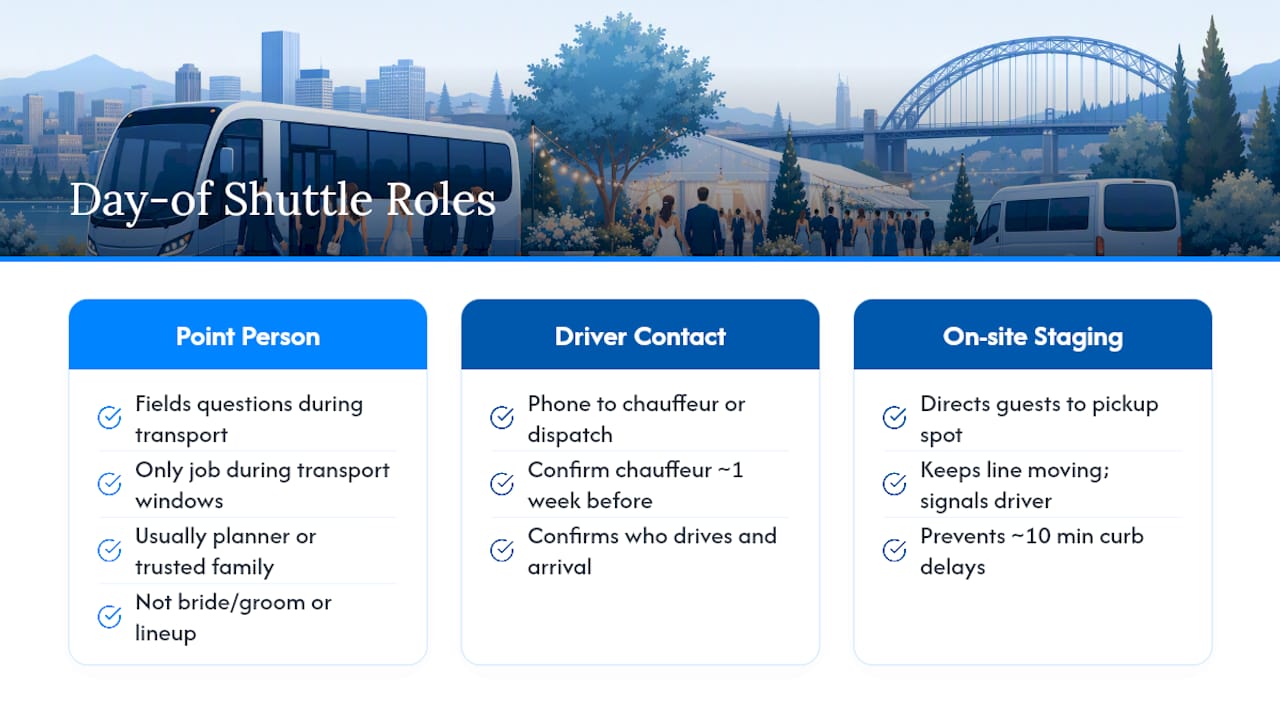
The point person is usually a wedding planner, a trusted family member, or a designated member of the bridal party. This person’s only job during transportation windows is fielding questions and making quick calls if something shifts, so it should not be the bride, the groom, or anyone standing in the wedding party lineup.
The driver contact should be a phone number that connects directly to your assigned chauffeur or the operator’s dispatch line. Confirming chauffeur assignments about a week before the wedding is one of the highest-value steps you can take, since it closes the gap between “we booked a shuttle” and “we know exactly who’s driving and when they’ll arrive.”
On-site staging covers the actual logistics of getting guests onto the vehicle: someone directing people to the right pickup spot, keeping the line moving, and giving the driver a signal when everyone’s aboard. Without this role, a shuttle can sit at a curb for ten extra minutes while guests wander in from different directions.
Write these three names and numbers on a single card and give a copy to your planner, your officiant, and your driver. It sounds simple. It saves the day more often than any other single piece of paper.
Insurance and Safety Standards Every Operator Should Meet
Wedding transportation isn’t just about comfort. It’s about moving your closest family and friends safely, often at night, sometimes on unlit rural roads. Before booking any operator, confirm they carry commercial auto insurance appropriate for passenger transport and that their vehicles undergo regular maintenance checks.
Ask directly whether the company performs routine vehicle inspections and how recently the assigned vehicle was serviced. A well-maintained fleet isn’t a nice extra. It’s the baseline for a company that takes passenger safety seriously, and it should be non-negotiable for a wedding where your guest list includes grandparents, kids, and out-of-town family unfamiliar with the roads.
For Willamette Valley and Hood River routes specifically, ask about route familiarity. Vineyard access roads and Gorge-area routes often involve unlit stretches, sharp turns, and late-night return trips after a reception winds down. Route reconnaissance in daylight, along with pre-staging conversations about low beams and safe pullouts for nighttime returns, is standard practice among operators who regularly work these areas. If a company can’t speak specifically to how they handle a dark gravel driveway at 11 p.m., that’s worth asking more questions about.
Also ask what happens if a vehicle breaks down mid-route. A reputable operator has a backup plan, whether that’s a second vehicle on standby or a clear dispatch protocol for getting a replacement to your location quickly. You shouldn’t have to wonder what happens if something goes wrong. You should be told before you ever sign the contract.
Customizable Packages: Refreshments, Decorations, and Add-Ons
Not every wedding shuttle needs to be bare-bones transportation. Many operators offer customizable touches that turn a transit leg into part of the celebration instead of dead time between events.
Common add-ons worth asking about include bottled water or light refreshments for guest shuttles, simple decorations like ribbon or signage for the bridal party vehicle, and music setups that let the wedding party keep the energy up between the ceremony and the reception. Some couples also request specific seating arrangements so bridal party members ride together, which is where a seating chart template can save real time during planning.

None of these extras are required to have a smooth transportation plan. But they turn what could be a quiet, awkward ride into one of the better memories of the day, especially for the wedding party riding between venues. If you want any of these touches, mention them when you request your quote rather than adding them later. Some accommodations, like specific decoration allowances or refreshment setups, are easier to confirm up front than to squeeze in the week of the wedding.
Why Driver Professionalism Matters More Than People Expect
The driver is the one person from your transportation vendor who’s actually present on your wedding day, and their demeanor sets the tone for every guest who steps onto that vehicle. A driver who’s late, curt, or unfamiliar with the route can rattle nerves right before a ceremony. One who’s calm, on time, and clearly experienced with weddings can put everyone at ease without saying much at all.
Ask potential operators how many wedding events their drivers handle per season and whether the same driver stays with your vehicle for the full day or changes between legs. Continuity matters. A driver who’s been briefed on your full timeline, from ceremony pickup to the final late-night guest run, handles unexpected shifts far better than someone dropped in for a single leg.
Experienced wedding drivers also know the unwritten rules: give the wedding party a few extra quiet minutes before pulling away, communicate clearly with the day-of point person, and stay flexible when photos run long. These are skills that come from doing this job specifically for weddings, not just general charter work.
How Booking Works, Step by Step
Booking a wedding shuttle doesn’t need to be complicated, but it does need to happen early. Here’s the general process most Portland-area operators follow:
- Request a quote with your date, guest counts, pickup and drop-off addresses, and rough timeline.
- Compare vehicle recommendations against your actual headcount, sizing up rather than down when you’re unsure.
- Review the written contract, checking start and end times, overtime rates, and cancellation terms before signing.
- Pay a deposit to hold your date. Deposit amounts and cancellation windows vary by operator, so get this in writing.
- Confirm final details, including driver contact and exact pickup locations, about a week before the wedding.
- Reconfirm chauffeur assignments in that final week to close any last-minute gaps.
Many operators recommend booking six to ten weeks ahead of a peak-season wedding date, with June Saturdays often filling first. If your date falls in Portland’s busy summer or early fall wedding season, treat the shuttle booking with the same urgency as your caterer or photographer. Waiting until a month out often means settling for whatever vehicle is left, not the one that actually fits your guest list.
Why Portland Weddings Need Local Transportation Expertise
Most wedding transportation advice online is written for a generic audience, and it shows. Generic guides tell you to “book early” and “confirm your route,” without ever mentioning that a vineyard access road outside Newberg behaves nothing like a downtown Portland pickup near the Pearl District, or that a Hood River reception venue might mean a driver navigating unlit Gorge roads well after midnight.
That gap is where most couples get burned. A national booking platform can find you a vehicle. It can’t tell you that a particular Willamette Valley venue has a gravel turnaround too tight for a 56-seat coach, or that a downtown ceremony during a summer weekend means building extra buffer for event traffic near the waterfront. Local routing knowledge isn’t a nice-to-have feature. It’s the entire difference between a shuttle plan that works on paper and one that works on the actual day.
The overrated piece of conventional wisdom here is the assumption that “any charter company will do” as long as the price is right. Price matters, but a Portland wedding has enough moving pieces, ceremony timing, guest logistics, vineyard access, night driving, that local experience should outweigh a slightly lower quote almost every time. Prioritize an operator who already knows your venue’s roads over one who’s never driven them.
— Dusty
Get a Quote From Reliant Transportation
Some operators offer a local alternative to guessing your way through wedding logistics, focusing specifically on Portland metro, Willamette Valley, and Hood River routes instead of generic nationwide booking. This local focus means quotes may come from a team familiar with vineyard driveways that need smaller vehicles and downtown routes requiring extra traffic buffer, rather than a call center reading from a script.

Reliant backs that local knowledge with a decade of consistently high ratings, a fleet maintained to handle everything from a small bridal party sprinter to a full guest coach, and planning resources built specifically for weddings, including a seating chart planning guide and a breakdown of bridal party transportation options to help you figure out exactly what you need before you request pricing.
Before you commit to any operator, compare their written cancellation and overtime policies side by side, and confirm directly with your venue that a coach or shuttle can actually access the site. When you’re ready to lock in your date, request a clear quote and reserve online rather than waiting until the calendar gets tighter.
Sources
The guidance in this article draws on a handful of sources worth reading directly if you want more detail:
- How to Plan Wedding Bus Transportation: A Step-by-Step Guide | Buslane
- Wedding transportation costs, tips & trends | The Knot
- How to Plan Portland Wedding Transportation | 6-Step Guide
- How to Plan Wedding Shuttle Routes Right – Charter a Coach
FAQ
How Far in Advance Should I Book a Wedding Shuttle in Portland?
Book six to ten weeks ahead for a peak-season date, and earlier if your wedding falls on a popular June or September Saturday, since popular vehicles fill fast during peak months.
How Much Does Wedding Transportation Typically Cost?
The Knot’s Real Weddings Study puts the national average around $1,075, though your actual cost depends heavily on vehicle type, hours booked, and region.
What Vehicle Size Do I Need for My Guest Count?
Sprinter vans work well for up to about 14 riders, shuttle vans for 14 to 24, minibuses for 24 to 35, and full coaches for 50 to 56, and it’s usually smarter to size up rather than down if you’re unsure.
Should I Confirm My Vehicle Can Access the Venue?
Yes. Confirm the exact loading zone, turnaround space, and preferred entrance directly with your venue coordinator, since a street address alone doesn’t tell you whether a coach can actually maneuver on site.