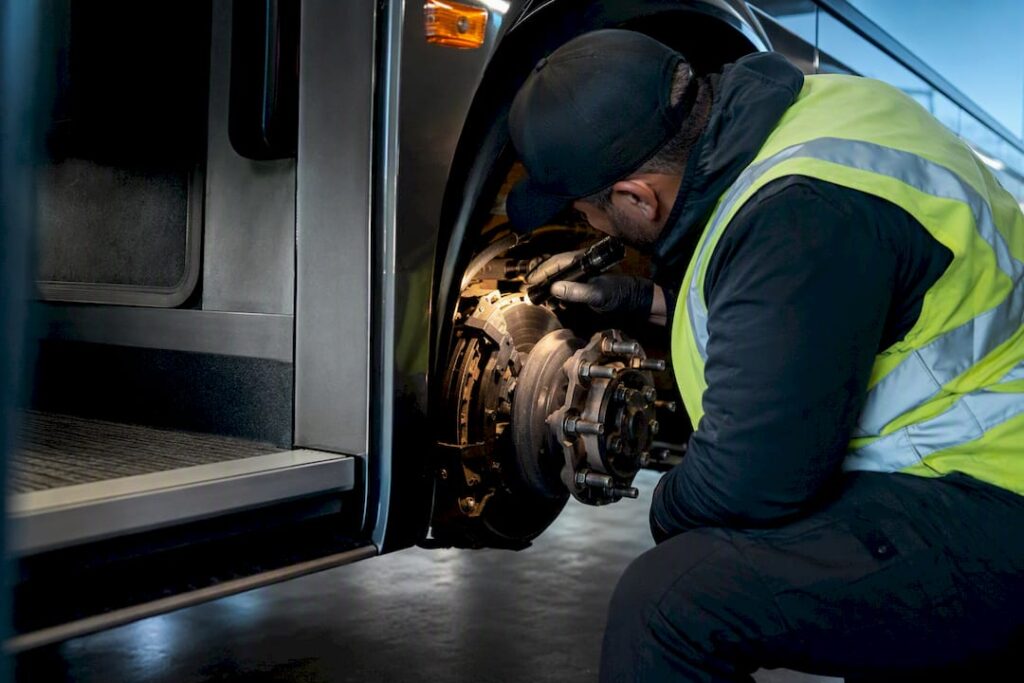
For most church retreats, hiring a professional charter or organized group transport is the safest and simplest way to move your group, and it beats coordinating a caravan of personal cars or borrowed vans. Before you book anything, verify three things: the carrier’s insurance certificate, its USDOT/MC registration, and its driver qualifications. Get those confirmed first, then work out vehicle size and cost.
TL;DR:
- Verify the carrier’s insurance certificate, USDOT and MC numbers, and driver qualifications before booking to ensure compliance and protection.
- Choose vehicle types based on group size and trip distance, with motorcoaches being most suitable for groups over 25 and longer drives.
- Schedule a detailed itinerary and sign a contract covering pickup times, insurance details, and operational plans to prevent delays and confusion.
- Plan for weather delays, regular rest stops, and ADA accommodations early, with clear communication protocols to handle emergencies effectively.
- Manage group behavior with clear expectations, assigned supervision, and limited in-vehicle amenities to maintain safety and comfort on the journey.
Table of Contents
- Why Choose Professional Group Transport For Church Retreats?
- Which Vehicle Type Fits Your Retreat Group?
- What Insurance And Driver Checks Should You Require?
- How Much Should A Church Retreat Bus Cost?
- Booking Checklist And Contract Must-Haves
- How Reliant Transportation Prepares For Retreat Groups
- How Do You Plan Pickup And Drop-Off Logistics?
- How Do You Accommodate Riders With Disabilities?
- When Should You Schedule Meal And Rest Breaks?
- How Do You Plan For Bad Weather?
- How Do You Coordinate Transportation With The Retreat Venue?
- How Do You Manage Group Behavior On The Bus?
- What’s The Real Lesson Here For Retreat Organizers?
- Ready To Book Transportation For Your Retreat?
- Sources
Why Choose Professional Group Transport For Church Retreats?
A chartered vehicle puts your entire group under one roof, one driver, and one set of eyes instead of scattering people across five or six personal cars. That single point of coordination cuts down the “where’s the third van?” texts that eat up a leader’s whole afternoon.
Professional transport also shifts liability off your volunteers and onto a licensed carrier with commercial insurance, which matters more than most organizers realize until something goes wrong. Group transport tends to deliver:
- Lower liability exposure for the church and its volunteer drivers
- Built-in PA systems for devotionals, icebreakers, or trip announcements
- Amenities like reclining seats and climate control for long rides with mixed ages
- One coordination point instead of managing multiple vehicle captains
Mid-week charter bookings can save 15 to 25 percent compared to weekend rates, according to group transport planning guides, which matters when you’re trying to stretch a retreat budget. Riding together also turns dead time into program time. A single vehicle with a working PA system means your worship leader can run a devotional or a game before you even hit the highway, instead of that time getting lost across separate cars.
Which Vehicle Type Fits Your Retreat Group?
Vehicle choice comes down to three variables: group size, trip distance, and how much gear you’re hauling. Getting this wrong is the most common budgeting mistake retreat organizers make, either overpaying for capacity they don’t need or underestimating a long drive.
- Motorcoach (45 to 56 passengers): Best for trips over 150 miles, per transportation guidance for churches and schools, thanks to onboard restrooms, underbelly luggage bays, and reclining seats for long hauls.
- Mini coach (20 to 35 passengers): A solid middle ground for mid-size groups on moderate trips where a full motorcoach feels oversized.
- Sprinter or passenger van (10 to 15 seats): Works for small groups and short distances but runs out of storage fast once luggage and gear enter the picture.
- School-bus style vehicles: Economical for short, local runs, though they usually lack restrooms, climate control, and luggage space.
- Accessible buses: Required whenever a rider needs a wheelchair lift, and worth confirming availability weeks in advance since accessible units are limited in most fleets.
Once your group tops 25 people or your drive runs longer than two hours, a single motorcoach almost always beats renting three or four separate vans, both for cost and for keeping everyone together. One caution worth repeating: ministry legal guides specifically warn against relying on 15-passenger vans for group trips because of well-documented rollover risk, especially when they’re loaded with luggage and driven by non-professional drivers. If your group size lands right at that 15-seat threshold, size up to a mini coach instead.
What Insurance And Driver Checks Should You Require?
This is the section organizers most often skip, and it’s the one that protects your church if something goes wrong on the road. The FMCSA makes clear that faith-based groups aren’t automatically exempt from commercial motor carrier rules. If your retreat fee bundles transportation with lodging or meals, or if you’re crossing state lines, that arrangement can be read as “for-hire” transport, which triggers commercial requirements including CDL licensing, drug and alcohol testing programs, and vehicle recordkeeping.
Larger commercial vehicles used for interstate for-hire transport may need substantial insurance coverage, potentially several million dollars, based on FMCSA thresholds, based on FMCSA thresholds. That’s not a typo, and it’s exactly why churches shouldn’t lean on a volunteer’s personal van insurance for a 40-person trip.
Before you sign anything, request:
- A certificate of insurance naming your church as an additional insured party
- The carrier’s USDOT and MC numbers, which you can verify independently
- Recent vehicle inspection records
- Proof of driver CDL licensing and an active drug and alcohol testing program
- Confirmation that two unrelated adults will be present per vehicle on youth trips, a standard recommended by youth transport safety guidance
Pro Tip: Call your insurance agent or your diocesan/denominational risk manager before you confirm a carrier. A five-minute call can catch a coverage gap that would otherwise surface only after an accident.
How Much Should A Church Retreat Bus Cost?
Charter pricing usually breaks down into an hourly or daily rate, a per-mile charge once you exceed a set radius, driver lodging for overnight trips, and a minimum hour or day charge that applies even to shorter bookings. A mid-size coach commonly runs in the range operators publish for group charter budgeting, and running the math per rider usually makes the number feel more manageable than the total quote.
Here’s how the savings tactics stack up:
- Book mid-week instead of Friday through Sunday, when rates are highest
- Fill every seat before adding a second vehicle, since half-empty coaches waste budget
- Ask for ministry or nonprofit pricing and have your 501©(3) documentation ready
- Keep the vehicle on-site for multi-day retreats rather than booking separate round trips for each excursion, since deadhead mileage adds up fast
Watch for hidden line items too. Deadhead charges (the drive to and from the garage), cleaning fees, and driver overtime can all show up after you thought you had a final number. Ask for a full breakdown before you sign.
Booking Checklist And Contract Must-Haves
Before requesting quotes, gather your dates, full itinerary, passenger count, luggage volume, and any ADA accommodation needs. Carriers price faster and more accurately when they have real numbers instead of estimates, and you’ll get quotes you can actually compare side by side, similar to how you’d review a charter bus contract before signing.
Your contract should spell out:
- Exact pickup and drop-off times and locations
- Minimum hours or mileage and what triggers overtime charges
- Cancellation and rescheduling terms
- Insurance certificate wording, including additional insured language
- USDOT/MC numbers and recent inspection records
Beyond the contract itself, confirm operational details verbally: what the backup plan is if a vehicle breaks down, whether a relief driver is available for long trips, and how you’ll reach the driver directly during travel. On the day of departure, your organizer packet should include the signed contract, a rider list with emergency contacts, permission forms for minors, and a printed itinerary for each chaperone.
How Reliant Transportation Prepares For Retreat Groups
Reliant Transportation is a charter bus service based in Portland, Oregon, and it has built its reputation over more than a decade of consistently high ratings managing exactly this kind of complex group logistics, from weddings to corporate shuttles to retreat trips. That track record matters because retreat transportation isn’t a simple point-A-to-point-B job. It involves rest stops, chaperone coordination, luggage, and often a schedule that shifts the week before departure.
When you’re evaluating any operator, ask for these operator practices up front:
- A seating chart you can adapt for chaperone placement, similar to the seating chart templates many charter services provide
- A pre-trip driver briefing covering your itinerary and any special stops
- Direct driver contact information for the day of travel
- A written amenities checklist so you know exactly what’s on board before you arrive at the pickup point
Retreat organizers who ask these questions upfront spend far less time troubleshooting on travel day.
How Do You Plan Pickup And Drop-Off Logistics?
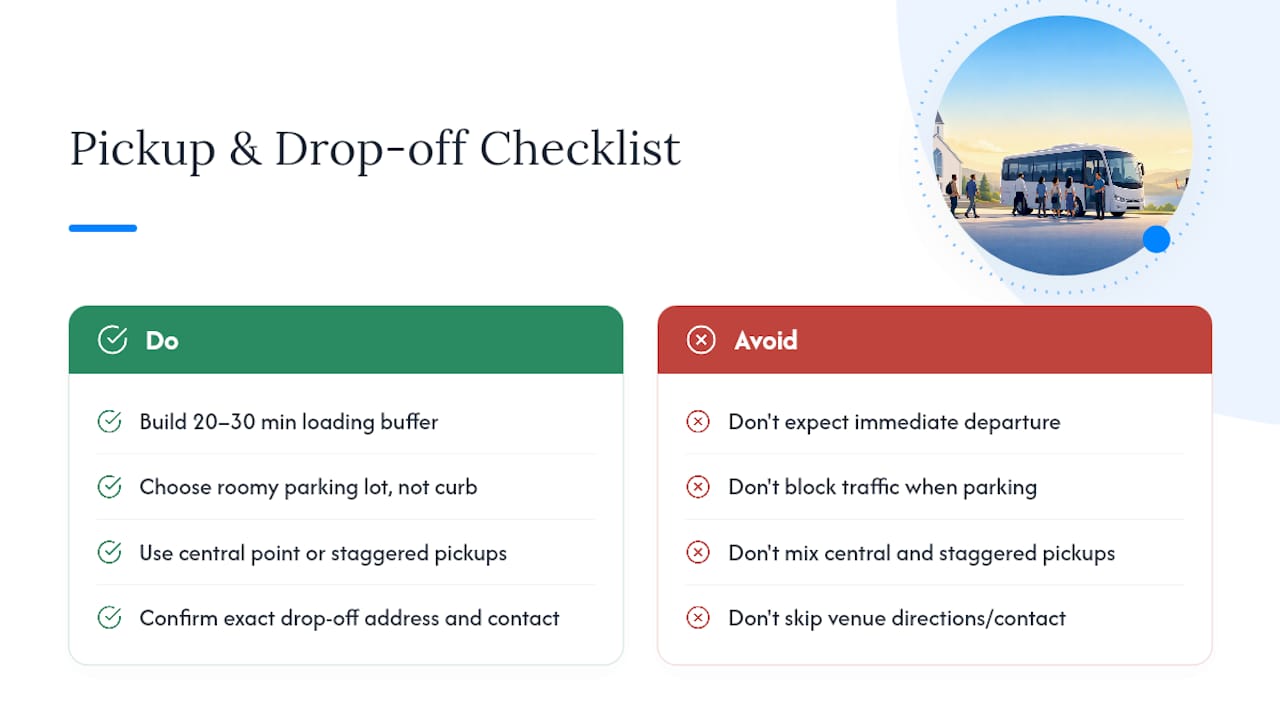
Pickup timing is where retreats most often go sideways, usually because organizers underestimate how long it takes to load 40 people, their luggage, and their sleeping bags onto a bus. Build in at least 20 to 30 minutes of loading time before your stated departure, and communicate that buffer clearly so people don’t show up at the departure time expecting to leave immediately.
Choose a pickup location with enough space for the vehicle to park and idle without blocking traffic. A church parking lot usually works better than a curbside spot on a busy street, especially for a full-size motorcoach that needs room to maneuver.
If your group is coming from multiple locations, either designate one central meeting point or arrange staggered pickups, but never both without a clear written schedule. Multiple stops add real time to your travel window, and drivers need that built into their route plan, not discovered mid-trip.
For drop-off, confirm the exact address with the retreat venue in advance, not just a general area. Rural retreat centers, campgrounds, and vineyard properties in areas like the Willamette Valley often have limited signage, and a coach driver unfamiliar with the property benefits from turn-by-turn directions or a contact person who can meet the bus at the entrance. Share that contact’s phone number with your driver before departure, not after you’re already lost on a gravel road.
How Do You Accommodate Riders With Disabilities?
Start by asking every participant directly, well before the trip, whether they need mobility accommodations. Don’t assume; a retreat roster with even one wheelchair user changes your entire vehicle decision, since standard motorcoaches and mini coaches aren’t universally equipped with lifts.
Book an accessible bus specifically if any rider uses a wheelchair, has significant mobility limitations, or needs extra time and space to board safely. Accessible units are a smaller share of most fleets, so confirm availability at the same time you request your quote rather than as an afterthought once your trip is already booked.
Beyond the vehicle itself, plan the boarding process. A rider using a mobility device needs more time to load than someone walking straight up the steps, and rushing that process creates real safety risk. Build extra minutes into your departure schedule specifically for accessible boarding, and assign a chaperone to help coordinate it so the driver can focus on the vehicle.
Seating placement matters too. Riders with mobility limitations generally do better seated near the front, closer to the door and away from the bumpiest ride at the back of the vehicle. If your group includes someone with a service animal, confirm the carrier’s pet and service animal policy in writing before travel day, since policies vary between operators.
When Should You Schedule Meal And Rest Breaks?
Plan a rest stop roughly every two to three hours for any trip longer than that window, both for restroom access and to let people stretch. Even a motorcoach with an onboard restroom benefits from a real stop on a multi-hour drive, since packed buses get restless fast, especially with kids or teens on board.
Build meal breaks into your itinerary rather than leaving them open ended. A retreat group of 40 people takes longer to order, eat, and reboard than most organizers expect, so budget 45 minutes to an hour for any sit-down meal stop, and closer to 20 to 30 minutes for a quick fast-food or gas station break.
Coordinate break locations with your driver in advance if possible. Drivers who know the route often have preferred stops with adequate bus parking, which matters more than it sounds. Plenty of gas stations simply don’t have room for a 45-foot coach to park safely. If your itinerary includes back-to-back travel days, plan for slightly longer breaks than usual since fatigue compounds for both passengers and drivers on multi-day retreats.
How Do You Plan For Bad Weather?
Weather contingency planning starts with a simple question to your carrier: what’s their policy on delays or rerouting due to snow, ice, or severe storms? Get that answer in writing before your retreat, not the morning of departure when a storm is already rolling through the Columbia River Gorge or the Cascades.
Establish a clear communication protocol with your group before you ever leave. Decide in advance how you’ll notify families or participants of a delay, whether that’s a group text chain, an email blast, or a phone tree, and designate one person, not the driver, as the point of contact for that communication.
Build a buffer into your schedule for retreats during winter months or in mountain-adjacent areas like Hood River, where road conditions can shift fast. If your route crosses a mountain pass or a stretch prone to closures, ask your carrier whether they have an alternate route planned and whether tire chains or specific equipment are required for that vehicle class.
Finally, confirm your cancellation and rescheduling terms cover weather-related changes specifically. Some contracts treat weather delays differently than a standard cancellation, and you want that clarified before you need it, not during a snowstorm.
How Do You Coordinate Transportation With The Retreat Venue?
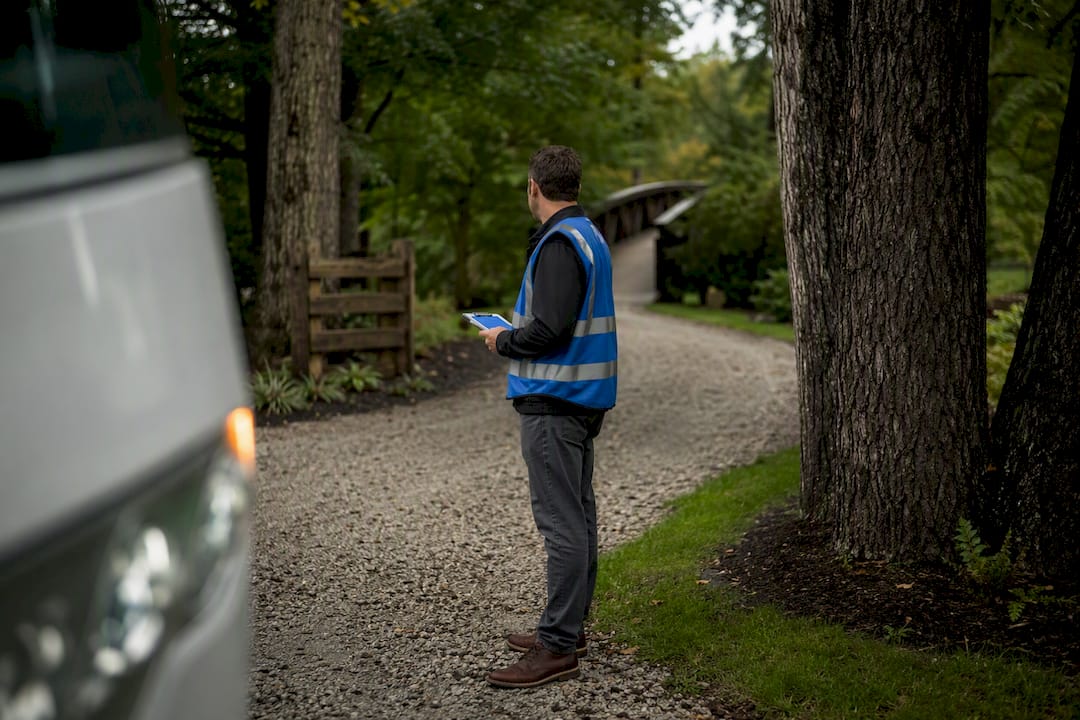
Contact the retreat venue directly about arrival logistics as soon as your transportation is booked, not the week before. Ask specifically about bus access: some rural venues have narrow driveways, low bridges, or gravel roads that a full-size motorcoach simply can’t navigate, and you need to know that before departure day, not when your driver is staring down a route that won’t work.
Confirm the venue’s preferred arrival window and share it with your carrier immediately. Venues often have specific check-in times or staff availability windows, and arriving an hour early with no one there to greet 40 tired retreat-goers creates an avoidable headache.
Ask the venue whether they can provide a contact person who can meet the bus and direct the driver to the correct unloading area, especially for larger campus-style properties. This single step prevents more confusion than almost anything else on this list.
If your retreat includes side excursions, like a group outing during a multi-day stay, coordinate those trips with the venue’s schedule and your transportation provider at the same time. Keeping the vehicle on-site for these shorter trips, rather than dismissing it and rebooking, tends to be both cheaper and simpler logistically.
How Do You Manage Group Behavior On The Bus?
Set expectations before you board, not once everyone’s already seated. A short briefing covering seat belts, aisle behavior, and quiet hours (especially for early morning or late-night departures) heads off most issues before they start.
Assign chaperones to specific sections of the bus rather than letting adults cluster together at the front. Spreading supervision throughout the vehicle, particularly on youth trips, keeps behavior in check and puts an adult within reach of every seating area.
A few practical habits go a long way:
- Keep snacks and drinks limited to spill-proof containers to protect the vehicle’s interior
- Rotate seating on multi-day trips so friend groups don’t calcify into cliques that exclude others
- Use the onboard PA system for a mid-trip check-in or devotional rather than letting hours pass in silence
- Remind riders where the restroom is and how the door locks, since this sounds obvious but saves real confusion on unfamiliar coaches
Comfort matters as much as behavior. Long rides go smoother when the temperature is reasonable, the noise level stays manageable, and there’s a clear plan for what happens during the drive, whether that’s a movie, a devotional, or simply quiet time.
What’s The Real Lesson Here For Retreat Organizers?
The conventional advice on this topic tends to stop at “get a quote and book it,” which undersells how much regulatory and safety groundwork actually protects your church. The FMCSA’s guidance on for-hire triggers isn’t bureaucratic noise. It’s a real signal that a bundled retreat fee covering transportation, lodging, and meals can shift your trip into commercial territory, with insurance and driver requirements most volunteer coordinators never think to ask about.
What gets overrated is vehicle amenities. What gets underrated is the paperwork: the certificate of insurance, the USDOT number, the driver’s CDL and drug testing status. Those three items matter more than reclining seats or a nicer PA system, because they’re what actually protects your church if something goes wrong on the highway.
If you take one thing from this article, verify insurance and driver qualifications before you compare prices, not after. Budget tactics like mid-week booking and filling the coach matter, but they’re optimizations, not substitutes for the safety checks that come first.
— Dusty
Ready To Book Transportation For Your Retreat?
A direct charter bus service offers an alternative to piecing together volunteer drivers and personal vehicles for your next retreat, providing one coordinated charter instead of a scattered caravan across the Portland metro area, the Willamette Valley wine region, and Hood River.

To get an accurate quote fast, have your dates, passenger count, full itinerary, and any accessibility needs ready before you reach out. That information lets Reliant Transportation match your group to the right vehicle size on the first pass instead of a round of back and forth. Browse a charter bus amenities checklist to see what’s available before you request pricing, then head to a booking page to reserve your dates and lock in your retreat transportation.
Sources
- Faith-Based Organization-Related Transportation | FMCSA
- Start-Up Guide for Ministry Vehicles – Christian Law
- Transporting youth | BuildFaith
- Church Group Transportation · LimoBus